
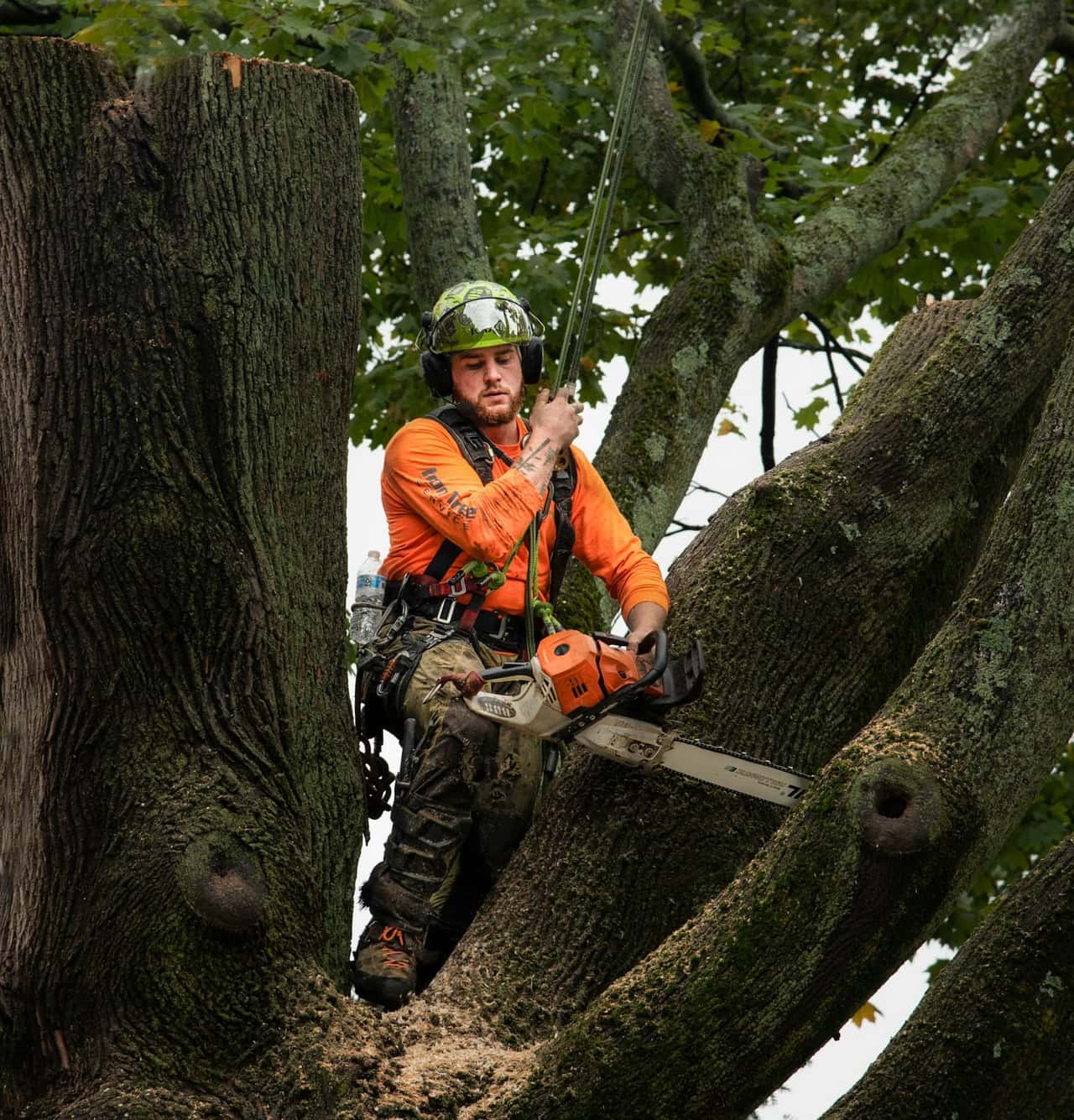
Storm Damage Tree Removal · Washington
Storm Damage Tree Removal in King County, WA
By calling, you agree that your call may be recorded and routed to an independent local tree-service provider, who may call or text you back about your request. Calling is free and does not obligate you to hire anyone. See our Privacy Policy.
- Free to call
- Independent local providers
- You decide
Tree problems in King County, WA that call for storm damage cleanup
- 1
Steep slopes, wet soil and big conifers
Much of the county's housing sits among tall Douglas-fir, western redcedar and western hemlock, often on slopes. Winter windstorms arrive on saturated ground, which is when large conifers uproot. Trees on steep slopes also hold soil in place, which is why the county regulates removal there: taking out the wrong trees can increase landslide and erosion risk.
- 2
Windstorm season
Most King County tree emergencies come with fall and winter windstorms from November to February, when Pacific storms push gusts over soaked soil. Puget Sound Energy and Seattle City Light own the lines across most of the county; any tree on a line goes to the utility first.
- 3
County rules apply only outside cities
King County's clearing rules cover unincorporated areas, such as much of the Snoqualmie Valley, Vashon-Maury Island, Fall City, Hobart and parts of the plateau east of Lake Sammamish. Seattle, Bellevue, Redmond, Sammamish, Kirkland, Issaquah and the other cities each have their own tree codes, and many require permits for significant trees on private lots.
What storm damage tree removal covers
After a storm, the job is to sort trees into three groups: down and needing removal, damaged but savable with pruning, and standing but newly dangerous.
How storm damage tree removal works, step by step · part of tree removal
Describe the tree and what it's near, and you'll reach an independent provider serving King County, WA.
Call about a tree emergencySafety first in King County, WA
Stay well away from any downed wire and anything touching it. Call 911 for injuries or lines down, then the utility.
What you can safely do
- Stay inside during the storm and away from windows on the side facing large trees.
- Afterward, look for hangers before walking under any tree.
- Check whether your city is running a curbside debris program before paying to haul brush.
- Keep all receipts. Tree work may count toward insurance or disaster-assistance claims.
Leave these to professionals
- Don't run a chainsaw on wood that's bent, pinned or twisted. It can spring violently when cut.
- Don't approach any tree near downed lines. Lines can be live even when the power is out.
- Don't hire a company that wants full payment before starting.
King County, WA at a glance
- County permit
- Clearing and grading permit, King County Code Title 16 and 21A
- Critical areas
- Steep slopes, wetlands, streams and their buffers
- Rural land
- Clearing over 7,000 sq ft on RA-zoned property
- Timber
- Removing 5,000 board feet of merchantable timber
- Cities
- Seattle, Bellevue, Sammamish, Kirkland and others set their own tree rules
Local sources for King County, WA
What affects the price of storm damage cleanup in King County, WA
The usual drivers are size, access, what's under the tree and cleanup; see the full list for storm damage cleanup.
Storm Damage Tree Removal in King County, WA: common questions
Steep slopes, wet soil and big conifers: what does it mean for storm damage cleanup in King County, WA?
Much of the county's housing sits among tall Douglas-fir, western redcedar and western hemlock, often on slopes. Winter windstorms arrive on saturated ground, which is when large conifers uproot. Trees on steep slopes also hold soil in place, which is why the county regulates removal there: taking out the wrong trees can increase landslide and erosion risk.
Windstorm season: what does it mean for storm damage cleanup in King County, WA?
Most King County tree emergencies come with fall and winter windstorms from November to February, when Pacific storms push gusts over soaked soil. Puget Sound Energy and Seattle City Light own the lines across most of the county; any tree on a line goes to the utility first.
County rules apply only outside cities: what does it mean for storm damage cleanup in King County, WA?
King County's clearing rules cover unincorporated areas, such as much of the Snoqualmie Valley, Vashon-Maury Island, Fall City, Hobart and parts of the plateau east of Lake Sammamish. Seattle, Bellevue, Redmond, Sammamish, Kirkland, Issaquah and the other cities each have their own tree codes, and many require permits for significant trees on private lots.
County permit: what it means for storm damage cleanup in King County, WA?
Clearing and grading permit, King County Code Title 16 and 21A
Critical areas: what it means for storm damage cleanup in King County, WA?
Steep slopes, wetlands, streams and their buffers
Other tree services in King County, WA
- Tree Removal in King County, WA
- Emergency Tree Removal in King County, WA
- Tree Trimming & Pruning in King County, WA
- Stump Grinding & Removal in King County, WA
- Dead Tree Removal in King County, WA
- Hazardous Tree Removal in King County, WA
- Large Tree Removal in King County, WA
- Tree Risk Assessment in King County, WA
- Commercial Tree Services in King County, WA
- Land Clearing in King County, WA
- Stump Removal in King County, WA
- Tree Cutting in King County, WA
- Palm Tree Removal in King County, WA
- Oak Tree Removal in King County, WA
- Pine Tree Removal in King County, WA
- Emergency Tree Trimming in King County, WA
- Emergency Tree Cutting in King County, WA
Storm Damage Tree Removal nearby
More about King County, WA: tree removal in King County, WA · all locations
Need storm damage cleanup in King County, WA?
Call to reach an independent tree-service provider that serves King County, WA. Calling is free and you decide whether to hire anyone.
By calling, you agree that your call may be recorded and routed to an independent local tree-service provider, who may call or text you back about your request. Calling is free and does not obligate you to hire anyone. See our Privacy Policy.