
Phoenix, AZ
Monsoon tree damage and removal in Phoenix
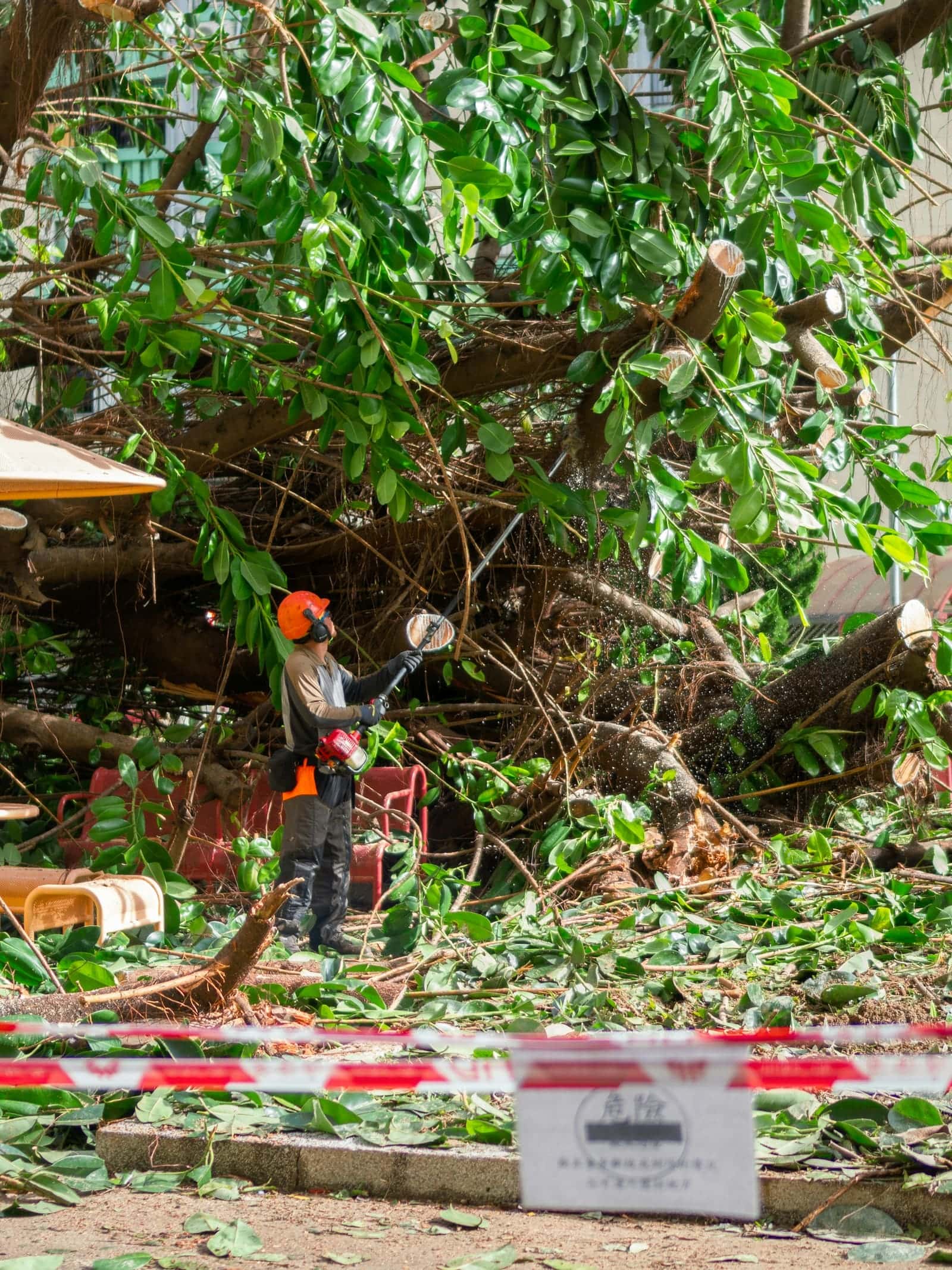
After a Phoenix monsoon storm, fallen trees on houses, walls, cars and lines come first. Partly uprooted trees are the next priority, because they can go over in the next storm, and monsoon storms come in waves. Small, recently planted trees that tipped over can sometimes be reset and staked; large uprooted trees almost always need removal.
Reviewed and updated
Why monsoon storms topple Valley trees
Monsoon downbursts are sudden and localized. One street can lose half its trees while the next is untouched. The trees that go over usually share a profile: dense, heavy crowns from fast irrigated growth, and shallow roots from frequent drip watering. South American mesquite hybrids, overgrown palo verdes, eucalyptus and African sumac are common casualties. After the storm, look for trees that moved: a new lean, soil cracked or mounded on one side, or roots exposed.
Monsoon damage triage for Valley yards
Tree on the roof, a wall or a power line
- Usual next step
- Call the utility for lines; then an emergency removal
Tree tipped over but roots still partly in the ground
- Usual next step
- Decide quickly: reset small trees, remove large ones; it can go over in the next storm
Mesquite or palo verde split at a fork
- Usual next step
- Usually removal; split forks don't heal
Palm with broken or hanging fronds
- Usual next step
- Remove the broken fronds; leave the green ones
Small limbs down, tree standing straight
- Usual next step
- Clean up and prune broken stubs when crews are available
Reset or remove?
Young trees (roughly under 4–6 inches in trunk diameter) that tipped but kept most of their roots can often be stood back up, backfilled and staked for a season. Large trees that uprooted, or tipped far enough to tear major roots, rarely re-anchor well and should be removed. A tree that's leaning with lifted soil is unstable, so keep people and cars away until it's dealt with.
- Check under the canopy for broken "hangers" before walking or parking there.
- Leave a tree touching any line alone and call the utility (APS or SRP, depending on your area).
- If the fallen tree is a native palo verde, mesquite or ironwood, the Arizona Native Plant Law may require notice to the Arizona Department of Agriculture before it's destroyed. Ask the tree company or the department.
Block walls and downed trees: who handles what
Phoenix-area yards are walled, and monsoon blow-overs often take a section of block wall with them. When the wall is shared with a neighbor, both owners' insurers may be involved, and the wall repair is a separate job from the tree removal.
Photograph the wall and the tree before anything is moved. Ask the tree crew to lift the tree off the wall rather than cut it where it lies if the wall is still partly standing, so it doesn't collapse further.
Choosing a replacement that stands up to the next monsoon
- Native and desert-adapted trees with open crowns, such as palo verde, ironwood and native mesquite, generally handle wind better than dense, fast-growing hybrids.
- Plan irrigation from day one: deep, infrequent watering with emitters spread toward the canopy edge.
- Avoid planting large-maturing trees close to walls, roofs and pools.
- Have young trees structurally pruned in their first few years.
Getting ready before the next season
The best monsoon prep happens in spring: thin dense crowns properly (removing weight from branch ends, not stripping the interior), remove deadwood, and switch to deep, infrequent watering so roots grow down and out. Over-thinned, lion-tailed trees are more likely to fail, not less.
Palms after a monsoon
Palms rarely blow over, but they do drop fronds and fruit stalks in monsoon winds. After a storm, broken and hanging fronds should come down; green fronds should stay. A palm that has started to lean noticeably after a storm, or one with a bent or damaged crown, should be looked at, since tall palms near houses and pools can do serious damage if they fail.
Phoenix monsoon questions
Can a blown-over tree be replanted in Phoenix?
Small, young trees often can be reset, backfilled and staked if most roots are intact. Large mature trees that uprooted generally can't re-anchor reliably and should be removed.
When is monsoon season in Phoenix?
The National Weather Service defines it as June 15 through September 30. The strongest storms are usually in July and August.
Should I thin my tree before the monsoon?
Yes, if the crown is dense. Proper thinning by a qualified arborist in spring reduces wind load. Avoid lion-tailing (stripping inner branches), which concentrates weight at the tips.
Storm damage cleanup in Phoenix
Call to speak with a local tree-service provider about removal, trimming, stumps or storm damage. Describe the tree and what it's near, and they'll explain the next step.