
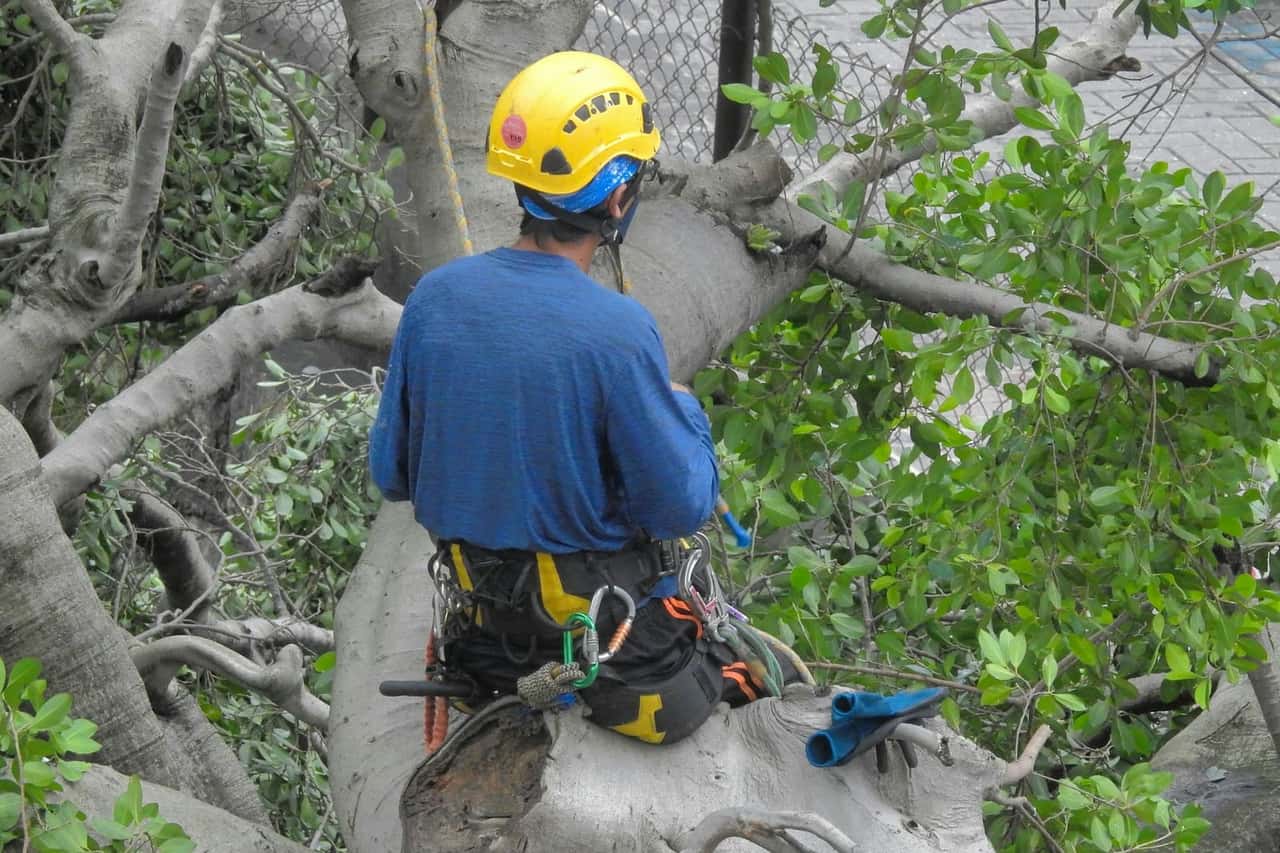
Storm Damage Tree Removal · Florida
Storm Damage Tree Removal in Miami-Dade County, FL
By calling, you agree that your call may be recorded and routed to an independent local tree-service provider, who may call or text you back about your request. Calling is free and does not obligate you to hire anyone. See our Privacy Policy.
- Free to call
- Independent local providers
- You decide
Tree problems in Miami-Dade County, FL that call for storm damage cleanup
- 1
The state exemption for dangerous trees
Florida Statute 163.045 overrides local permit rules for one situation: a single-family detached home where the owner has documentation, from an ISA-certified arborist or a Florida licensed landscape architect using ISA tree risk assessment procedures, that a tree poses an unacceptable risk. Then the county or city can't require a permit, fee, mitigation or replanting.
- 2
When pruning becomes illegal removal
Miami-Dade treats hatracking, topping and other excessive pruning that effectively destroys a tree as removal without a permit, and root cutting or girdling counts too. Selective pruning done to the ANSI A300 standard doesn't need a permit. If a trimmer offers to cut a black olive or mahogany down to stubs for hurricane season, decline: it's both harmful and a code violation.
- 3
Hurricanes and limestone soil
Much of Miami-Dade sits on limestone with shallow soil, so trees root shallowly and wide. Combine that with dense crowns and hurricane winds, and uprooting is common. Thin crowns before June, keep palms cleaned of coconuts and dead fronds, and have trees with lean or decay assessed early. After a storm, see [storm damage tree removal in Florida](/services/storm-damage-tree-removal/florida/).
What storm damage tree removal covers
After a storm, the job is to sort trees into three groups: down and needing removal, damaged but savable with pruning, and standing but newly dangerous.
How storm damage tree removal works, step by step · part of tree removal
Describe the tree and what it's near, and you'll reach an independent provider serving Miami-Dade County, FL.
Call about a tree emergencySafety first in Miami-Dade County, FL
Stay well away from any downed wire and anything touching it. Call 911 for injuries or lines down, then the utility.
What you can safely do
- Stay inside during the storm and away from windows on the side facing large trees.
- Afterward, look for hangers before walking under any tree.
- Check whether your city is running a curbside debris program before paying to haul brush.
- Keep all receipts. Tree work may count toward insurance or disaster-assistance claims.
Leave these to professionals
- Don't run a chainsaw on wood that's bent, pinned or twisted. It can spring violently when cut.
- Don't approach any tree near downed lines. Lines can be live even when the power is out.
- Don't hire a company that wants full payment before starting.
Miami-Dade County, FL at a glance
- County rule
- Miami-Dade Code Chapter 24 (tree preservation, §24-49)
- State exemption
- Fla. Stat. 163.045 for documented high-risk trees on single-family lots
- Improper pruning
- Hatracking and topping that destroys a tree count as unpermitted removal
- Right-of-way trees
- Report to the county or your city; don't remove them yourself
- Hurricane season
- June 1 to November 30
Local sources for Miami-Dade County, FL
What affects the price of storm damage cleanup in Miami-Dade County, FL
The usual drivers are size, access, what's under the tree and cleanup; see the full list for storm damage cleanup.
Storm Damage Tree Removal in Miami-Dade County, FL: common questions
The state exemption for dangerous trees: what does it mean for storm damage cleanup in Miami-Dade County, FL?
Florida Statute 163.045 overrides local permit rules for one situation: a single-family detached home where the owner has documentation, from an ISA-certified arborist or a Florida licensed landscape architect using ISA tree risk assessment procedures, that a tree poses an unacceptable risk. Then the county or city can't require a permit, fee, mitigation or replanting.
When pruning becomes illegal removal: what does it mean for storm damage cleanup in Miami-Dade County, FL?
Miami-Dade treats hatracking, topping and other excessive pruning that effectively destroys a tree as removal without a permit, and root cutting or girdling counts too. Selective pruning done to the ANSI A300 standard doesn't need a permit. If a trimmer offers to cut a black olive or mahogany down to stubs for hurricane season, decline: it's both harmful and a code violation.
Hurricanes and limestone soil: what does it mean for storm damage cleanup in Miami-Dade County, FL?
Much of Miami-Dade sits on limestone with shallow soil, so trees root shallowly and wide. Combine that with dense crowns and hurricane winds, and uprooting is common. Thin crowns before June, keep palms cleaned of coconuts and dead fronds, and have trees with lean or decay assessed early. After a storm, see storm damage tree removal in Florida.
County rule: what it means for storm damage cleanup in Miami-Dade County, FL?
Miami-Dade Code Chapter 24 (tree preservation, §24-49)
State exemption: what it means for storm damage cleanup in Miami-Dade County, FL?
Fla. Stat. 163.045 for documented high-risk trees on single-family lots
Other tree services in Miami-Dade County, FL
- Tree Removal in Miami-Dade County, FL
- Emergency Tree Removal in Miami-Dade County, FL
- Tree Trimming & Pruning in Miami-Dade County, FL
- Stump Grinding & Removal in Miami-Dade County, FL
- Dead Tree Removal in Miami-Dade County, FL
- Hazardous Tree Removal in Miami-Dade County, FL
- Large Tree Removal in Miami-Dade County, FL
- Tree Risk Assessment in Miami-Dade County, FL
- Commercial Tree Services in Miami-Dade County, FL
- Land Clearing in Miami-Dade County, FL
- Stump Removal in Miami-Dade County, FL
- Tree Cutting in Miami-Dade County, FL
- Palm Tree Removal in Miami-Dade County, FL
- Oak Tree Removal in Miami-Dade County, FL
- Pine Tree Removal in Miami-Dade County, FL
- Emergency Tree Trimming in Miami-Dade County, FL
- Emergency Tree Cutting in Miami-Dade County, FL
Storm Damage Tree Removal nearby
More about Miami-Dade County, FL: tree removal in Miami-Dade County, FL · all locations
Need storm damage cleanup in Miami-Dade County, FL?
Call to reach an independent tree-service provider that serves Miami-Dade County, FL. Calling is free and you decide whether to hire anyone.
By calling, you agree that your call may be recorded and routed to an independent local tree-service provider, who may call or text you back about your request. Calling is free and does not obligate you to hire anyone. See our Privacy Policy.