Storms & safety
Can storm-damaged trees recover?
Updated · Guide by TreeRemovalServices.net
Short answer
Many storm-damaged trees recover if the trunk is sound, the roots are anchored and at least half the crown remains. Broken limbs can be pruned back to sound wood, and hail-stripped trees usually releaf. Trees with split trunks, lifted root plates, or more than half the crown lost are usually removal candidates.
Keep, prune or remove
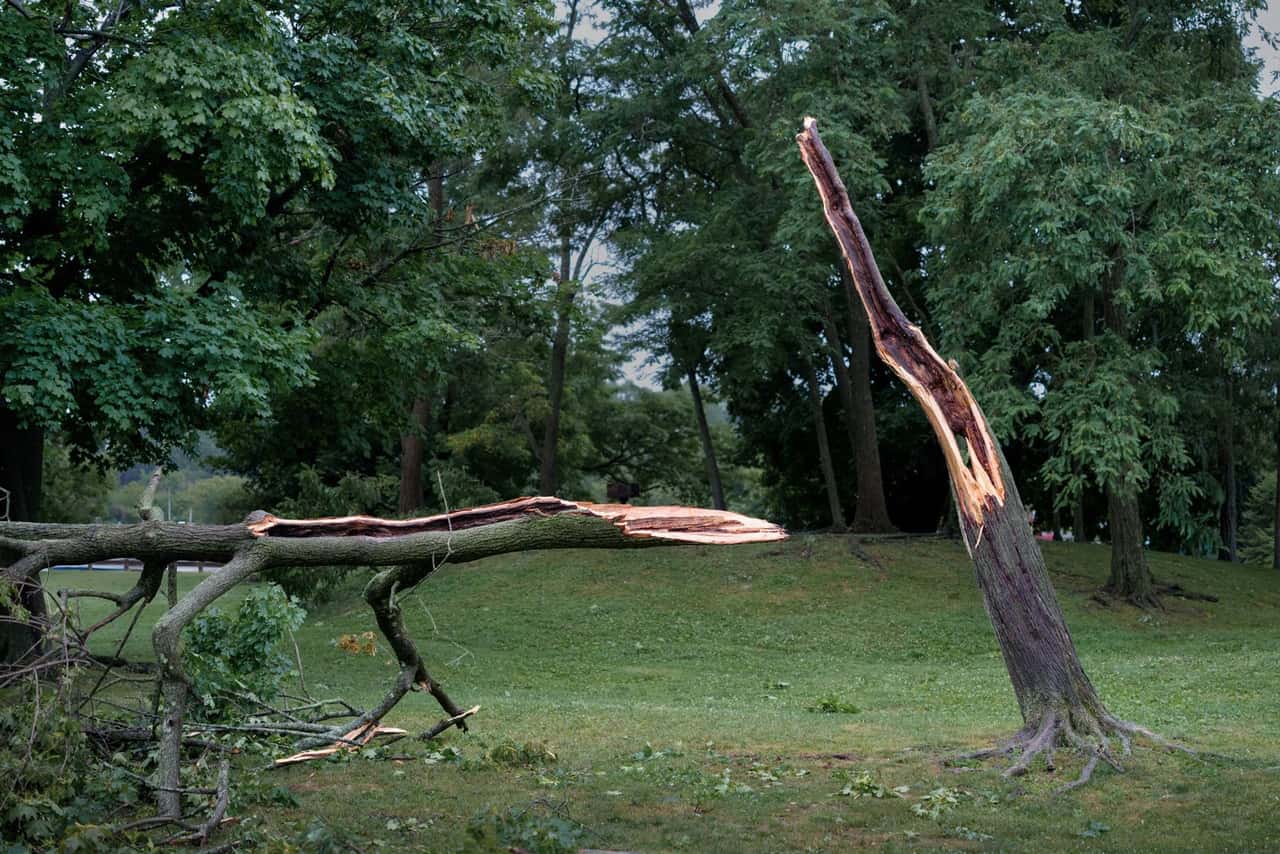
How a storm-damaged tree should be handled depends on where the damage is and how much of the tree is left.
A few broken limbs
- Usually
- Prune back to sound wood; keep
Leaves stripped by hail or wind
- Usually
- Keep; most trees releaf
Bark wounds on the trunk
- Usually
- Keep and monitor for decay
Split at a major fork
- Usually
- Remove, or cable/brace if an arborist approves
More than half the crown lost
- Usually
- Usually remove
Lifted root plate, new lean
- Usually
- Remove; anchorage failed
Twisted trunk (tornado)
- Usually
- Assess; often declines
Prune cleanly after the storm
Ragged breaks invite decay. Cut broken limbs back to a healthy branch or the trunk, just outside the branch collar. Don't top the tree or paint wounds (except oaks in oak wilt areas, like Texas from February to June, where painting fresh oak wounds is recommended).
Damage that shows up later
Ice storms and derechos leave hidden damage. After Arkansas's 2009 ice storm, decay fungi entered broken limbs and trees declined for years; after Iowa's 2020 derecho, many survivors had cracked unions and twisted trunks. Check big storm survivors again the next season, and have trees near the house assessed.
Palms after hurricanes
A palm that lost all its fronds can recover if the bud at the top is intact; new fronds from the center within a few months is a good sign. A snapped or kinked trunk, or a bud that rots, means removal. See Florida storm damage tree removal.
Saltwater and flooding
Trees flooded by storm surge or standing water may brown and decline weeks or months later as roots run short of oxygen or salt builds in the root zone. Don't rush to remove them; watch for steady decline before deciding.
When to call a tree professional
Get professional help, not more reading, if the tree has any of these:
- A new or worsening lean
- Soil or roots lifting at the base
- A large crack in the trunk
- Big dead limbs over the house or drive
- Decay, cavities or fungus near the base
- Storm damage near a structure or line
- Storm Damage Tree Removal services · Uprooted, split or snapped trees and hanging limbs after wind, ice or hurricanes.
- Tree Trimming & Pruning services · Pruning for clearance over roofs and drives, deadwood removal and storm preparation.
- Find tree service near you
Tell us what's happening and we'll connect you with a tree-service provider serving your area.
Call for tree serviceCommon questions
Will a tree stripped by hail grow back?
Usually. Healthy trees releaf within weeks; prune broken limbs and watch trunk wounds.
Can a split tree be saved?
Sometimes, with cabling and bracing if the split is small and the tree is otherwise healthy. A split through the main trunk usually means removal.
Should I wait to remove a storm-damaged tree?
Not if it threatens a house, road or people. Otherwise, waiting a season to see recovery is often reasonable.
Editorial note: this guide is general information written for homeowners. It isn't a substitute for an on-site assessment by a qualified arborist, or for legal or insurance advice.