Los Angeles, CA · tree trimming
Tree Trimming & Pruning in Los Angeles, CA
In Los Angeles, most trimming is palms (dead fronds are a fire and falling hazard) and pruning before Santa Ana wind and fire season. Protected native trees, including oaks, sycamores, black walnut and bay laurel 4 inches and up, need an Urban Forestry permit for harmful work, so avoid heavy cuts on them. Parkway trees are the city's.
By calling, you agree that your call may be recorded and routed to an independent local tree-service provider, who may call or text you back about your request. Calling is free and does not obligate you to hire anyone. See our Privacy Policy.
When you need tree trimming & pruning in Los Angeles
Pruning for clearance over roofs and drives, deadwood removal and storm preparation.
- Dead branches larger than a broom handle anywhere over a roof, driveway or play area.
- Limbs touching or overhanging the roof, gutters or chimney.
- Branches blocking streetlights, signs, sidewalks or sight lines at the driveway.
- Crossing or rubbing branches, or a narrow V-shaped fork with bark pinched inside.
- Storm damage: broken stubs and torn limbs that need clean cuts.
Often needed with: Tree Risk Assessment services, Tree Removal services, Storm Damage Tree Removal services, Commercial Tree Services.
Call and we'll connect you with a tree-service provider for tree trimming & pruning in Los Angeles.
Call for tree serviceWhat to confirm in a tree trimming & pruning quote in Los Angeles
Quotes differ mostly in what they include. Ask each provider to put these in writing so you can compare like for like:
- Which trees, and which kind of pruning for each
- How much live crown will be removed (on mature trees, usually well under a quarter)
- Deadwood removal above a stated size
- Clearance over the roof, drive or lines
- Hauling the branches or chipping on site
- Following the ANSI A300 pruning standard, and no topping
Before you call about tree trimming & pruning in Los Angeles
These answers let a provider in Los Angeles tell you on the first call what the job involves and roughly how it'll be done.
- Which trees
- And roughly how tall
- The goal
- Roof clearance, deadwood, storm prep, more light
- Over what
- Roof, drive, neighbor's yard, lines
- Species if known
- Oaks may have timing rules where oak wilt is present
- Access
- Can a lift reach, or is it a climbing job?
- Cleanup
- Branches hauled, or chipped on site
Safety and permission checks
- Power lines: stay at least 10 feet from overhead lines (OSHA's minimum distance for unqualified workers) and call the utility; only line-clearance-qualified tree workers cut closer.
- Underground lines: call 811 a few days before stump grinding or digging so buried utilities are marked for free.
- Permits: ask the city or county before removing or heavily pruning a large tree; protected-tree sizes and street-tree rules vary by place.
- Who is responsible: a tree on your lot is usually yours, street (right-of-way) trees are usually the city's, and trees on lines are the utility's to clear.
- Doing it yourself: picking up small fallen limbs is a homeowner job; chainsaw work off a ladder, near lines or on anything that could hit a building is not.
Have your answers ready? Call and we'll connect you with a provider serving your area.
Call for tree serviceHow getting tree trimming & pruning in Los Angeles works
- 1
Tell us what's happening
Call and describe the tree, where it is and how urgent it is.
- 2
Get connected
Your call goes to an independent tree-service provider serving your area.
- 3
The tree is assessed
The provider looks at the tree, what's around it, and access for equipment.
- 4
Scope and price are discussed
You get the plan and price directly from the provider, before any work.
- 5
You decide
There's no obligation; you choose whether and when to go ahead.
TreeRemovalServices.net is a referral service and doesn't perform tree work. How it works
Local conditions
Local tree trimming & pruning considerations in Los Angeles
What's specific to this work in Los Angeles: local storms, trees, access, rules and costs.
Los Angeles at a glance
- Protected
- Native oaks, sycamore, black walnut, bay laurel 4 in.+ (cumulative)
- Palms
- Dead fronds removed regularly by trained climbers or lifts
- Parkway trees
- City-owned; permission needed
- Season
- Before Santa Ana and fire season
Last updated
Palms: the most common LA trim
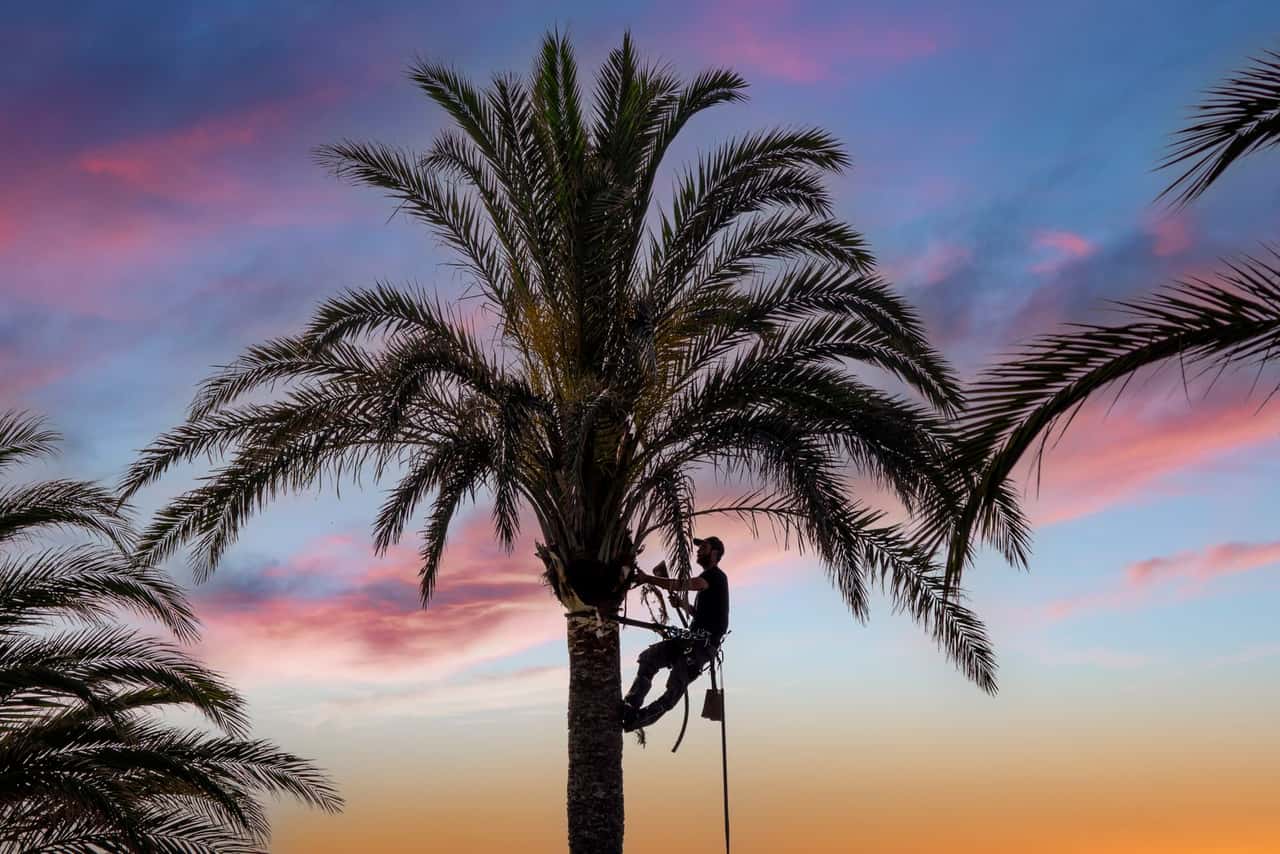
Mexican fan palms can exceed 80 feet, and their dead fronds are both a fire hazard and a falling hazard. Removing dead fronds and seed stalks regularly, by trained climbers or from lifts, is a safety task. Keep green fronds; over-stripping weakens the palm. Never let anyone climb with spikes on a palm you want to keep.
Eucalyptus and summer limb drop
Eucalyptus are common across Los Angeles and can drop large limbs, sometimes on hot, calm days. Their shedding bark also builds up as fire fuel near houses. Regular pruning to remove deadwood and reduce long, heavy limbs over roofs, driveways and play areas is the main safety measure. Large eucalyptus near structures are often removal candidates.
Protected trees: when pruning needs a permit
Los Angeles protects native oaks (other than scrub oak), Southern California black walnut, western sycamore and California bay laurel measuring 4 inches or more in cumulative diameter. Removing or relocating one, or doing harmful work around one, requires a permit from Urban Forestry. Light maintenance pruning is different from cutting large limbs or roots; ask a company familiar with the protected tree rules before any heavy work.
A trimming visit in LA
- 1
Set the objective
Agree on what the pruning is for (safety, clearance, light, or structure) and roughly how much will be removed.
- 2
Access
Climbers use ropes and saddles; bucket trucks work where they can reach. Spikes shouldn't be used on trees that are staying.
- 3
Make proper cuts
Cuts are made just outside the branch collar. Large limbs are removed with a three-cut method so bark doesn't tear.
- 4
Clean up
Brush is chipped and hauled, and the yard is raked. Chips are often left on request as mulch.
Santa Ana and fire preparation
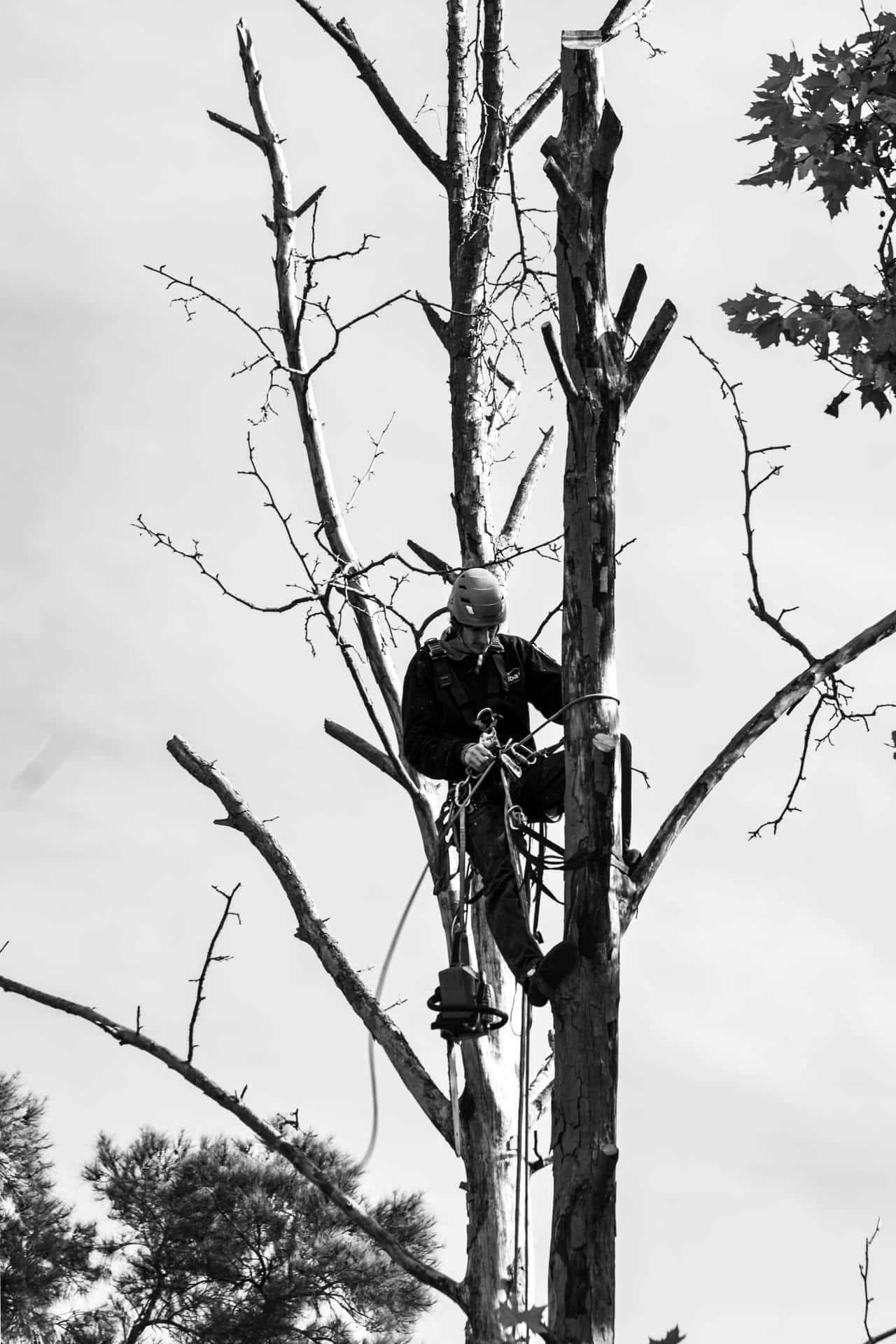
Dry offshore Santa Ana winds from fall into winter topple eucalyptus and pines and raise fire danger. Trimming before the season means removing dead wood, keeping limbs off roofs and away from chimneys, clearing palm skirts and thinning crowns that catch wind. In hillside fire zones, defensible-space rules add requirements; see tree trimming in California.
Beyond trimming in Los Angeles
Trimming handles most palms and healthy trees. These cover the cases it can't.
For dead palms and failing eucalyptus.
Before work on a protected oak.
For wind-damaged pines.
Ficus and parkway damage
Ficus trees lift sidewalks and invade pipes. Root pruning to repair a sidewalk can destabilize a large tree, and parkway trees belong to the city, so sidewalk-and-root problems with a street tree go to the city, not a private crew.
Los Angeles trimming questions
Do I need a permit to trim an oak in Los Angeles?
Light maintenance is different from harmful work. Cutting large limbs or roots of a protected oak can require an Urban Forestry permit; ask before heavy pruning.
How often should palms be trimmed in LA?
Often once a year for dead fronds and seed stalks, more for palms over walkways or roofs.
Can I trim the parkway tree in front of my LA house?
Parkway trees belong to the city and need permission for pruning or removal.
Why shouldn't palm climbers use spikes?
Spikes leave trunk wounds that don't heal and can let in disease.
When should I trim trees before Santa Ana season?
Late summer to early fall, before winds peak from fall into winter.
Is it safe to strip all the green fronds from a palm?
No. It weakens the palm; remove only dead fronds and seed stalks.
How much does tree trimming cost in Los Angeles?
Palm height, access and protected-tree work drive the price. See the tree trimming cost factors.
Who trims trees near me in Los Angeles?
Insured, licensed tree services with arborists. You can call us to reach an independent provider.
More tree services in Los Angeles
- Tree Removal servicesTaking down a tree you no longer want or can't keep, in sections near buildings.
- Emergency Tree Removal servicesA tree on the house, car, driveway or a line, or one about to fall.
- Storm Damage Tree Removal servicesUprooted, split or snapped trees and hanging limbs after wind, ice or hurricanes.
- Dead Tree Removal servicesDead or dying trees that turn brittle and get riskier to climb every season.
- Hazardous Tree Removal servicesLeaning, cracked or decayed trees that could hit something if they fail.
- Large Tree Removal servicesBig trees close to structures that need rigging or a crane.
- Stump Grinding & Removal servicesGrinding stumps below grade so you can replant, sod or build.
- Tree Risk Assessment servicesAn arborist's opinion on whether a tree can stay, before you remove it.
- Commercial Tree ServicesTree work for HOAs, property managers and commercial sites.
- Land Clearing servicesClearing brush, trees and stumps from a lot by mulching or excavation.
- Stump Removal servicesDigging out the stump and root ball where something will be built or planted.
- Tree Cutting servicesBringing a tree down safely: felled in one piece or cut down in sections.
- Palm Tree Removal servicesDead, diseased or unwanted palms, crown first, then the trunk.
- Oak Tree Removal servicesOaks with permits, oak wilt timing and heavy wood to plan around.
- Pine Tree Removal servicesTall, beetle-killed or storm-damaged pines near the house.
- Emergency Tree Trimming servicesBroken, hanging or cracked limbs over a roof, drive or path.
- Emergency Tree Cutting servicesCutting a fallen tree off a car, driveway, fence or road.
Tell us what's happening and we'll connect you with a tree-service provider serving your area.
Call for tree serviceTree service areas near Los Angeles
Sources for the local facts on this page
- City of Los Angeles: Protected tree ordinance (checked 2026-10-03)
- LA StreetsLA: Protected trees photo guide (checked 2026-10-03)
Tree trimming in Los Angeles
Call to speak with a local tree-service provider about removal, trimming, stumps or storm damage. Describe the tree and what it's near, and they'll explain the next step.
By calling, you agree that your call may be recorded and routed to an independent local tree-service provider, who may call or text you back about your request. Calling is free and does not obligate you to hire anyone. See our Privacy Policy.