Miami, FL
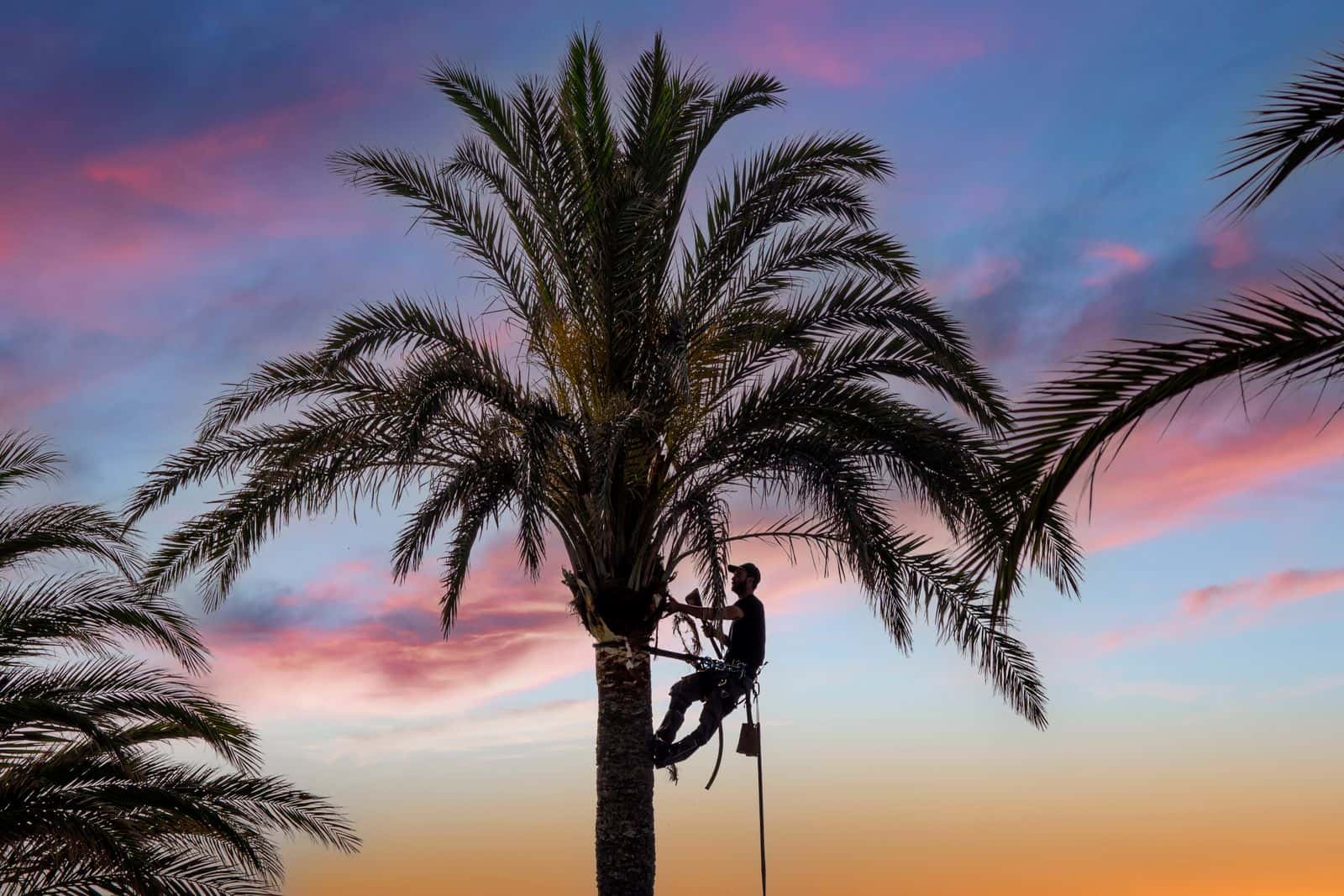
Tree and palm trimming in Miami
In Miami, trimming is hurricane preparation: thin dense crowns, remove deadwood and coconuts, and clear roofs in the dry season, December through May. Don't over-prune: stripped palms and topped trees are weaker, and Miami-Dade treats pruning that destroys a tree as unpermitted removal.
Reviewed and updated
A dry-season trimming calendar for Miami yards
December to February
- What fits
- Structural pruning and thinning of hardwoods
- Why
- Dry, cooler weather; crews have more openings
March to May
- What fits
- Coconut and dead-frond removal, clearance over roofs and pools
- Why
- Last window before the June 1 start of hurricane season
June to November
- What fits
- Only dead, broken or hazardous limbs
- Why
- Hurricane season; heavy cuts stimulate soft regrowth and debris pickup is unpredictable
After a storm
- What fits
- Hangers and broken limbs first
- Why
- Restoration pruning on survivors once emergency work slows
Palms: what to cut and what to leave
Coconut palms need their coconuts and dead fronds removed; both turn into heavy projectiles in a hurricane. Royal palms shed their own fronds and usually need little trimming beyond picking up what falls. Green fronds should stay on every palm. The so-called hurricane cut, which leaves a few fronds pointing straight up, weakens palms, starves them of the potassium stored in older fronds and leaves a thin, top-heavy crown.
University of Florida extension guidance is to remove only fronds that are completely brown, and never to climb a palm with spikes, which leaves trunk wounds that don't heal.
Thinning dense hardwoods: black olive, ficus and mahogany
Black olive, ficus and mahogany grow dense, heavy crowns that act like sails in hurricane winds, and the thin soil over Miami's limestone gives them limited anchorage. Selective thinning, reducing end weight on long limbs and removing crossing or rubbing branches lowers the wind load without stressing the tree.
Ficus is the exception that often needs more than trimming. Its roots invade pipes and lift slabs, and a big ficus hedge or tree near a wall may be a removal candidate rather than a pruning one.
Which Miami trees hold up best in hurricanes
University of Florida researchers surveyed trees after a series of Florida hurricanes and grouped common species by how well they stood up to wind. Trimming helps any tree, but it can't turn a weak species into a strong one, so it's worth knowing which group your trees fall in before deciding how much to spend on them.
- Higher survival in UF/IFAS hurricane surveys: sabal (cabbage) palm, live oak, gumbo limbo and sea grape.
- Poorer survival: queen palm, coconut palm, laurel oak and Australian pine. A large one close to the house is often better replaced over time than trimmed again every year (see [UF/IFAS: Wind and Trees](https://edis.ifas.ufl.edu/publication/FR173)).
- Survival isn't the only measure: a coconut palm that loses its crown over a pool still does damage, so how close a tree is to the house matters as much as its species.
Hurricane cuts, hatracking and lion-tailing: trimming that makes trees weaker
- Hurricane-cut palms: stripping all but a few upright fronds weakens the palm and leaves a skinny, top-heavy head.
- Hatracking or topping hardwoods: cutting big limbs back to stubs causes dense, weakly attached sprouts that break in the next storm, and can count as removal under Miami-Dade rules.
- Lion-tailing: stripping inner branches and leaving foliage only at the ends pushes weight outward and makes limbs more likely to snap.
- Taking too much at once: more than about a quarter of a hardwood's live crown in one visit stresses the tree.
Severe pruning, permits and power lines
Miami-Dade County's Chapter 24 exempts selective pruning done to the ANSI A300 standard from permits, but treats hatracking, topping and other excessive pruning that effectively destroys a tree as unpermitted removal. Root cutting and girdling count too. Several cities in the county add their own rules, and condos and HOAs often need to approve work in common areas.
Limbs touching or near service lines are FPL's or a line-clearance-qualified crew's job. Before a storm is named is the time to ask; after, line crews are focused on restoration.
What to ask a Miami trimming crew before they climb
- 1
Will you use climbing spikes on my palms?
The answer should be no. Spikes wound palm trunks permanently; crews use lifts, ladders or climbing gear without spurs.
- 2
Which fronds will you remove?
Only brown and drooping ones, plus coconuts and flower stalks. Green fronds stay.
- 3
How much of the hardwood crown will you take?
A good answer names the goal, such as thinning or roof clearance, and stays well under a quarter of the live crown. An ISA Certified Arborist can assess a tree that worries you.
- 4
What happens to the debris?
Ask whether it's hauled away. Piles left at the curb close to a storm can become projectiles.
Miami tree and palm trimming questions
Is it too late to trim trees once a hurricane is forecast in Miami?
Usually. Crews are booked solid, county trash pickup is suspended before storms, and cut branches left at the curb become debris. Trim in the dry season instead; once a storm is forecast, only pick up loose items and fallen coconuts.
How often should coconut palms be trimmed in Miami?
Many owners have coconuts and dead fronds removed once or twice a year, with one visit timed before hurricane season. Palms over walkways, pools or parking may need it more often because falling nuts can injure people.
Can I top my black olive tree to make it hurricane-safe?
No. Topping triggers fast, weakly attached regrowth that breaks more easily, and severe pruning can count as tree removal under Miami-Dade rules. Ask for crown thinning and end-weight reduction instead.
Sources for the local facts on this page
- Miami-Dade County: Effective destruction of trees through improper pruning (checked 2026-10-01)
- Miami-Dade County: Tree preparation for hurricanes (checked 2026-10-01)
- UF/IFAS: Wind and Trees, Lessons Learned from Hurricanes (checked 2026-10-01)
Tree trimming in Miami
Call to speak with a local tree-service provider about removal, trimming, stumps or storm damage. Describe the tree and what it's near, and they'll explain the next step.