Denver, CO
Tree trimming in Denver
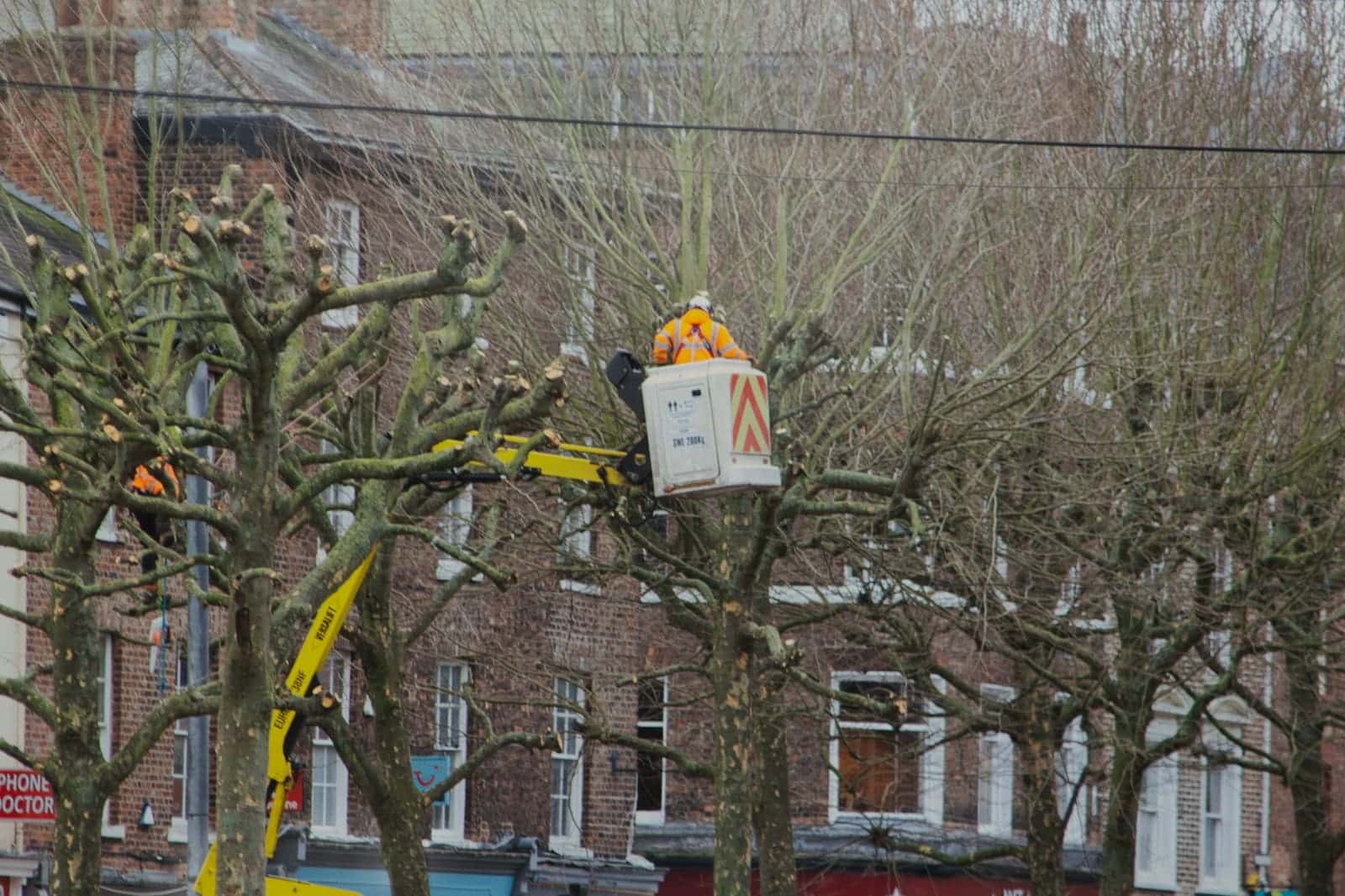
In Denver, trimming is mostly about getting weak limbs out before wet fall and spring snow. Denver also makes you responsible for pruning the street tree in front of your house, with 13.5 feet of clearance over the street and 8 feet over the sidewalk. Pruning it needs no permit.
Reviewed and updated
Pruning ahead of October and May snow
Colorado State Forest Service guidance describes the problem plainly: wet spring and fall snow clings to every branch and leaf, and the combined weight cracks and breaks limbs. Damage doesn't always show right away. A limb can crack internally or split at its union under snow and then fall weeks later in wind or on a calm day.
Pruning for snow means reducing long, horizontal limbs that collect weight, removing branches with weak, V-shaped attachments before they split, and taking out deadwood that will break first. Silver maples, Siberian elms and cottonwoods, all common in older Denver neighborhoods, benefit most. Do the work in late winter or summer so it's finished before the first fall storm.
Which Denver trees break first under snow
Silver maple
- How it fails in snow
- Long, brittle limbs and included-bark forks split
- Pruning priority
- Reduce end weight on long limbs; deal with weak forks early
Siberian elm
- How it fails in snow
- Weak wood; many limbs break at once
- Pruning priority
- Regular deadwood removal and reduction over roofs and lines
Plains cottonwood
- How it fails in snow
- Very large, heavy limbs; decay in older trees
- Pruning priority
- Inspect for decay before reducing; big limbs over houses first
Green ash
- How it fails in snow
- Snow breakage plus emerald ash borer risk
- Pruning priority
- Decide treat-or-replace before spending on major pruning
Honeylocust and linden
- How it fails in snow
- Sturdier, but dense young crowns still collect snow
- Pruning priority
- Structural pruning while young
Spruce and pine
- How it fails in snow
- Snow loads the whole crown; tops and side limbs snap
- Pruning priority
- Remove broken tops promptly; don't shear
After a snowstorm: what to cut now and what can wait
- 1
Leave loaded limbs alone
Shaking or hitting a snow-loaded limb from below can snap it onto you. Brush snow gently upward from low branches only.
- 2
Clear hazards over walks and the alley
Broken limbs hanging over sidewalks, the alley or the street are the first priority, including on the street tree you're responsible for.
- 3
Make clean cuts on torn limbs
Ragged breaks heal poorly. A pruning cut back to a branch union or the trunk collar gives the tree a better wound to close.
- 4
Book structural follow-up
Cracked forks and limbs that bent but didn't break often fail later. Have them looked at once crews are less busy.
Watering and pruning in a semi-arid city
Almost every street and yard tree in Denver depends on irrigation, and drought-stressed trees respond badly to heavy pruning. A tree that lost much of its crown to a storm, or is showing scorch and dieback, should be watered through dry fall and winter spells before it's pruned hard.
Colorado State University Extension recommends watering trees during dry fall and winter weather when the soil isn't frozen and temperatures are above freezing. It matters most for trees whose roots were damaged by construction or whose crowns were heavily cut.
The street tree out front is yours to prune
Denver's ordinance (D.R.M.C. §57-18) puts the adjoining property owner in charge of the tree between the sidewalk and the street: planting, pruning, leaf and limb cleanup, and removal. The city sets the standard; you pay for the work.
Branches must clear the street, including the parking lane, by 13.5 feet so trucks and snowplows don't tear them, and the sidewalk by 8 feet. Pruning a right-of-way tree doesn't need a permit, but it has to be done to industry standards. Removing one does need a free permit from the Office of the City Forester.
Licensed contractors and power lines
Anyone paid to prune or remove trees in Denver must hold a city tree contractor license (D.R.M.C. Chapter 57), with either a large-tree or ornamental-tree license, and a company needs at least one license holder. The City Forester's office keeps a list of licensed contractors, and you can ask a company for its license number before hiring it.
Branches near the primary lines along alleys and streets are Xcel Energy's to clear; branches on the service drop to your house can be discussed with Xcel. Only line-clearance-qualified crews may work close to energized lines.
What a Denver trimming quote should list
- The company's Denver tree contractor license number.
- Each tree, and whether it's a private tree or a right-of-way tree.
- The objective: clearance to 13.5 feet over the street and 8 feet over the sidewalk, deadwood removal, or reduction for snow.
- Roughly how much of each crown will be removed; heavy cuts on a single visit stress semi-arid trees.
- Cleanup, chipping and alley access. If an ash is involved, ask whether removal is the better spend.
Denver tree trimming questions
Who pays to trim the tree between my sidewalk and street in Denver?
You do. Denver ordinance makes the adjoining property owner responsible for street-tree care, including pruning and keeping 13.5 feet of clearance over the street and 8 feet over the sidewalk.
Do I need a permit to prune a right-of-way tree in Denver?
No permit is needed for pruning, but the work has to meet industry pruning standards and, if you hire someone, be done by a Denver-licensed tree contractor. Removal does need a free City Forester permit.
When should I trim trees in Denver to prevent snow damage?
Late winter or summer, so weak and overextended limbs are reduced before the first wet snow in fall. Avoid heavy pruning in late summer and early fall, which can push tender regrowth just before cold weather.
Sources for the local facts on this page
- Denver: Approved street tree list and owner responsibilities (checked 2026-10-01)
- Denver: Tree service license information (checked 2026-10-01)
- Denver Revised Municipal Code Chapter 57: Vegetation (checked 2026-10-01)
- Colorado State Forest Service: Dealing with snow-damaged trees (checked 2026-10-01)
Tree trimming in Denver
Call to speak with a local tree-service provider about removal, trimming, stumps or storm damage. Describe the tree and what it's near, and they'll explain the next step.