Atlanta, GA · tree trimming
Tree trimming in Atlanta
In Atlanta, good trimming keeps big in-town oaks safe for longer: remove deadwood, reduce heavy limbs over roofs and thin dense crowns. Be careful with heavy cuts, because Atlanta's ordinance requires a permit to injure a protected tree, not just to remove one; light, standard pruning doesn't count, but topping or severe cutting can. Leave limbs near lines to Georgia Power.
Atlanta at a glance
- Main goal
- Extend the safe life of aging oaks; keep limbs off roofs
- Ordinance
- Removing or injuring trees 6 in. DBH and up needs a permit
- Avoid
- Topping and severe cuts that injure the tree
- Lines
- Georgia Power clears its lines
Reviewed and updated
Pruning Atlanta's aging oaks
Many of the water oaks and southern red oaks in Atlanta's older neighborhoods are near the end of their lives. Pruning won't reverse decay, but removing dead limbs, reducing long, heavy limbs that reach over the house, and lightening the ends of branches can lower the chance of a limb failure and buy years of shade. White oaks and willow oaks are longer-lived and respond well to structural pruning.
A good arborist will also tell you when pruning isn't enough: fungus at the base, large cavities or a dead top point toward removal. See hazardous tree removal in Atlanta.
Atlanta's canopy and what pruning protects
Atlanta's in-town canopy is unusually dense for a large city, and the ordinance exists because residents value it. Pruning is how you keep a big tree without carrying its risk: removing deadwood over walkways and roofs, shortening limbs that overextend toward the house, and lifting low branches over driveways. Done every few years, that kind of maintenance lets many older oaks stay safely for a decade or more after they'd otherwise be removal candidates.
Ask any company quoting the work how much of the live crown they plan to remove. On mature oaks, the right answer is usually well under a quarter.
When pruning crosses the permit line
Atlanta's ordinance requires a permit to remove, destroy or injure any tree 6 inches DBH or larger on private property. Normal pruning to industry standards isn't injury, but topping, removing large portions of the crown or cutting major roots can be. If a company proposes heavy reduction on a large tree, ask whether it would need a permit before work starts.
A pruning visit in an in-town Atlanta yard
- 1
Set the objective
Agree on what the pruning is for (safety, clearance, light, or structure) and roughly how much will be removed.
- 2
Access
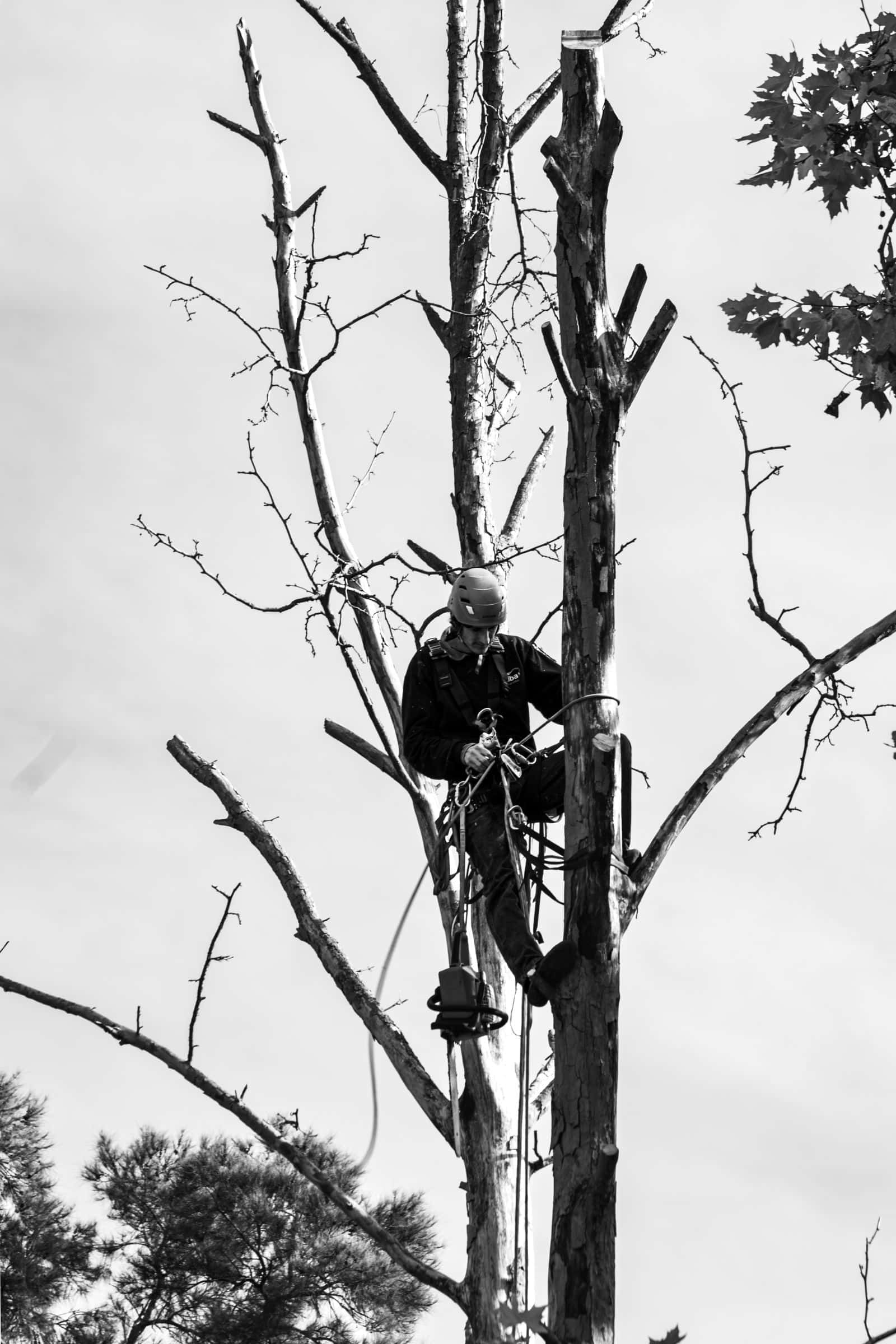
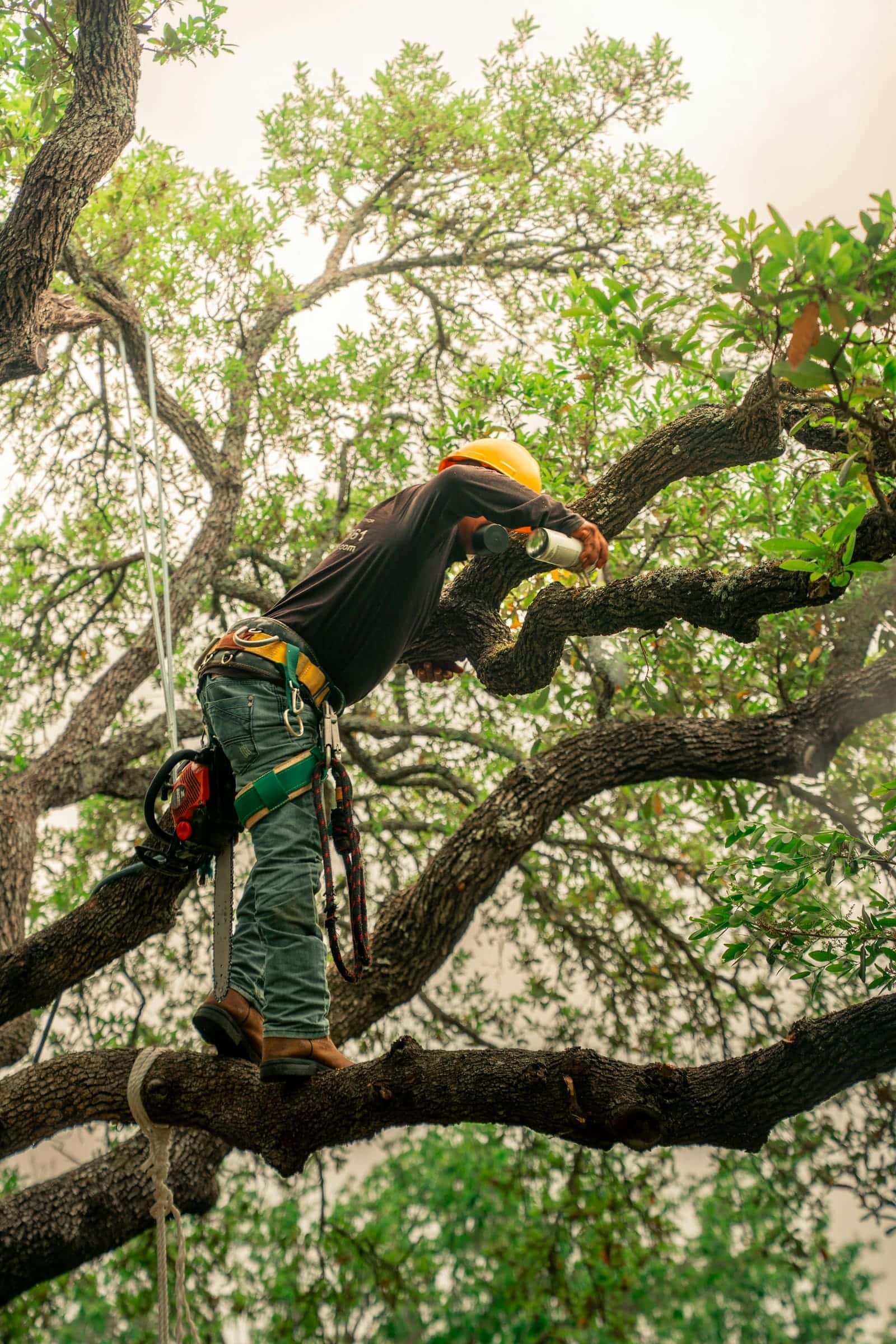
Climbers use ropes and saddles; bucket trucks work where they can reach. Spikes shouldn't be used on trees that are staying.
- 3
Make proper cuts
Cuts are made just outside the branch collar. Large limbs are removed with a three-cut method so bark doesn't tear.
- 4
Clean up
Brush is chipped and hauled, and the yard is raked. Chips are often left on request as mulch.
Pines over the house
Loblolly pines left when neighborhoods were built tower over many Atlanta houses. There's little pruning can do to make a tall pine safer in wind besides removing dead limbs, and drought-stressed pines attract beetles. If a pine has a dead top, pitch tubes on the trunk or a new lean, it's a removal question, not a trimming one.
Timing and Georgia Power
Late winter, before leaf-out, is a good time for structural pruning of oaks and maples, since you can see the branch structure and storms are still months away. Deadwood can come out any time. Georgia Power clears vegetation around its lines; don't let a regular crew work near energized wires.
When trimming isn't the answer in Atlanta
Trimming is the first step for most healthy trees. These are for the ones it can't fix.
For decaying oaks and pines with dead tops.
Before heavy pruning on a big oak over the house.
After a removal.
Atlanta tree trimming questions
Do I need a permit to trim a tree in Atlanta?
Not for normal pruning done to industry standards. Severe cutting or topping that injures a tree 6 inches or larger can require a permit; ask before heavy work.
Can pruning save an old water oak in Atlanta?
It can reduce risk and extend its life by removing deadwood and heavy limbs, but it won't fix internal decay. Have an arborist check for fungus, cavities and dead tops.
Why does my Atlanta oak keep dropping dead branches?
Usually age and decay in the crown. Older water and red oaks shed deadwood as they decline; regular deadwood removal keeps it off the roof, but heavy, ongoing dieback is a reason for an assessment.
When is the best time to trim trees in Atlanta?
Late winter, before leaf-out, for structural pruning; deadwood removal can be done any time.
Should I trim or remove a tall pine over my Atlanta house?
Trimming can remove dead limbs, but it won't make a tall pine much safer in wind. A dead top, pitch tubes or a new lean point to removal.
Who trims trees near power lines in Atlanta?
Georgia Power or its contractors. Don't let a regular crew work near energized lines.
Is topping a tree allowed in Atlanta?
Topping is harmful and can count as injuring a protected tree under Atlanta's ordinance. Ask for crown reduction or thinning instead.
How much does tree trimming cost in Atlanta?
It depends on tree height, access on narrow or steep lots and how much is removed. See the tree trimming cost guide.
Who trims trees near me in Atlanta?
Insured tree services with ISA-certified arborists. You can call us to reach an independent provider in Atlanta.
Sources for the local facts on this page
- Atlanta Tree Conservation Commission: Tree removal permits (checked 2026-10-03)
- ATL311: Office of Buildings tree permits (checked 2026-10-03)
Tree trimming in Atlanta
Call to speak with a local tree-service provider about removal, trimming, stumps or storm damage. Describe the tree and what it's near, and they'll explain the next step.