
St. Louis, MO · tree trimming
Tree Trimming & Pruning in St. Louis, MO
In the City of St. Louis, pruning a city tree, like the street tree in front of your house, needs a Permit to Maintain from the Division of Forestry, issued only to tree services with an ISA Certified Arborist on staff. Trees on your own lot need no permit. Common pruning jobs are silver maples over alleys and garages and pin oaks with yellowing, declining crowns.
By calling, you agree that your call may be recorded and routed to an independent local tree-service provider, who may call or text you back about your request. Calling is free and does not obligate you to hire anyone. See our Privacy Policy.
When you need tree trimming & pruning in St. Louis
Pruning for clearance over roofs and drives, deadwood removal and storm preparation.
- Dead branches larger than a broom handle anywhere over a roof, driveway or play area.
- Limbs touching or overhanging the roof, gutters or chimney.
- Branches blocking streetlights, signs, sidewalks or sight lines at the driveway.
- Crossing or rubbing branches, or a narrow V-shaped fork with bark pinched inside.
- Storm damage: broken stubs and torn limbs that need clean cuts.
Often needed with: Tree Risk Assessment services, Tree Removal services, Storm Damage Tree Removal services, Commercial Tree Services.
Call and we'll connect you with a tree-service provider for tree trimming & pruning in St. Louis.
Call for tree serviceWhat to confirm in a tree trimming & pruning quote in St. Louis
Quotes differ mostly in what they include. Ask each provider to put these in writing so you can compare like for like:
- Which trees, and which kind of pruning for each
- How much live crown will be removed (on mature trees, usually well under a quarter)
- Deadwood removal above a stated size
- Clearance over the roof, drive or lines
- Hauling the branches or chipping on site
- Following the ANSI A300 pruning standard, and no topping
Before you call about tree trimming & pruning in St. Louis
These answers let a provider in St. Louis tell you on the first call what the job involves and roughly how it'll be done.
- Which trees
- And roughly how tall
- The goal
- Roof clearance, deadwood, storm prep, more light
- Over what
- Roof, drive, neighbor's yard, lines
- Species if known
- Oaks may have timing rules where oak wilt is present
- Access
- Can a lift reach, or is it a climbing job?
- Cleanup
- Branches hauled, or chipped on site
Safety and permission checks
- Power lines: stay at least 10 feet from overhead lines (OSHA's minimum distance for unqualified workers) and call the utility; only line-clearance-qualified tree workers cut closer.
- Underground lines: call 811 a few days before stump grinding or digging so buried utilities are marked for free.
- Permits: ask the city or county before removing or heavily pruning a large tree; protected-tree sizes and street-tree rules vary by place.
- Who is responsible: a tree on your lot is usually yours, street (right-of-way) trees are usually the city's, and trees on lines are the utility's to clear.
- Doing it yourself: picking up small fallen limbs is a homeowner job; chainsaw work off a ladder, near lines or on anything that could hit a building is not.
Have your answers ready? Call and we'll connect you with a provider serving your area.
Call for tree serviceHow getting tree trimming & pruning in St. Louis works
- 1
Tell us what's happening
Call and describe the tree, where it is and how urgent it is.
- 2
Get connected
Your call goes to an independent tree-service provider serving your area.
- 3
The tree is assessed
The provider looks at the tree, what's around it, and access for equipment.
- 4
Scope and price are discussed
You get the plan and price directly from the provider, before any work.
- 5
You decide
There's no obligation; you choose whether and when to go ahead.
TreeRemovalServices.net is a referral service and doesn't perform tree work. How it works
Local conditions
Local tree trimming & pruning considerations in St. Louis
What's specific to this work in St. Louis: local storms, trees, access, rules and costs.
St. Louis at a glance
- City trees
- Permit to Maintain from the Division of Forestry
- Who can get one
- Commercial tree services with an ISA Certified Arborist
- Pin oaks
- Chlorosis and decline in alkaline soil
- Ice
- Silver maples and pears break onto alleys and lines
Last updated
The Permit to Maintain
Under the City Tree Ordinance, any pruning, spraying or removal of a city tree requires a Permit to Maintain from the Division of Forestry. Permits go only to commercial tree services with at least one ISA Certified Arborist on staff and current licenses. Either the owner or the contractor can apply. Report problems with city trees to Forestry.
Pin oaks with yellow leaves
St. Louis has many pin oaks, and alkaline soils cause chlorosis: yellow leaves with green veins as the tree struggles to take up iron. Chlorotic pin oaks decline and drop deadwood. Pruning removes the dead limbs, but treating the chlorosis and soil is what slows decline. Badly declined pin oaks near houses may need removal.
A St. Louis pruning job
- 1
Set the objective
Agree on what the pruning is for (safety, clearance, light, or structure) and roughly how much will be removed.
- 2
Access
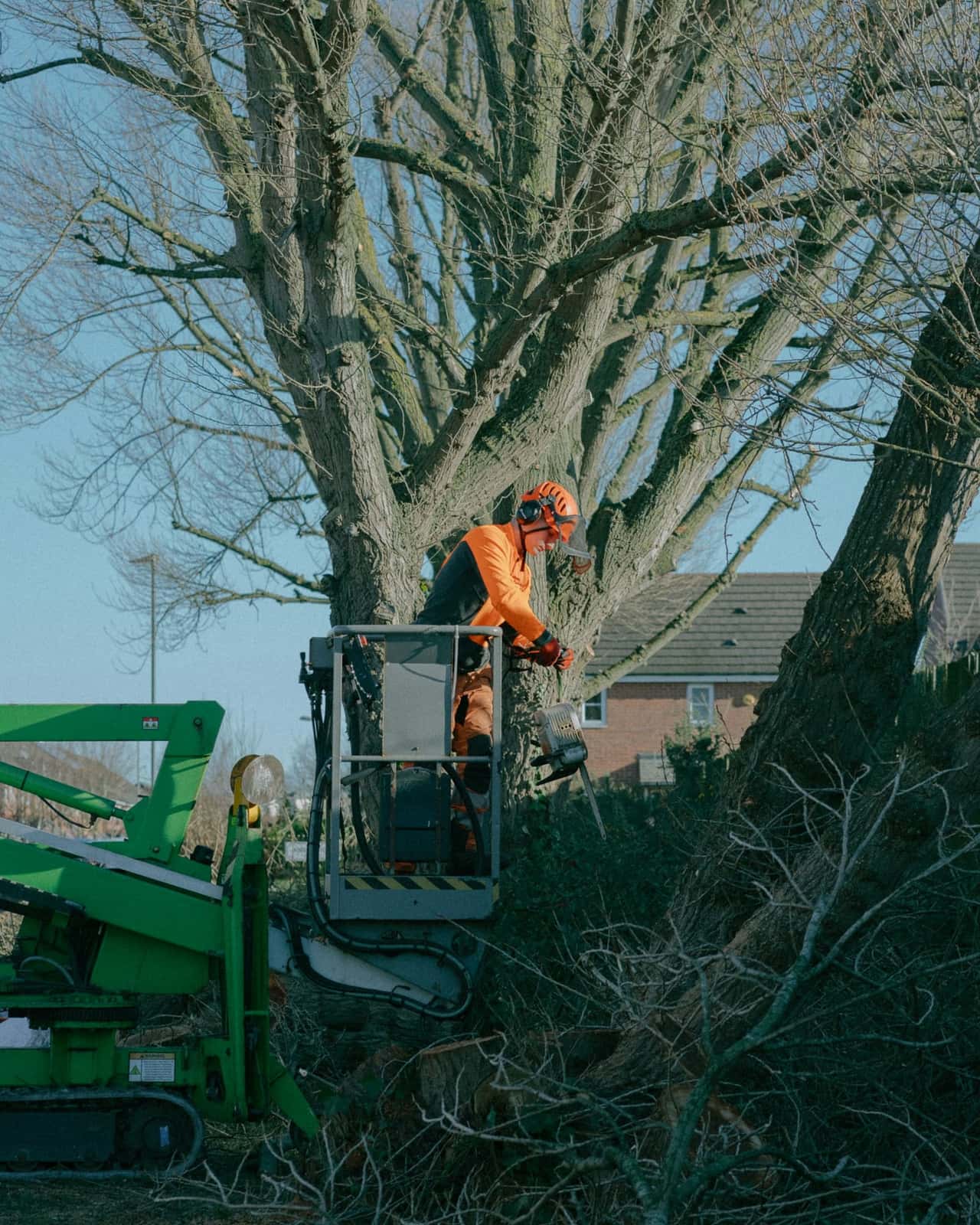
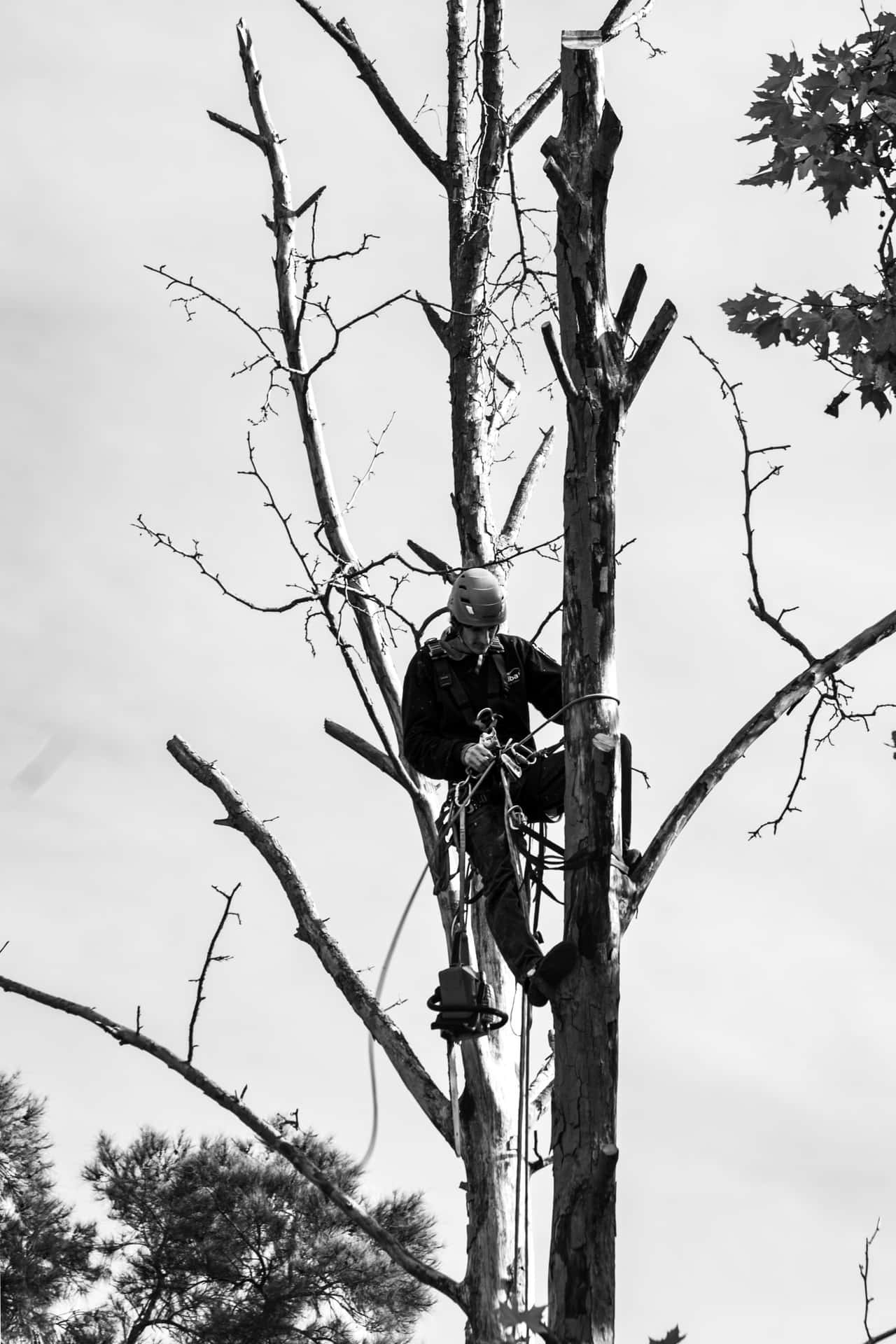
Climbers use ropes and saddles; bucket trucks work where they can reach. Spikes shouldn't be used on trees that are staying.
- 3
Make proper cuts
Cuts are made just outside the branch collar. Large limbs are removed with a three-cut method so bark doesn't tear.
- 4
Clean up
Brush is chipped and hauled, and the yard is raked. Chips are often left on request as mulch.
St. Louis trimming and summer storms
St. Louis sees strong summer thunderstorms, and big pin oaks, silver maples and sweetgums in older neighborhoods carry heavy end weight. Trimming before storm season (removing deadwood, reducing long limbs over roofs and thinning crowded crowns) lowers the chance of a limb coming through the house. It's maintenance, not a guarantee, but it changes how trees handle wind.
Oaks are best pruned outside the spring and early summer window when oak wilt spreads more easily.
Ice storms and alleys
Freezing rain and spring storms bring brittle limbs down onto alleys, garages and lines. Silver maples and Callery pears break first. Reducing long limbs over the alley and garage before winter is the most useful pruning many St. Louis owners can do.
Brick homes and backyard access
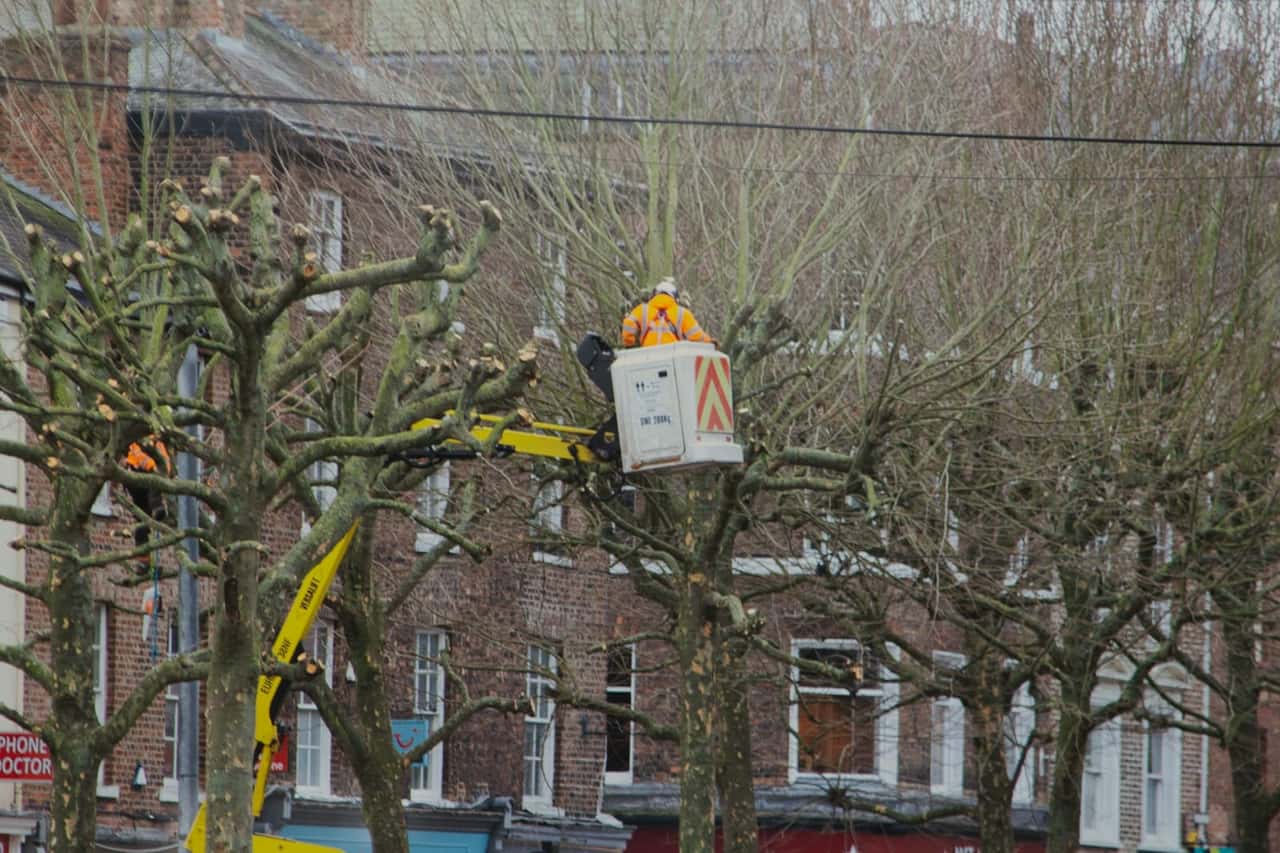
Many St. Louis homes are brick, close together, with backyards reached from the alley. Crews often prune from the alley with a lift, or climb when access is tight. Tell the company about alley width and overhead lines.
When trimming isn't enough in St. Louis
If a pruning visit turns up decay, a dead leader or root damage, the same crew can usually quote the next step.
For badly declined pin oaks.
For ash killed by emerald ash borer.
After ice storms.
St. Louis tree trimming questions
Do I need a permit to prune the street tree in front of my St. Louis house?
Yes, a Permit to Maintain from the Division of Forestry, issued only to tree services with an ISA Certified Arborist.
Why are my pin oak's leaves yellow?
Probably chlorosis from St. Louis's alkaline soils, which limits iron uptake. Treatment can slow decline.
Can pruning save a declining pin oak?
Pruning removes deadwood but doesn't fix chlorosis; soil treatment matters more. Badly declined trees may need removal.
When should I prune trees over my alley?
Before winter, to reduce limbs that break in ice onto the alley, garage and lines.
Do I need a permit for trees in my own yard?
No. The Permit to Maintain applies to city trees.
Who handles trees on power lines in St. Louis?
Ameren Missouri, and 911 for sparks or fire.
How much does tree trimming cost in St. Louis?
It depends on size, alley access and how much is removed. See the tree trimming cost factors.
Who trims trees near me in St. Louis?
Tree services with an ISA Certified Arborist, required for city trees. You can call us to reach an independent provider.
More tree services in St. Louis
- Tree Removal servicesTaking down a tree you no longer want or can't keep, in sections near buildings.
- Emergency Tree Removal servicesA tree on the house, car, driveway or a line, or one about to fall.
- Storm Damage Tree Removal servicesUprooted, split or snapped trees and hanging limbs after wind, ice or hurricanes.
- Dead Tree Removal servicesDead or dying trees that turn brittle and get riskier to climb every season.
- Hazardous Tree Removal servicesLeaning, cracked or decayed trees that could hit something if they fail.
- Large Tree Removal servicesBig trees close to structures that need rigging or a crane.
- Stump Grinding & Removal servicesGrinding stumps below grade so you can replant, sod or build.
- Tree Risk Assessment servicesAn arborist's opinion on whether a tree can stay, before you remove it.
- Commercial Tree ServicesTree work for HOAs, property managers and commercial sites.
- Land Clearing servicesClearing brush, trees and stumps from a lot by mulching or excavation.
- Stump Removal servicesDigging out the stump and root ball where something will be built or planted.
- Tree Cutting servicesBringing a tree down safely: felled in one piece or cut down in sections.
- Palm Tree Removal servicesDead, diseased or unwanted palms, crown first, then the trunk.
- Oak Tree Removal servicesOaks with permits, oak wilt timing and heavy wood to plan around.
- Pine Tree Removal servicesTall, beetle-killed or storm-damaged pines near the house.
- Emergency Tree Trimming servicesBroken, hanging or cracked limbs over a roof, drive or path.
- Emergency Tree Cutting servicesCutting a fallen tree off a car, driveway, fence or road.
Tell us what's happening and we'll connect you with a tree-service provider serving your area.
Call for tree serviceTree service areas near St. Louis
Sources for the local facts on this page
- City of St. Louis: Permit to Maintain (checked 2026-10-03)
- City of St. Louis: Report tree problems (checked 2026-10-03)
Tree trimming in St. Louis
Call to speak with a local tree-service provider about removal, trimming, stumps or storm damage. Describe the tree and what it's near, and they'll explain the next step.
By calling, you agree that your call may be recorded and routed to an independent local tree-service provider, who may call or text you back about your request. Calling is free and does not obligate you to hire anyone. See our Privacy Policy.