
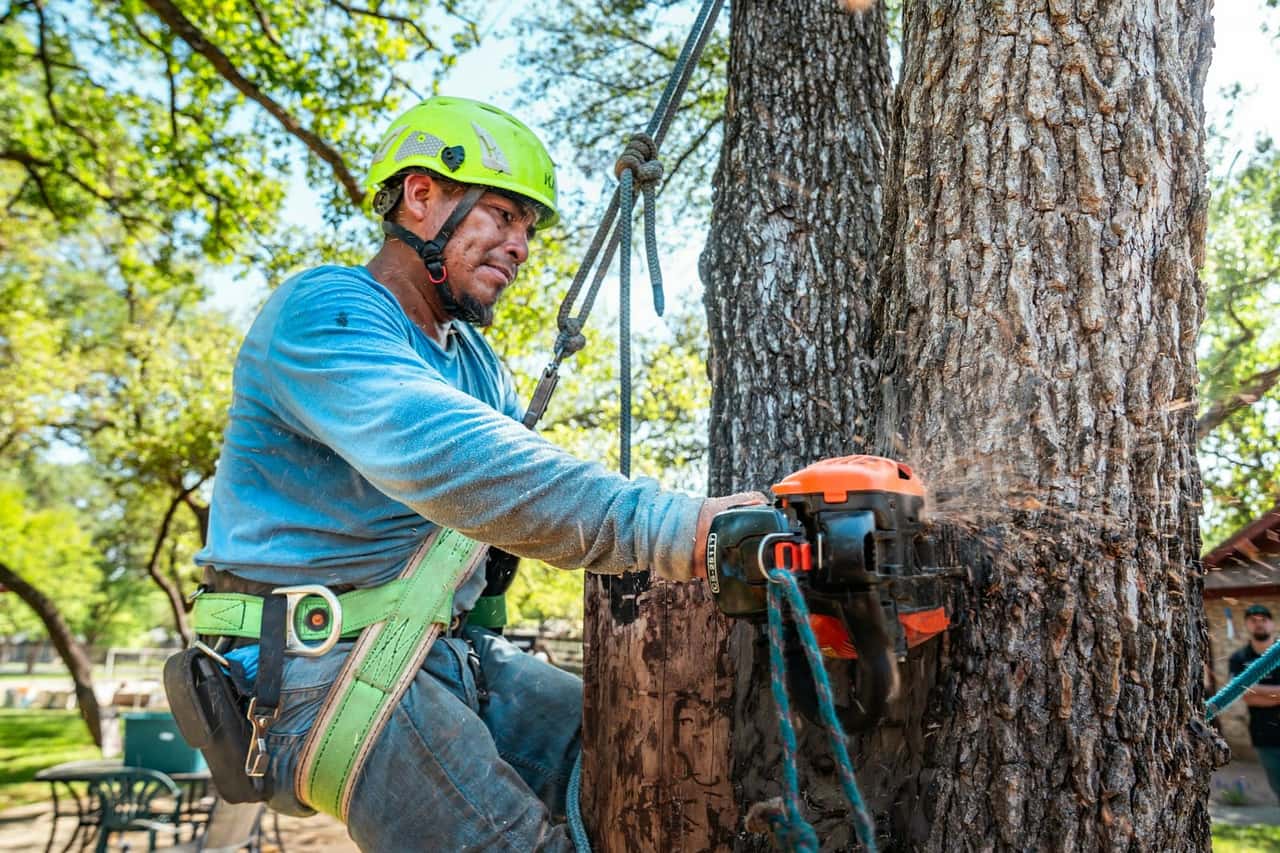
Tree Risk Assessment · Texas
Tree Risk Assessment in San Antonio, TX
By calling, you agree that your call may be recorded and routed to an independent local tree-service provider, who may call or text you back about your request. Calling is free and does not obligate you to hire anyone. See our Privacy Policy.
- Free to call
- Independent local providers
- You decide
Tree problems in San Antonio, TX that call for arborist risk assessment
- 1
Oak wilt in live oak stands
Root-connected live oaks let the disease spread tree to tree. Trenching, careful pruning timing and removal of infected red oaks are standard tools.
- 2
Drought on thin soils
North-side trees on limestone have little soil water to draw on and decline in dry years.
- 3
Spring storms and hail
Severe thunderstorms bring hail and damaging winds, mainly in spring.
What tree risk assessment covers
A tree risk assessment is an arborist's evaluation of how likely a tree (or part of it) is to fail, what it would hit, and how bad the consequences would be.
How tree risk assessment works, step by step
Describe the tree and what it's near, and you'll reach an independent provider serving San Antonio, TX.
Call for tree serviceTrees in San Antonio, TX that most often need arborist risk assessment
- Live oak
- Dominant native; oak wilt spreads through connected roots
- Texas red oak
- Very susceptible; dies within weeks of infection
- Pecan
- Large and heavy-limbed; river bottoms and older neighborhoods
Tree rules and permits in San Antonio, TX
- San Antonio's tree preservation ordinance (Unified Development Code §35-523) sets rules for significant and heritage trees (24 inches and larger) mainly during development and permitting.
- Lots where construction of one- to three-family dwellings is complete are exempt from those preservation requirements. Historic districts and development projects may still involve review.
Sources (checked 2026-10-01)
Rules change and details depend on your exact property. Confirm with the city or county before work starts. This isn't legal advice.
What affects the price of arborist risk assessment in San Antonio, TX
The usual drivers are size, access, what's under the tree and cleanup; see the full list for arborist risk assessment.
In San Antonio, TX: North-side lots on limestone make stump grinding and root work harder and slower. Older central neighborhoods like Alamo Heights and Monte Vista have very large oaks and pecans near historic homes, where careful rigging is needed.
Tree Risk Assessment in San Antonio, TX: common questions
Do I need a permit for tree Risk Assessment in San Antonio, TX?
San Antonio's tree preservation ordinance (Unified Development Code §35-523) sets rules for significant and heritage trees (24 inches and larger) mainly during development and permitting. Lots where construction of one- to three-family dwellings is complete are exempt from those preservation requirements. Historic districts and development projects may still involve review.
Which trees in San Antonio, TX most often need arborist risk assessment?
Live oak: dominant native; oak wilt spreads through connected roots Texas red oak: very susceptible; dies within weeks of infection Pecan: large and heavy-limbed; river bottoms and older neighborhoods
Oak wilt in live oak stands: what does it mean for arborist risk assessment in San Antonio, TX?
Root-connected live oaks let the disease spread tree to tree. Trenching, careful pruning timing and removal of infected red oaks are standard tools.
Drought on thin soils: what does it mean for arborist risk assessment in San Antonio, TX?
North-side trees on limestone have little soil water to draw on and decline in dry years.
Spring storms and hail: what does it mean for arborist risk assessment in San Antonio, TX?
Severe thunderstorms bring hail and damaging winds, mainly in spring.
How do access and lot layout in San Antonio, TX affect arborist risk assessment?
North-side lots on limestone make stump grinding and root work harder and slower. Older central neighborhoods like Alamo Heights and Monte Vista have very large oaks and pecans near historic homes, where careful rigging is needed.
Other tree services in San Antonio, TX
- Tree Removal in San Antonio, TX
- Emergency Tree Removal in San Antonio, TX
- Storm Damage Tree Removal in San Antonio, TX
- Tree Trimming & Pruning in San Antonio, TX
- Stump Grinding & Removal in San Antonio, TX
- Dead Tree Removal in San Antonio, TX
- Hazardous Tree Removal in San Antonio, TX
- Large Tree Removal in San Antonio, TX
- Commercial Tree Services in San Antonio, TX
- Land Clearing in San Antonio, TX
- Stump Removal in San Antonio, TX
- Tree Cutting in San Antonio, TX
- Palm Tree Removal in San Antonio, TX
- Oak Tree Removal in San Antonio, TX
- Pine Tree Removal in San Antonio, TX
- Emergency Tree Trimming in San Antonio, TX
- Emergency Tree Cutting in San Antonio, TX
Tree Risk Assessment nearby
More about San Antonio, TX: tree removal in San Antonio, TX · all locations
Need arborist risk assessment in San Antonio, TX?
Call to reach an independent tree-service provider that serves San Antonio, TX. Calling is free and you decide whether to hire anyone.
By calling, you agree that your call may be recorded and routed to an independent local tree-service provider, who may call or text you back about your request. Calling is free and does not obligate you to hire anyone. See our Privacy Policy.