Orlando, FL · dangerous trees
Hazardous tree removal in Orlando
In Orlando, the most common hazardous tree is an aging laurel oak: fast-growing mid-century trees that decay from the inside after 50 to 70 years and fail in storms. The city regulates removal of trees 6 inches and larger, but on a single-family lot, Florida's §163.045 lets you remove a tree an ISA-certified arborist documents as an unacceptable risk without a city permit.
Orlando at a glance
- Biggest hazard
- Laurel oaks past 50–70 years with internal decay
- City rule
- Application to remove trees 6 in. DBH and up
- Heritage trees
- Mature live oak, bald cypress, southern magnolia
- Exemption
- Fla. Stat. 163.045 with an arborist's risk documentation
Reviewed and updated
Why laurel oaks fail in Orlando
Laurel oaks were planted widely across Orlando's mid-century neighborhoods because they grow fast. They're also short-lived: after 50 to 70 years, decay spreads through the trunk and main limbs, often with few outward signs. Hurricanes Ian (2022) and Milton (2024) brought many of them down across Central Florida, sometimes whole trees on sandy, saturated soil.
Warning signs include mushrooms or conks on the trunk or roots, cavities, dead upper limbs, and limbs that drop on calm days.
The arborist exemption is usually the fastest route
The City of Orlando requires an application to remove trees 6 inches DBH or larger, and treats mature live oaks, bald cypress and southern magnolias as heritage trees with additional requirements. For a decaying laurel oak at a single-family home, Florida Statute 163.045 usually matters more: with written documentation from an ISA-certified arborist or Florida licensed landscape architect that the tree poses an unacceptable risk, the city can't require a permit, fee or replanting.
Taking down a decayed laurel oak
- 1
Assess the tree and its fall zone
The crew works out which way the tree or its parts could fail and what's in the way before anyone starts cutting.
- 2
Choose a method that doesn't rely on the defect
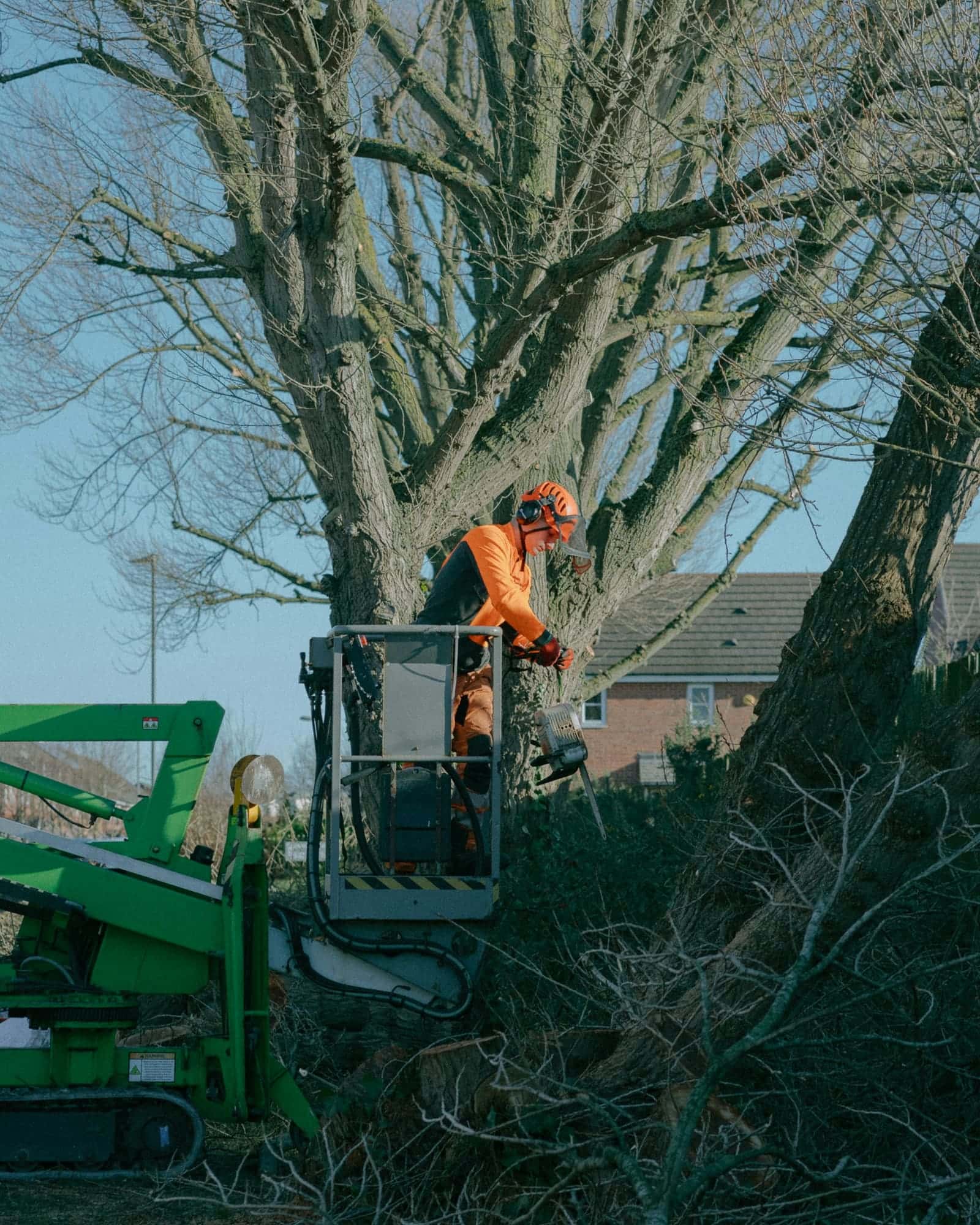
A cracked or decayed tree may not hold a climber's weight or rigging, so lifts and cranes are used to take it apart from outside the tree.
- 3
Make it safe in stages
The most dangerous parts, such as hanging limbs or the heavy side of a leaning tree, come off first to reduce the load.
- 4
Finish and clean up
The remaining trunk is taken down in sections, wood is hauled or left as agreed, and the stump is cut low or ground.
Getting the arborist documentation right
The Florida exemption depends on the paperwork. The assessment has to be an onsite evaluation under the ISA's tree risk assessment procedures, signed by an ISA-certified arborist or Florida licensed landscape architect, concluding that the tree poses an unacceptable risk, meaning removal is the only practical way to bring the risk below moderate. Keep a copy; the city can ask to see it.
Ask the arborist to note species, size, defects and targets (the house, driveway, a neighbor's roof). A decaying laurel oak over a bedroom is a very different case from one over an empty side yard.
Lightning-struck pines
Central Florida is one of the most lightning-prone places in the country. Struck slash pines often show a spiral strip of missing bark, and they frequently decline over weeks to months as beetles move in. A struck pine near the house should be watched closely and usually removed if needles brown or pitch tubes appear.
Hazard trees: what you can do and what to leave
Safe for a homeowner
- Keep people, pets and cars out of the area the tree could reach, roughly its height in every direction.
- Photograph the defect now and over the following weeks; changes help an arborist judge urgency.
- Call your electric utility if the tree threatens power lines.
- Tell your neighbor in writing if the tree is on your property and could fall onto theirs.
Leave these to professionals
- Don't climb or cut a cracked, leaning or decayed tree yourself; it can fail without warning when cut.
- Don't pile soil or park vehicles around the base of a leaning tree.
- Don't wait through storm season if the tree can reach the house.
Next steps for an Orlando hazard tree
Documentation, removal and what comes after.
For the arborist documentation 163.045 requires.
If the tree has already failed in a storm.
After removal.
Orlando hazardous tree questions
How do I know if my laurel oak is dangerous?
Look for mushrooms or conks, cavities, dead upper limbs and limbs dropping on calm days. Laurel oaks over 50 years old often have hidden decay, so have one near the house assessed.
Do I need a city permit to remove a hazardous tree in Orlando?
Normally, trees 6 inches and larger need an application. On a single-family lot, an arborist's written finding of unacceptable risk lets you skip the permit under Florida Statute 163.045.
What are heritage trees in Orlando?
Mature live oaks, bald cypress and southern magnolias, which carry extra requirements before removal.
Will a lightning-struck pine die?
Often, over weeks to months as beetles attack. Watch for browning needles and pitch tubes, and remove it if it's near the house.
Should I replace my laurel oak with another laurel oak?
Most arborists suggest a longer-lived, wind-firm species like live oak or sabal palm, planted with room to grow.
Can a decaying laurel oak be saved with pruning?
Pruning can reduce weight but won't fix trunk decay. If decay is advanced, removal is usually safer.
How much does hazardous tree removal cost in Orlando?
It depends on size, decay that rules out climbing, access and crane needs. See the tree removal cost guide.
Who removes hazardous trees near me in Orlando?
Insured local tree services, ideally with an ISA-certified arborist. You can call us to reach an independent provider in Orlando.
Sources for the local facts on this page
- City of Orlando: Tree ordinance (agenda attachment) (checked 2026-10-03)
- Florida Statutes §163.045 (checked 2026-10-03)
Hazardous tree removal in Orlando
Call to speak with a local tree-service provider about removal, trimming, stumps or storm damage. Describe the tree and what it's near, and they'll explain the next step.