
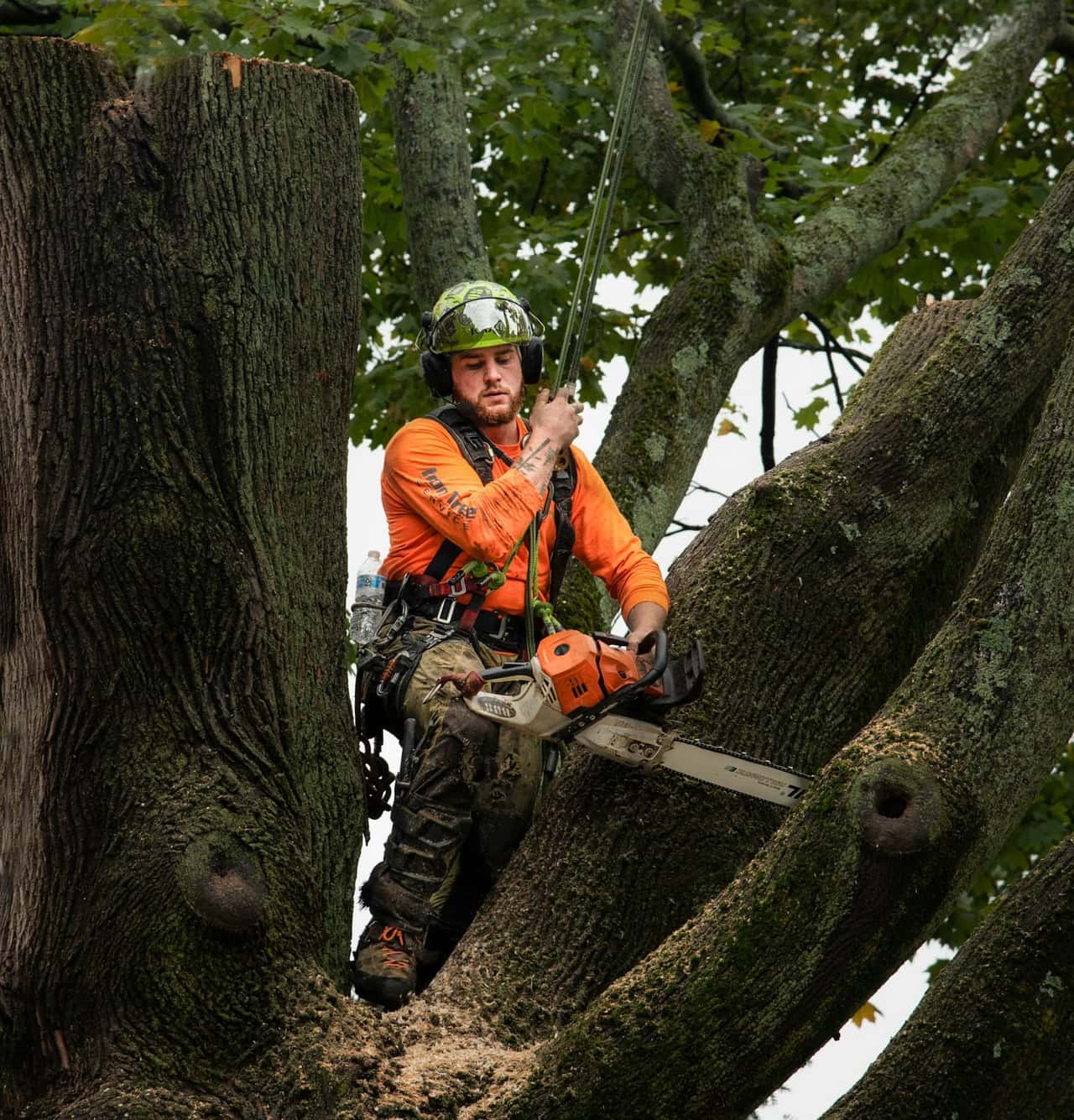
Hazardous Tree Removal · California
Hazardous Tree Removal in Sacramento, CA
By calling, you agree that your call may be recorded and routed to an independent local tree-service provider, who may call or text you back about your request. Calling is free and does not obligate you to hire anyone. See our Privacy Policy.
- Free to call
- Independent local providers
- You decide
Tree problems in Sacramento, CA that call for hazardous tree removal
- 1
Winter storms on saturated soil
Atmospheric rivers bring wind and heavy rain; large trees uproot (January 2023).
- 2
Protected natives
Valley oaks and other natives need permits, and summer watering at the trunk harms them.
- 3
Aging planted canopy
Century-old elms, sycamores and oaks in central neighborhoods are declining.
What hazardous tree removal covers
A hazardous tree is a living tree with a defect, such as a crack, decay, a failing root plate or a new lean, that makes it likely to fail onto something that matters: a house, a driveway, a street or a place people use.
How hazardous tree removal works, step by step · part of tree removal
Describe the tree and what it's near, and you'll reach an independent provider serving Sacramento, CA.
Call for tree serviceTrees in Sacramento, CA that most often need hazardous tree removal
- Valley oak
- Protected at 12 inches; sensitive to irrigation and root damage
- American and Chinese elm
- Large, aging; Dutch elm disease risk for American elms
- London plane / sycamore
- Common; anthracnose and large limbs
Tree rules and permits in Sacramento, CA
- Sacramento City Code 12.56 protects private trees: native Valley oak, blue oak, interior live oak, coast live oak, California buckeye and California sycamore at 12 inches DSH or more, and any tree at 24 inches or more on undeveloped land or commercial, industrial or apartment properties.
- Approved permits are required before work on city trees or private protected trees.
Sources (checked 2026-10-01)
Rules change and details depend on your exact property. Confirm with the city or county before work starts. This isn't legal advice.
What affects the price of hazardous tree removal in Sacramento, CA
The usual drivers are size, access, what's under the tree and cleanup; see the full list for hazardous tree removal.
In Sacramento, CA: Older neighborhoods have alleys, detached garages and overhead lines under large canopies, so many removals are rigged out over garages and fences rather than dropped. Newer suburbs in Natomas and south Sacramento have smaller trees but tighter lots, and many were built where valley oaks once stood, so remaining native oaks there are often protected.
Hazardous Tree Removal in Sacramento, CA: common questions
Do I need a permit for hazardous Tree Removal in Sacramento, CA?
Sacramento City Code 12.56 protects private trees: native Valley oak, blue oak, interior live oak, coast live oak, California buckeye and California sycamore at 12 inches DSH or more, and any tree at 24 inches or more on undeveloped land or commercial, industrial or apartment properties. Approved permits are required before work on city trees or private protected trees.
Which trees in Sacramento, CA most often need hazardous tree removal?
Valley oak: protected at 12 inches; sensitive to irrigation and root damage American and Chinese elm: large, aging; Dutch elm disease risk for American elms London plane / sycamore: common; anthracnose and large limbs
Winter storms on saturated soil: what does it mean for hazardous tree removal in Sacramento, CA?
Atmospheric rivers bring wind and heavy rain; large trees uproot (January 2023).
Protected natives: what does it mean for hazardous tree removal in Sacramento, CA?
Valley oaks and other natives need permits, and summer watering at the trunk harms them.
Aging planted canopy: what does it mean for hazardous tree removal in Sacramento, CA?
Century-old elms, sycamores and oaks in central neighborhoods are declining.
How do access and lot layout in Sacramento, CA affect hazardous tree removal?
Older neighborhoods have alleys, detached garages and overhead lines under large canopies, so many removals are rigged out over garages and fences rather than dropped. Newer suburbs in Natomas and south Sacramento have smaller trees but tighter lots, and many were built where valley oaks once stood, so remaining native oaks there are often protected.
Other tree services in Sacramento, CA
- Tree Removal in Sacramento, CA
- Emergency Tree Removal in Sacramento, CA
- Storm Damage Tree Removal in Sacramento, CA
- Tree Trimming & Pruning in Sacramento, CA
- Stump Grinding & Removal in Sacramento, CA
- Dead Tree Removal in Sacramento, CA
- Large Tree Removal in Sacramento, CA
- Tree Risk Assessment in Sacramento, CA
- Commercial Tree Services in Sacramento, CA
- Land Clearing in Sacramento, CA
- Stump Removal in Sacramento, CA
- Tree Cutting in Sacramento, CA
- Palm Tree Removal in Sacramento, CA
- Oak Tree Removal in Sacramento, CA
- Pine Tree Removal in Sacramento, CA
- Emergency Tree Trimming in Sacramento, CA
- Emergency Tree Cutting in Sacramento, CA
Hazardous Tree Removal nearby
More about Sacramento, CA: tree removal in Sacramento, CA · all locations
Need hazardous tree removal in Sacramento, CA?
Call to reach an independent tree-service provider that serves Sacramento, CA. Calling is free and you decide whether to hire anyone.
By calling, you agree that your call may be recorded and routed to an independent local tree-service provider, who may call or text you back about your request. Calling is free and does not obligate you to hire anyone. See our Privacy Policy.