
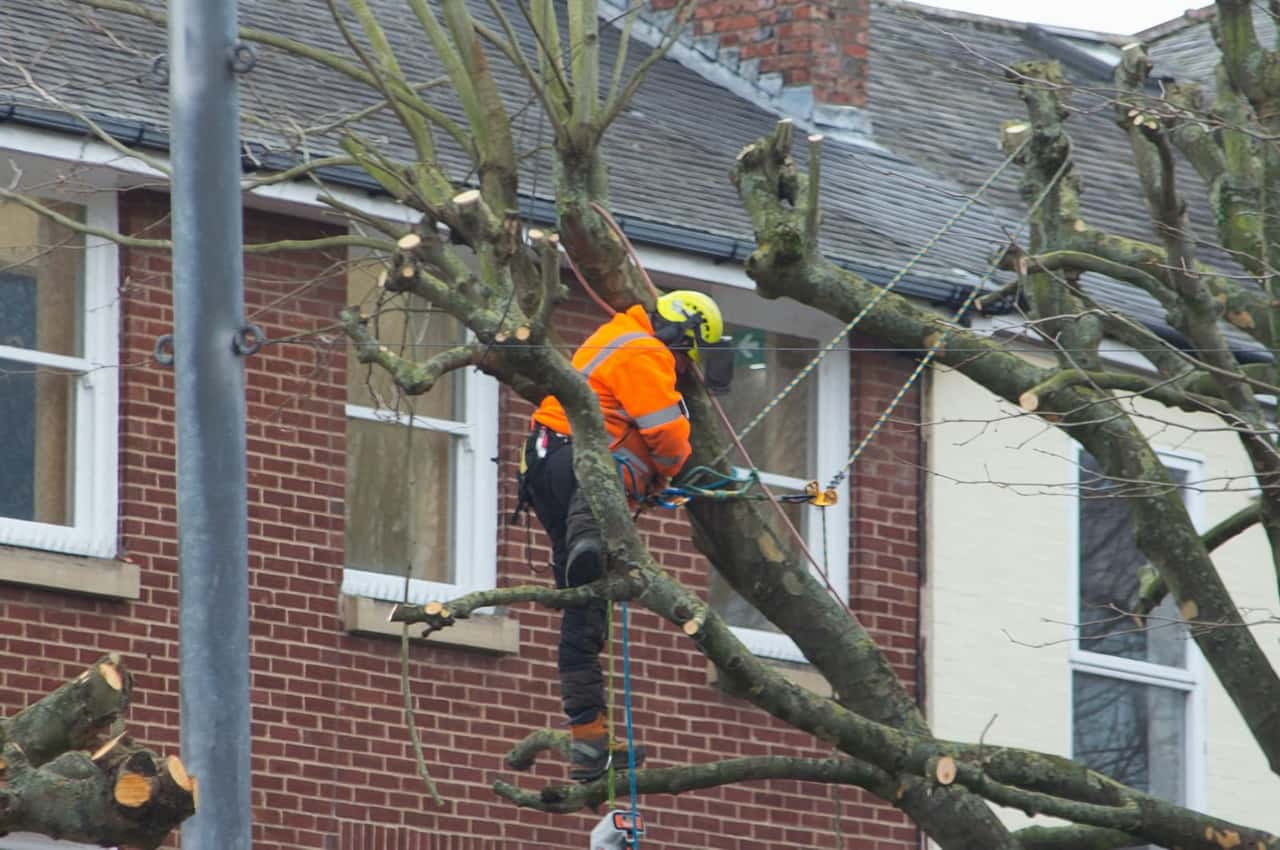
Hazardous Tree Removal · Illinois
Hazardous Tree Removal in Cook County, IL
By calling, you agree that your call may be recorded and routed to an independent local tree-service provider, who may call or text you back about your request. Calling is free and does not obligate you to hire anyone. See our Privacy Policy.
- Free to call
- Independent local providers
- You decide
Tree problems in Cook County, IL that call for hazardous tree removal
- 1
Storms: derechos, downbursts and lake-effect ice
Summer derechos and downbursts cross the county from the west, like the August 2020 derecho that split and uprooted trees across Chicago and the suburbs. Silver maples, Callery pears and declining ash are the usual casualties. In winter, freezing rain and heavy snow add weight to limbs over alleys, garages and service drops.
- 2
Forest Preserve land next to your yard
The Forest Preserves of Cook County manage more than 70,000 acres of woods, prairies and wetlands, and many suburban backyards border them. Trees on preserve land belong to the Forest Preserves, even when they lean over your fence. Don't cut or remove them; report a hazardous preserve tree to the Forest Preserves. You can generally trim branches that cross onto your property, as long as you don't damage the tree.
- 3
Who sets the rules for your address
Cook County is made up of Chicago, more than a hundred suburbs and pockets of unincorporated land. The county's own tree rules only apply in the unincorporated areas. Inside Chicago, the Department of Streets and Sanitation's Bureau of Forestry owns and maintains parkway trees; inside a suburb like Oak Park, Evanston or Skokie, that village or city sets its own permit requirements, which are often stricter than the county's.
What hazardous tree removal covers
A hazardous tree is a living tree with a defect, such as a crack, decay, a failing root plate or a new lean, that makes it likely to fail onto something that matters: a house, a driveway, a street or a place people use.
How hazardous tree removal works, step by step · part of tree removal
Describe the tree and what it's near, and you'll reach an independent provider serving Cook County, IL.
Call for tree serviceCook County, IL at a glance
- County ordinance
- Chapter 126: Tree Preservation, Landscaping and Screening (unincorporated areas)
- Trees covered
- Deciduous trees over 6 in. trunk diameter; evergreens 10 ft or taller, on unimproved or partly improved land
- Applies to
- Unincorporated Cook County only; Chicago and suburbs have their own rules
- Main pest
- Emerald ash borer, confirmed in Illinois in 2006
- Forest Preserves
- 70,000+ acres of public natural land run by the Forest Preserves of Cook County
Local sources for Cook County, IL
What affects the price of hazardous tree removal in Cook County, IL
The usual drivers are size, access, what's under the tree and cleanup; see the full list for hazardous tree removal.
Hazardous Tree Removal in Cook County, IL: common questions
Storms: derechos, downbursts and lake-effect ice: what does it mean for hazardous tree removal in Cook County, IL?
Summer derechos and downbursts cross the county from the west, like the August 2020 derecho that split and uprooted trees across Chicago and the suburbs. Silver maples, Callery pears and declining ash are the usual casualties. In winter, freezing rain and heavy snow add weight to limbs over alleys, garages and service drops.
Forest Preserve land next to your yard: what does it mean for hazardous tree removal in Cook County, IL?
The Forest Preserves of Cook County manage more than 70,000 acres of woods, prairies and wetlands, and many suburban backyards border them. Trees on preserve land belong to the Forest Preserves, even when they lean over your fence. Don't cut or remove them; report a hazardous preserve tree to the Forest Preserves. You can generally trim branches that cross onto your property, as long as you don't damage the tree.
Who sets the rules for your address: what does it mean for hazardous tree removal in Cook County, IL?
Cook County is made up of Chicago, more than a hundred suburbs and pockets of unincorporated land. The county's own tree rules only apply in the unincorporated areas. Inside Chicago, the Department of Streets and Sanitation's Bureau of Forestry owns and maintains parkway trees; inside a suburb like Oak Park, Evanston or Skokie, that village or city sets its own permit requirements, which are often stricter than the county's.
County ordinance: what it means for hazardous tree removal in Cook County, IL?
Chapter 126: Tree Preservation, Landscaping and Screening (unincorporated areas)
Trees covered: what it means for hazardous tree removal in Cook County, IL?
Deciduous trees over 6 in. trunk diameter; evergreens 10 ft or taller, on unimproved or partly improved land
Other tree services in Cook County, IL
- Tree Removal in Cook County, IL
- Emergency Tree Removal in Cook County, IL
- Storm Damage Tree Removal in Cook County, IL
- Tree Trimming & Pruning in Cook County, IL
- Stump Grinding & Removal in Cook County, IL
- Dead Tree Removal in Cook County, IL
- Large Tree Removal in Cook County, IL
- Tree Risk Assessment in Cook County, IL
- Commercial Tree Services in Cook County, IL
- Land Clearing in Cook County, IL
- Stump Removal in Cook County, IL
- Tree Cutting in Cook County, IL
- Palm Tree Removal in Cook County, IL
- Oak Tree Removal in Cook County, IL
- Pine Tree Removal in Cook County, IL
- Emergency Tree Trimming in Cook County, IL
- Emergency Tree Cutting in Cook County, IL
Hazardous Tree Removal nearby
More about Cook County, IL: tree removal in Cook County, IL · all locations
Need hazardous tree removal in Cook County, IL?
Call to reach an independent tree-service provider that serves Cook County, IL. Calling is free and you decide whether to hire anyone.
By calling, you agree that your call may be recorded and routed to an independent local tree-service provider, who may call or text you back about your request. Calling is free and does not obligate you to hire anyone. See our Privacy Policy.