
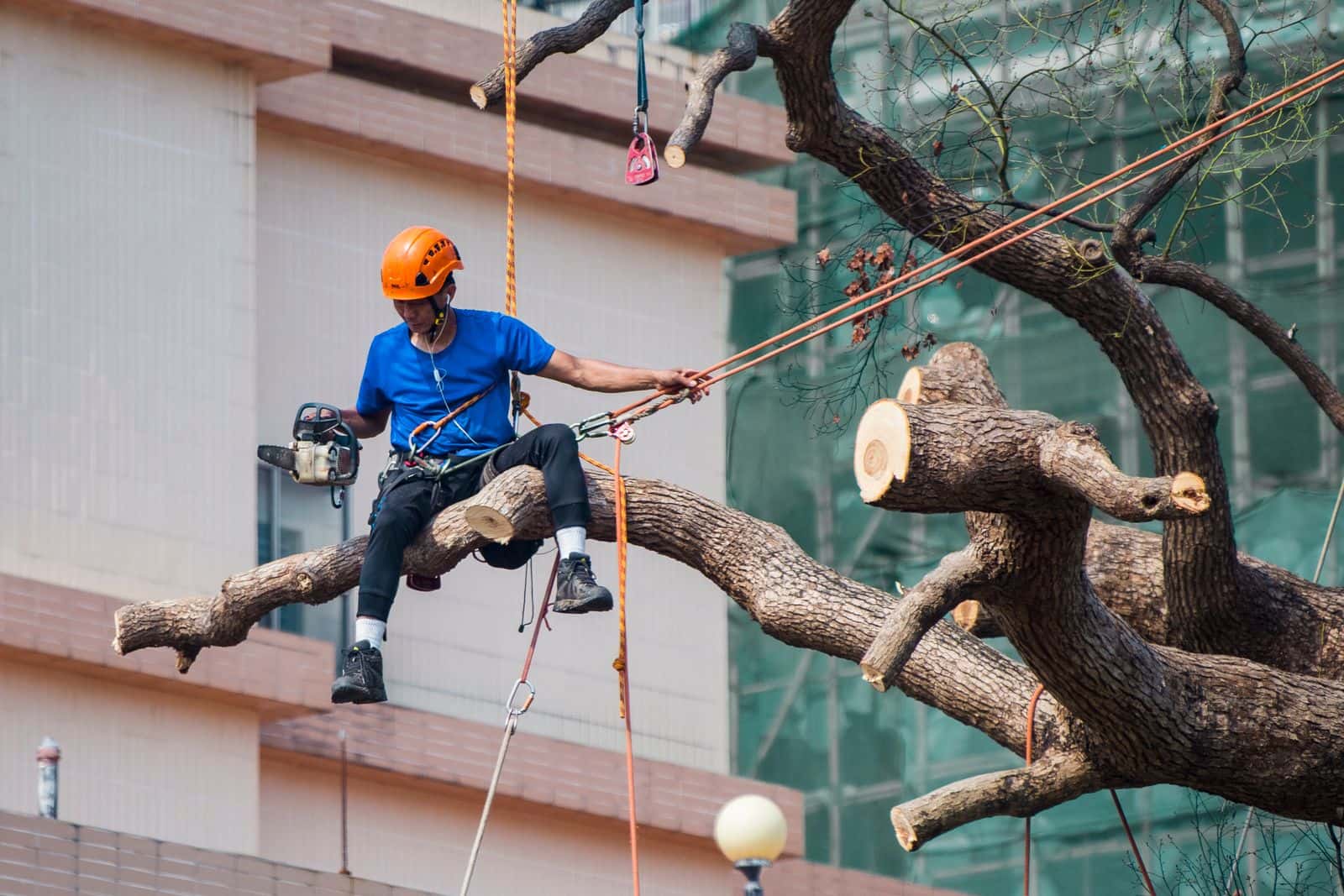
Miami, FL · dangerous trees
Hazardous tree removal in Miami
In Miami, the hazard trees are usually overgrown ficus and black olives with heavy crowns on shallow roots over limestone, mahogany with failing limbs, and palms with damaged trunks. Miami-Dade exempts non-specimen trees (under 18 inches) in single-family yards from its removal permit, and Florida's §163.045 lets you remove any dangerous residential tree with an arborist's documentation.
Miami at a glance
- Main hazards
- Ficus, black olive, mahogany limbs, damaged palms
- Root issue
- Shallow roots on limestone
- County exemption
- Non-specimen trees (<18 in.) in single-family yards
- State exemption
- Fla. Stat. 163.045 with arborist documentation
Reviewed and updated
Miami's hazard trees
Ficus
- Why it becomes hazardous
- Huge, heavy crowns on shallow roots; roots lift slabs and invade pipes
Black olive
- Why it becomes hazardous
- Dense, heavy crowns that catch hurricane wind
Mahogany
- Why it becomes hazardous
- Large limbs fail over roofs
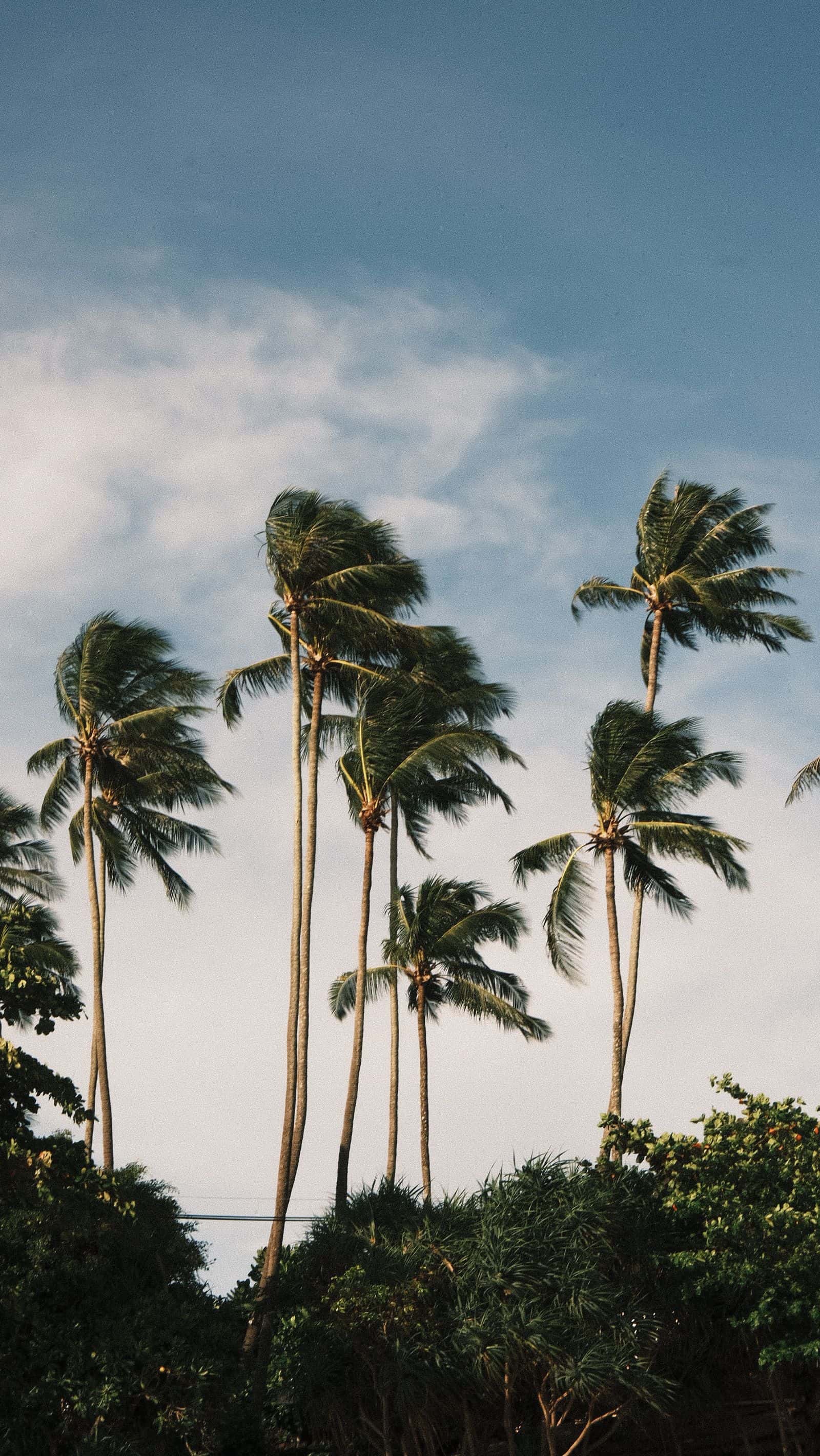
Coconut palm
- Why it becomes hazardous
- Heavy nuts and fronds fall; trunks snap in strong wind
Any tree on limestone
- Why it becomes hazardous
- Limited rooting depth; topples in saturated soil
Hurricane-damaged trees that stayed up
After a hurricane, the most dangerous trees are sometimes the ones still standing: a black olive with a cracked trunk, a ficus with a lifted root plate, a palm with a kinked trunk. Damage that wasn't obvious the day after a storm can fail in the next one. Have survivors near the house assessed within a few weeks of the storm.
Which permit path applies
Miami-Dade's Chapter 24 requires permits for most removals, but exempts non-specimen trees, under 18 inches in diameter, from the yard of an existing single-family home, as well as certain invasive species. Specimen trees, 18 inches and larger, get the strictest review. For any tree on a single-family lot, Florida Statute 163.045 lets you skip the local permit if an ISA-certified arborist or Florida licensed landscape architect documents that it poses an unacceptable risk. Some municipalities in the county have their own rules.
Removing a big ficus or black olive safely
- 1
Assess the tree and its fall zone
The crew works out which way the tree or its parts could fail and what's in the way before anyone starts cutting.
- 2
Choose a method that doesn't rely on the defect
A cracked or decayed tree may not hold a climber's weight or rigging, so lifts and cranes are used to take it apart from outside the tree.
- 3
Make it safe in stages
The most dangerous parts, such as hanging limbs or the heavy side of a leaning tree, come off first to reduce the load.
- 4
Finish and clean up
The remaining trunk is taken down in sections, wood is hauled or left as agreed, and the stump is cut low or ground.
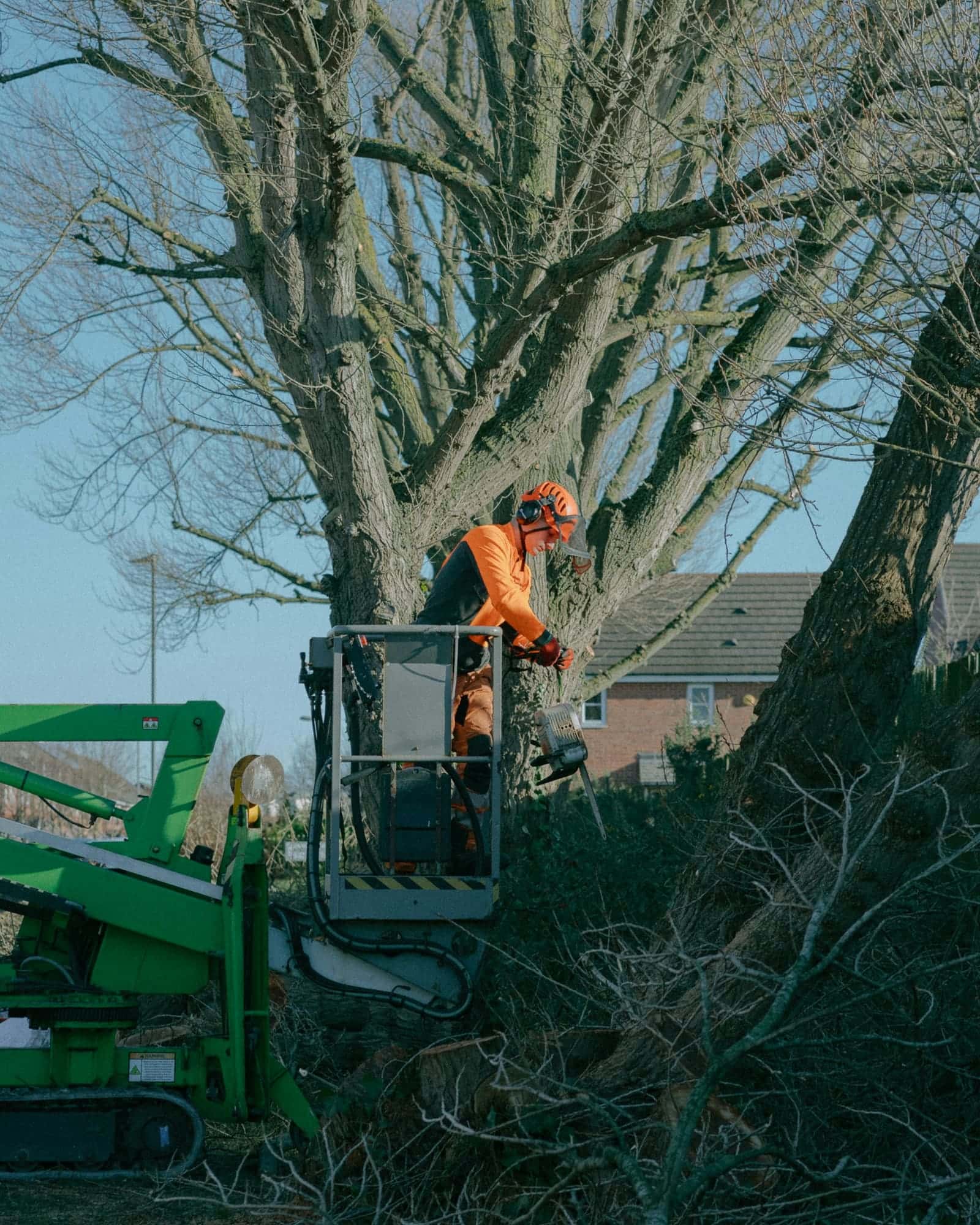
Hazard trees: do and don't
Safe for a homeowner
- Keep people, pets and cars out of the area the tree could reach, roughly its height in every direction.
- Photograph the defect now and over the following weeks; changes help an arborist judge urgency.
- Call your electric utility if the tree threatens power lines.
- Tell your neighbor in writing if the tree is on your property and could fall onto theirs.
Leave these to professionals
- Don't climb or cut a cracked, leaning or decayed tree yourself; it can fail without warning when cut.
- Don't pile soil or park vehicles around the base of a leaning tree.
- Don't wait through storm season if the tree can reach the house.
Before hurricane season
Hazard trees near houses should be dealt with in the dry season, December through May. Once a storm is forecast, crews are booked and cut wood becomes debris. Overgrown ficus near walls, pools and slabs are often removal candidates rather than pruning ones, because their roots cause damage that pruning can't fix.
Next steps in Miami
In Miami, the order is usually: document the risk, remove the tree, then deal with the stump and roots, which for ficus matters as much as the trunk.
For documentation under the state exemption.
After removal, especially ficus.
For trees worth keeping.
Miami hazardous tree questions
Should I remove the big ficus next to my Miami house?
Often. Ficus have heavy crowns, shallow roots that topple in hurricanes and roots that damage slabs and pipes. Pruning won't fix root damage.
What is a specimen tree in Miami-Dade?
A tree 18 inches or more in diameter. Specimen trees face the strictest review before removal.
Can I remove a dangerous tree in Miami without a permit?
On a single-family lot, yes, with an arborist's written finding of unacceptable risk under Florida Statute 163.045. Smaller non-specimen trees are also exempt from the county permit.
Are black olive trees dangerous in hurricanes?
They can be when overgrown: dense, heavy crowns catch wind. Thinning helps; removal may be safer near the house.
How do I know if a palm trunk is unsafe?
Cracks, a bend or kink in the trunk, rot at the base or a narrowing "pencil point" are warning signs.
When should hazard trees be removed in Miami?
In the dry season, December through May, before hurricane season.
How much does hazardous tree removal cost in Miami?
It depends on size, access around pools and walls and crane needs. See the tree removal cost guide.
Who removes hazardous trees near me in Miami?
Insured local tree companies with arborists. You can call us to reach an independent provider in Miami.
Sources for the local facts on this page
- Miami-Dade County: Tree removal or relocation permits (checked 2026-10-03)
- Florida Statutes §163.045 (checked 2026-10-03)
Hazardous tree removal in Miami
Call to speak with a local tree-service provider about removal, trimming, stumps or storm damage. Describe the tree and what it's near, and they'll explain the next step.