Atlanta, GA · dangerous trees
Hazardous tree removal in Atlanta
In the City of Atlanta, even a dead or hazardous tree 6 inches in diameter or larger on private property needs a permit from the Arborist Division before removal, though dead and hazardous trees are handled differently from healthy ones. In a true emergency, contact the city as soon as you can and document everything. Aging water and red oaks and tall pines cause most hazards.
Atlanta at a glance
- Permit
- Required for trees 6 in. DBH and up, including dead trees
- Issued by
- Office of Buildings, Arborist Division
- Common hazards
- Aging water and southern red oaks, tall loblolly pines
- Outside the city
- Decatur, Sandy Springs, DeKalb and others have their own rules
Reviewed and updated
Why a dangerous tree still needs a permit
Atlanta's tree ordinance requires a permit to remove, destroy or injure any tree 6 inches DBH or larger on private property, regardless of species or condition, and that includes dead trees. The point is verification: the city's arborists confirm that a tree is dead or hazardous, which affects whether replacement planting or recompense to the Tree Trust Fund is required. Healthy trees removed for convenience carry heavier replacement obligations.
Pair the application with an arborist's written assessment describing the defect: decay, a crack, root failure or death. That speeds review and protects you if a neighbor questions the removal.
Replacement planting and the Tree Trust Fund
Approved removals in Atlanta usually come with an obligation to plant replacement trees on the property or pay recompense into the city's Tree Trust Fund. Dead and hazardous trees confirmed by the Arborist Division are treated more lightly than healthy trees removed for convenience, which is another reason to document the defect well. Ask the city what applies before you commit to a replanting plan.
Good replacements for in-town lots are long-lived, well-structured species like white oak and willow oak, planted away from the house and lines so they don't become the next hazard.
When it's an emergency
A tree on a house, split and leaning over a roof, or on a line is an emergency, and safety comes first. The city has an emergency process; contact the Arborist Division as soon as you can, and keep photos and the tree company's description of the hazard. Lines go to Georgia Power and 911 first.
Atlanta's hazardous trees
Water oak, southern red oak
- Typical hazard
- Century-old trees with internal decay and limb drop
Loblolly pine
- Typical hazard
- Snaps or uproots in wind; beetle attack after drought
Tulip poplar
- Typical hazard
- Very tall; large limbs drop
Any tree near new construction
- Typical hazard
- Root damage from in-fill building causes decline years later
Steep, narrow in-town lots
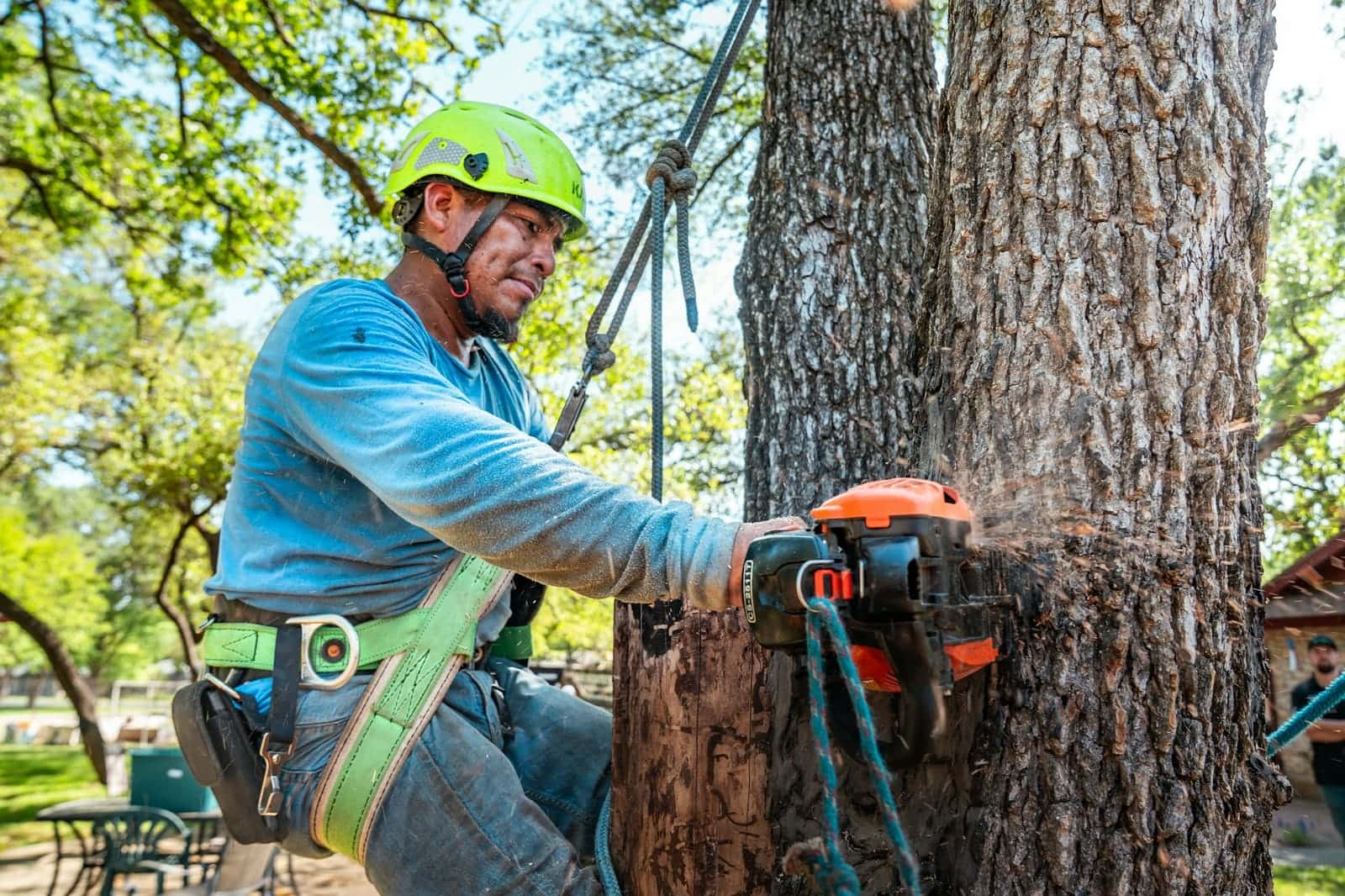
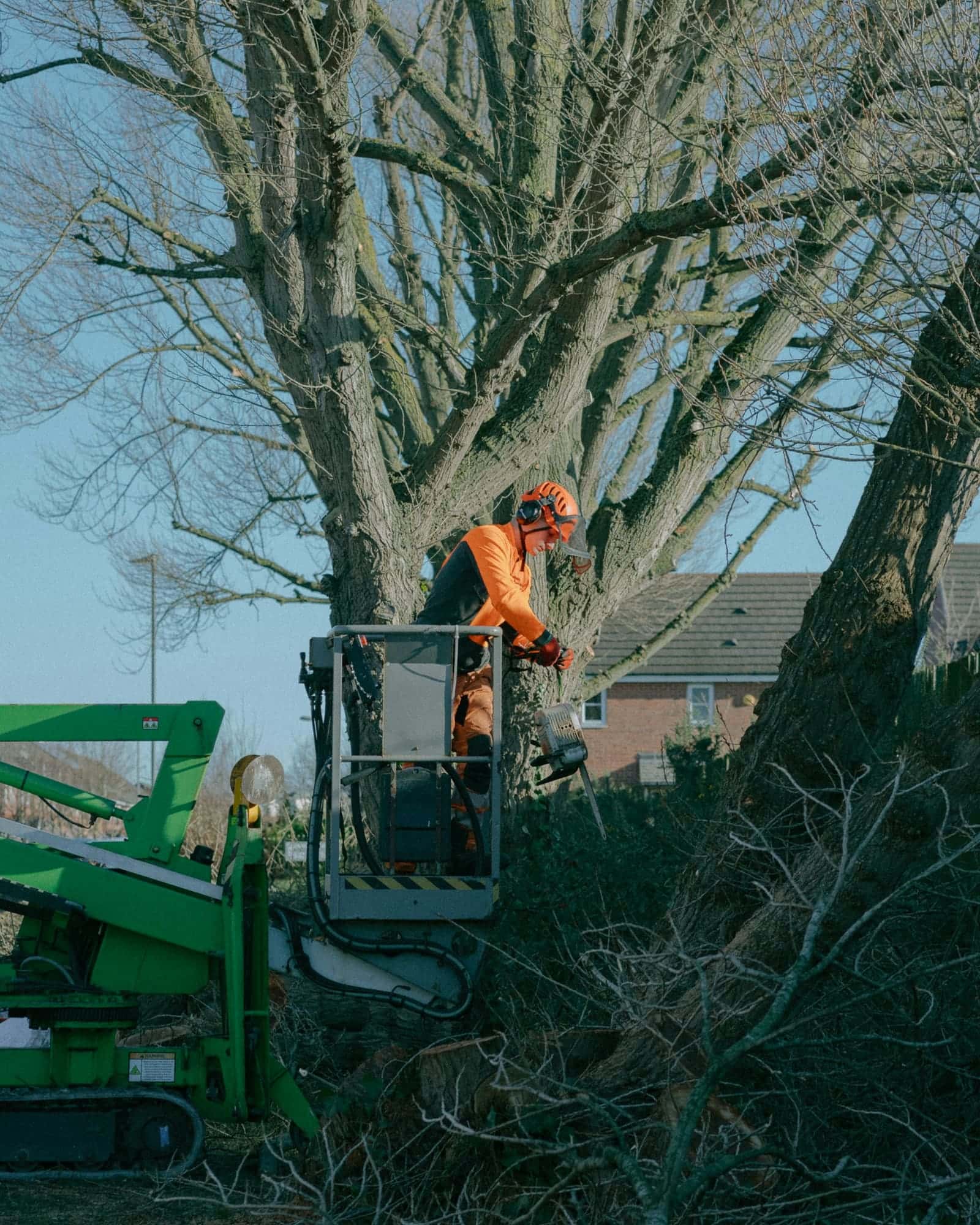
In-town neighborhoods like Kirkwood, Virginia-Highland and Druid Hills have narrow, sometimes steep lots with houses, fences and lines close together. Hazardous removals usually need climbers lowering sections with rigging, or a crane for big trees over houses. Dead or decayed trees often can't be climbed safely, which pushes jobs toward lifts and cranes.
Removing a dangerous oak on an in-town lot
- 1
Assess the tree and its fall zone
The crew works out which way the tree or its parts could fail and what's in the way before anyone starts cutting.
- 2
Choose a method that doesn't rely on the defect
A cracked or decayed tree may not hold a climber's weight or rigging, so lifts and cranes are used to take it apart from outside the tree.
- 3
Make it safe in stages
The most dangerous parts, such as hanging limbs or the heavy side of a leaning tree, come off first to reduce the load.
- 4
Finish and clean up
The remaining trunk is taken down in sections, wood is hauled or left as agreed, and the stump is cut low or ground.
Atlanta hazardous tree questions
Why does Atlanta review a tree that's obviously dead?
The permit covers trees 6 inches DBH or larger even when dead, so the Arborist Division can verify the condition. Confirmed dead or hazardous trees are treated more lightly than healthy removals.
Is replacement required for a hazardous tree in Atlanta?
Dead and hazardous trees are treated differently from healthy ones, and replacement or recompense obligations depend on the city's review. Ask the Arborist Division for your case.
What if a tree falls on my Atlanta house at night?
Get to safety, call 911 and Georgia Power if lines are involved, then have it removed. Contact the city's Arborist Division as soon as possible and keep documentation.
How do I show a tree is hazardous for the permit?
An ISA-certified arborist's written assessment describing the defect, with photos, is the strongest evidence.
Why do so many old oaks in Atlanta fail?
Many water and red oaks in older neighborhoods are near the end of their lifespan and have internal decay; construction around their roots speeds decline.
Do Decatur or Sandy Springs follow Atlanta's tree rules?
No. They have their own ordinances. Check your city's rules if you're outside Atlanta's limits.
What does hazardous tree removal cost in Atlanta?
It depends on size, access on in-town lots, decay that rules out climbing, and crane needs, plus permit-related costs. See the tree removal cost guide.
Who removes hazardous trees near me in Atlanta?
Insured local tree services familiar with Atlanta's permit process. You can call us to reach an independent provider.
Sources for the local facts on this page
- Atlanta Tree Conservation Commission: Tree removal permits (checked 2026-10-03)
- ATL311: Office of Buildings tree permits (checked 2026-10-03)
Hazardous tree removal in Atlanta
Call to speak with a local tree-service provider about removal, trimming, stumps or storm damage. Describe the tree and what it's near, and they'll explain the next step.