
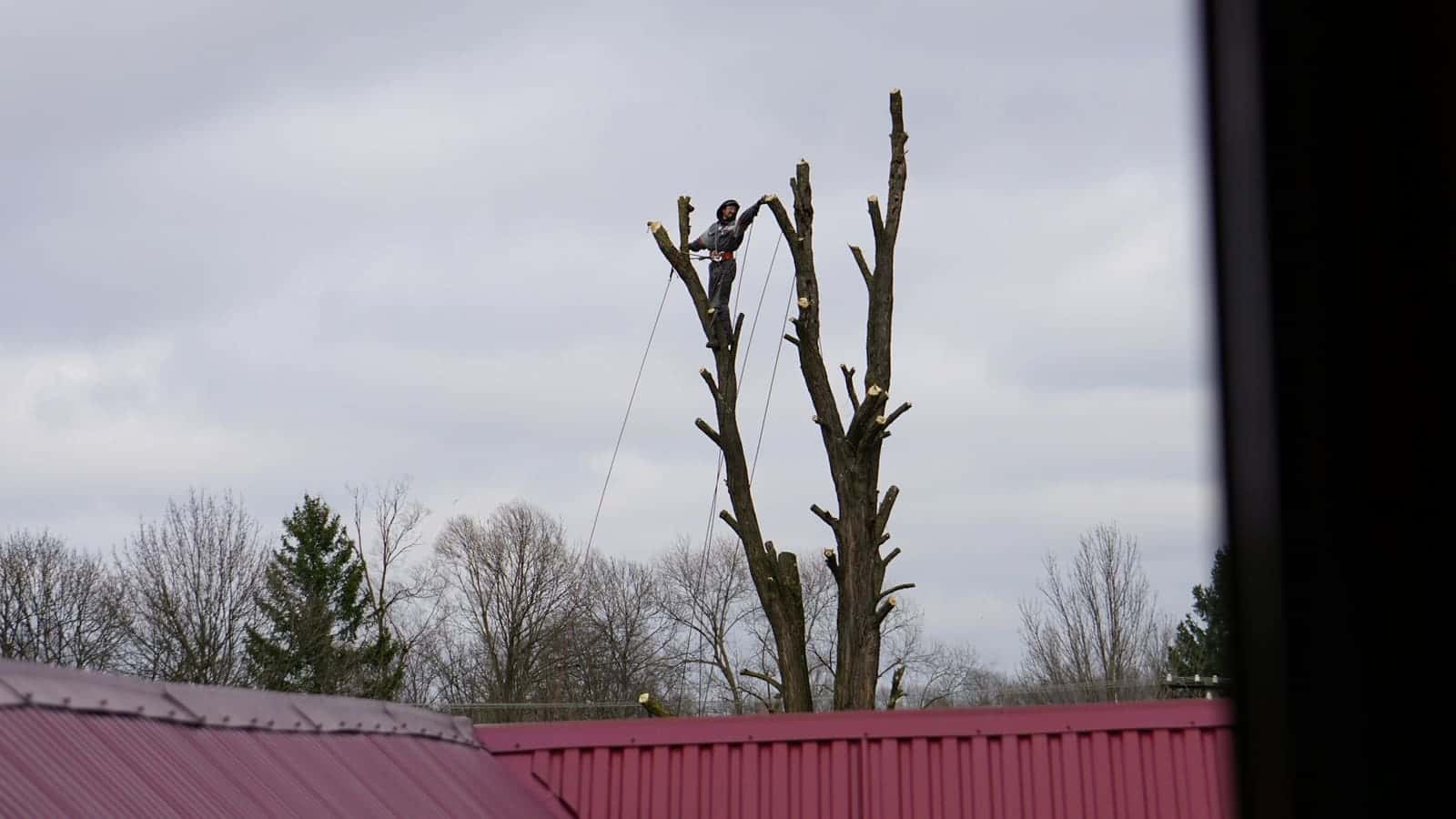
Houston, TX · dangerous trees
Hazardous tree removal in Houston
In Houston, the trees most likely to fail are aging water oaks with internal decay, tall pines on waterlogged clay, and weak-wooded Chinese tallow. A new lean, mushrooms at the base, a large dead limb or a crack in the trunk all mean the tree should be assessed and often removed before hurricane season. Right-of-way trees go through the city.
Houston at a glance
- Most common hazard
- Water oaks with internal decay
- Storm risk
- Pines and oaks uprooting on saturated gumbo clay
- Weak wood
- Chinese tallow (invasive)
- Public trees
- Right-of-way trees: report through 311
Reviewed and updated
Why Houston trees become hazardous
Many of Houston's established neighborhoods, like the Heights, Meyerland, Memorial and Bellaire, were planted with water oaks decades ago. Water oaks are relatively short-lived and develop internal decay as they age, so large limbs and whole trees can fail without warning, even on calm days. Loblolly pines grow tall with relatively shallow anchorage in Houston's slow-draining clay, and after days of rain the soil can't hold them in strong wind.
Construction is the other big cause. Trees whose roots were cut for driveways, sidewalks, drainage projects or foundation work often decline and fail years later.
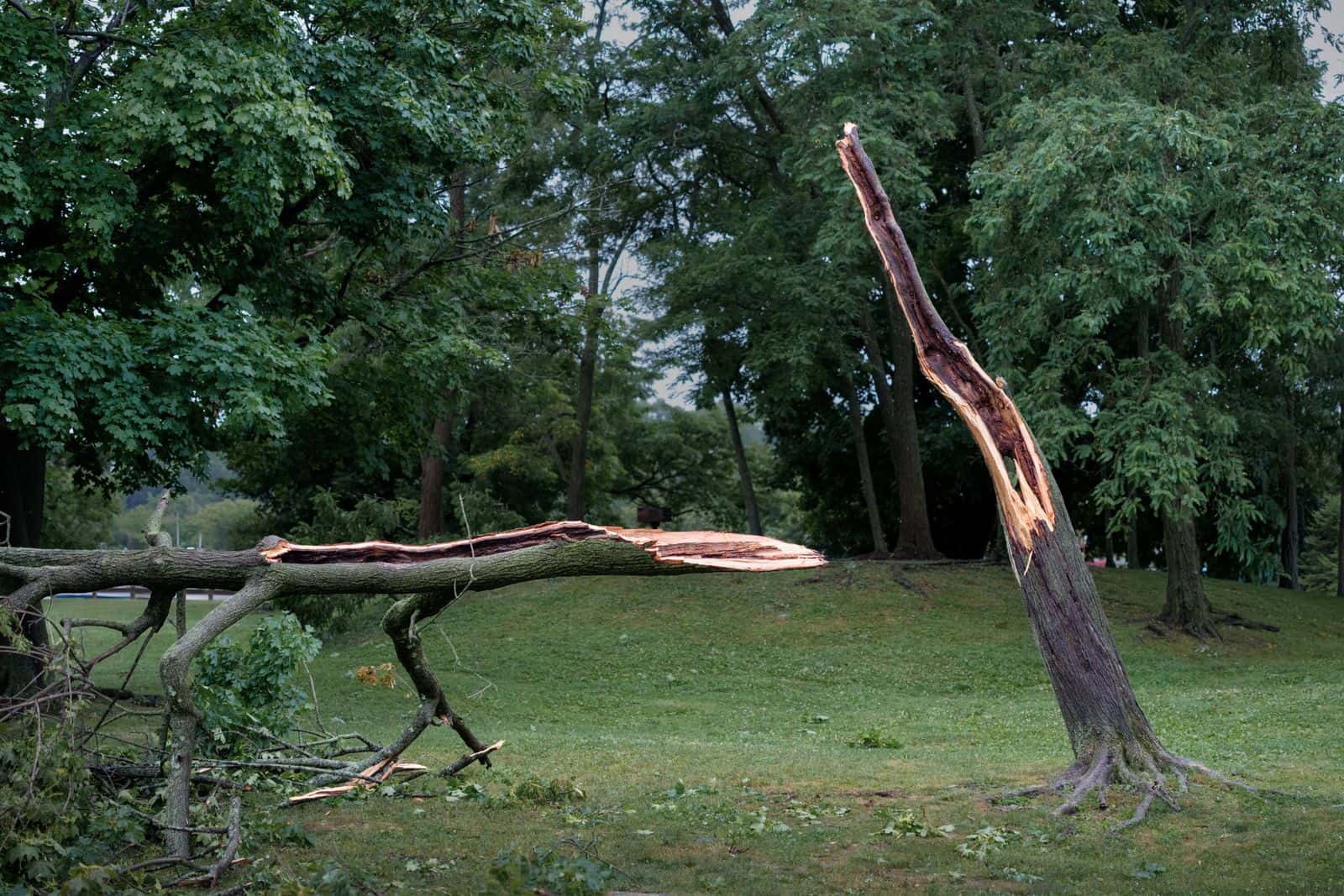
Warning signs to look for
Mushrooms or conks at the base
- What it suggests
- Root or lower-trunk decay
New lean with soil cracked on the far side
- What it suggests
- Root plate failure; urgent
Large dead limbs in the upper crown
- What it suggests
- Decline; limbs can drop any time
Cavities or hollow sound when tapped
- What it suggests
- Internal decay
Cracks at forks or in the trunk
- What it suggests
- Structural failure starting
Pine with brown needles and pitch tubes
- What it suggests
- Bark beetle attack after drought
Taking down a tree that can't be climbed
- 1
Assess the tree and its fall zone
The crew works out which way the tree or its parts could fail and what's in the way before anyone starts cutting.
- 2
Choose a method that doesn't rely on the defect
A cracked or decayed tree may not hold a climber's weight or rigging, so lifts and cranes are used to take it apart from outside the tree.
- 3
Make it safe in stages
The most dangerous parts, such as hanging limbs or the heavy side of a leaning tree, come off first to reduce the load.
- 4
Finish and clean up
The remaining trunk is taken down in sections, wood is hauled or left as agreed, and the stump is cut low or ground.
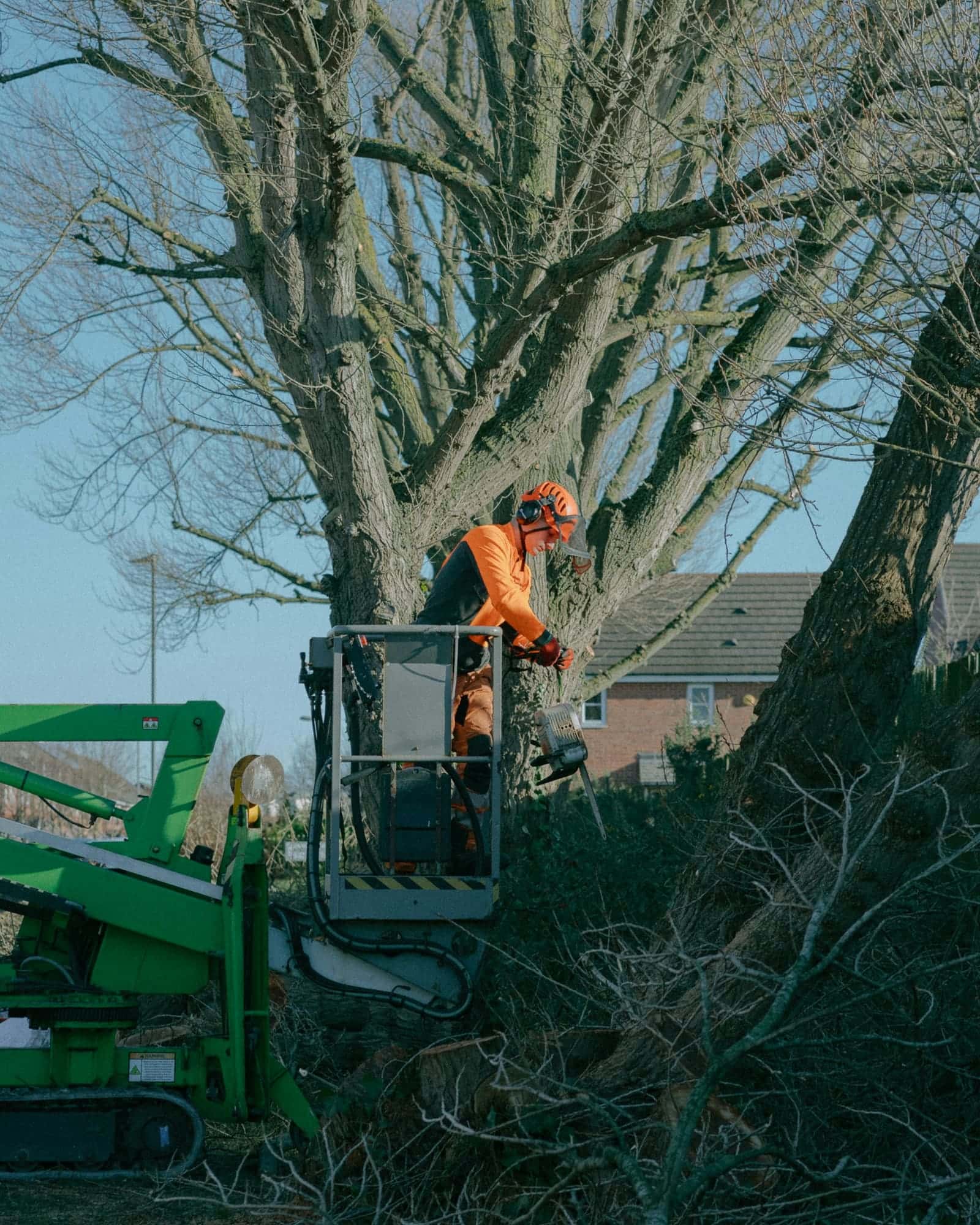
Remove now or before hurricane season?
A tree leaning on or over the house with soil movement, or one with a split trunk, is an emergency; see emergency tree removal in Houston. A tree with decay or dead limbs over a roof, driveway or play area should be removed or pruned before June 1, when hurricane season begins and crews get booked up. A tree with minor deadwood can often be pruned instead.
Chinese tallow and other trees to replace
Chinese tallow is an invasive species that spread across Houston's yards and green spaces. It grows fast with weak wood that breaks in storms, and it seeds aggressively. Removing large tallows near houses is usually a good decision; replace them with stronger natives like live oak, cedar elm or bald cypress, planted with room to grow.
Right-of-way trees and neighbors' trees
A hazardous tree in the street right-of-way belongs to the city. Report it through 311 and don't hire anyone to cut it without a city permit. For a neighbor's hazardous tree, put your concern in writing with photos; if it falls, a documented warning matters. See who pays when a tree falls.
Other help for a declining Houston tree
To decide whether a declining water oak can be saved.
When deadwood removal is enough.
After removal, especially tallow stumps that sprout.
Houston hazardous tree questions
How do I know if my water oak is dangerous?
Look for mushrooms or conks at the base, cavities, large dead limbs high in the crown, and limbs that have dropped on calm days. Older water oaks often decay inside, so have one assessed if it's over the house.
Is a leaning pine in my Houston yard an emergency?
If the lean is new and the soil is cracked or lifted on the opposite side, yes. Keep people out of its reach and get it removed promptly.
Should I remove Chinese tallow trees?
Large tallows near structures are good removal candidates: they're invasive, weak-wooded and break in storms. Replace them with stronger natives.
Do I need a permit to remove a hazardous tree in Houston?
Not for a tree on your own residential lot. A tree on city property or the right-of-way needs a city permit or a 311 report.
Why do Houston trees fall after heavy rain?
Houston's gumbo clay drains slowly; after days of rain, roots lose grip, and even moderate wind can tip a top-heavy or root-damaged tree.
Can a tree with decay be saved?
Sometimes. If decay is limited and the tree is otherwise sound, pruning to reduce weight may help. An arborist's assessment, sometimes with drilling tests, tells you how much sound wood remains.
When should I remove a dangerous tree in Houston?
As soon as possible if it threatens a house or people, and ideally before hurricane season for anything with decay or dead limbs over structures.
What does hazardous tree removal cost in Houston?
It depends on size, location over structures, access and whether a crane is needed. Hazardous trees often can't be climbed safely, which adds equipment. See the tree removal cost guide.
Who removes hazardous trees near me in Houston?
Insured local tree services with bucket trucks or cranes for unsafe trees. You can call us to reach an independent provider.
Sources for the local facts on this page
- Houston Permitting Center: Tree removal/tree trimming permit (PRD1001) (checked 2026-10-03)
- City of Houston 311: Fallen tree removal (checked 2026-10-03)
Hazardous tree removal in Houston
Call to speak with a local tree-service provider about removal, trimming, stumps or storm damage. Describe the tree and what it's near, and they'll explain the next step.