
Cincinnati, OH · dangerous trees
Hazardous Tree Removal in Cincinnati, OH
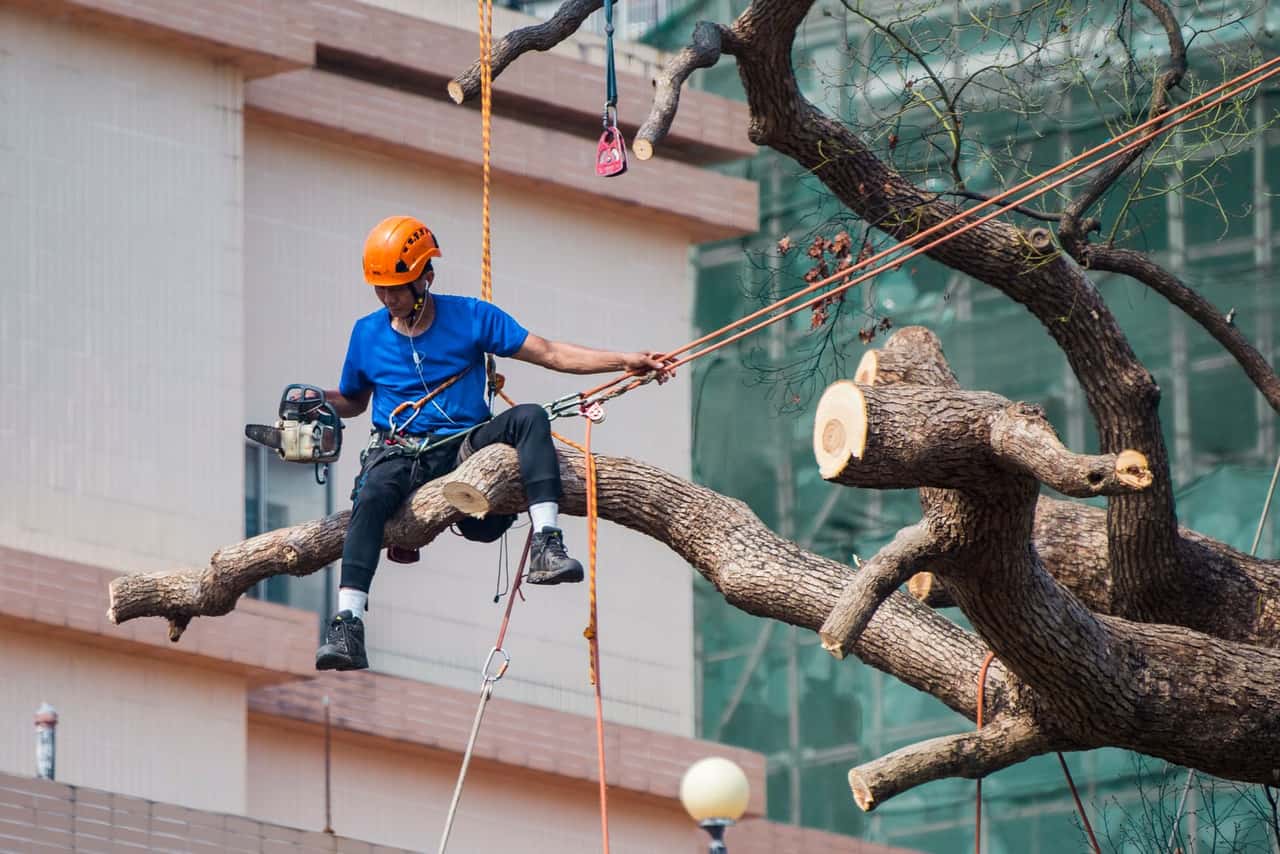
Most hazardous trees in Cincinnati are dead ash and leaning or damaged trees on steep hillside lots. On those slopes a lift or crane often can't set up, so climbers rig the tree down and wood is carried by hand. On landslide-prone ground, how the tree and stump are removed matters, because cutting into or loading a slope can make it less stable. Public trees need an Urban Forestry permit.
By calling, you agree that your call may be recorded and routed to an independent local tree-service provider, who may call or text you back about your request. Calling is free and does not obligate you to hire anyone. See our Privacy Policy.
When you need hazardous tree removal in Cincinnati
Leaning, cracked or decayed trees that could hit something if they fail.
- The tree has started leaning, or leans more than it did, especially with cracked or raised soil opposite the lean.
- There's a crack running through the trunk or down from a large fork.
- Two trunks meet in a tight V with bark pinched between them, and the joint has begun to split.
- Mushrooms, conks or soft, crumbly wood appear at the base or on the roots.
- Large dead limbs or broken branches hang over the house, driveway or street.
- Roots were cut in the last few years for a driveway, trench, addition or foundation repair.
Often needed with: Tree Risk Assessment services, Dead Tree Removal services, Emergency Tree Removal services, Large Tree Removal services.
Call and we'll connect you with a tree-service provider for hazardous tree removal in Cincinnati.
Call for tree serviceWhat hazardous tree removal in Cincinnati includes
- Assessment
- What the tree could hit, its condition, and access.
- Job planning
- Whether it can be felled or must come down in sections.
- Sectional removal and rigging
- Limbs and trunk lowered on ropes near buildings.
- Crane work when needed
- For big or decayed trees over structures.
- Brush and debris cleanup
- Chipping branches and raking the work area.
- Wood hauling or leaving rounds
- Agree in advance which you want.
- Stump options
- Grinding is usually a separate line item.
- Property protection
- Mats, plywood or careful drops to protect lawns and drives.
What to confirm in a hazardous tree removal quote in Cincinnati
Quotes differ mostly in what they include. Ask each provider to put these in writing so you can compare like for like:
- The defect the crew is responding to, in writing
- Method: felling, rigging or crane, and why
- Protecting the roof, fence or anything under the tree
- Hauling and cleanup
- Stump grinding
- Utility coordination if lines are involved
Before you call about hazardous tree removal in Cincinnati
These answers let a provider in Cincinnati tell you on the first call what the job involves and roughly how it'll be done.
- The defect you see
- Crack, lean, fungus, cavity, hanging limb
- Is it new?
- A new lean or crack is more urgent
- Soil at the base
- Cracked or lifting on one side
- What it could hit
- House, drive, play area, lines
- Access
- Gate width, slope, what's under the canopy
- Photos
- Of the defect and the whole tree
Safety and permission checks
- Power lines: stay at least 10 feet from overhead lines (OSHA's minimum distance for unqualified workers) and call the utility; only line-clearance-qualified tree workers cut closer.
- Underground lines: call 811 a few days before stump grinding or digging so buried utilities are marked for free.
- Permits: ask the city or county before removing or heavily pruning a large tree; protected-tree sizes and street-tree rules vary by place.
- Who is responsible: a tree on your lot is usually yours, street (right-of-way) trees are usually the city's, and trees on lines are the utility's to clear.
- Doing it yourself: picking up small fallen limbs is a homeowner job; chainsaw work off a ladder, near lines or on anything that could hit a building is not.
Have your answers ready? Call and we'll connect you with a provider serving your area.
Call for tree serviceHow getting hazardous tree removal in Cincinnati works
- 1
Tell us what's happening
Call and describe the tree, where it is and how urgent it is.
- 2
Get connected
Your call goes to an independent tree-service provider serving your area.
- 3
The tree is assessed
The provider looks at the tree, what's around it, and access for equipment.
- 4
Scope and price are discussed
You get the plan and price directly from the provider, before any work.
- 5
You decide
There's no obligation; you choose whether and when to go ahead.
TreeRemovalServices.net is a referral service and doesn't perform tree work. How it works
Local conditions
Local hazardous tree removal considerations in Cincinnati
What's specific to this work in Cincinnati: local storms, trees, access, rules and costs.
Cincinnati at a glance
- Most common hazard
- Dead ash; trees leaning on wet clay slopes
- Usual method
- Climbers and rigging; wood carried by hand
- Slope caution
- Removal can change how a hillside holds
- Public trees
- Urban Forestry permit before any work
Last updated
Which Cincinnati trees count as hazards
A hazardous tree is one with a defect that could fail onto something: the house, a car, a walkway or a neighbor's yard. In Cincinnati the most common are ash killed by emerald ash borer years ago, which turn brittle and drop limbs, and trees on steep lots that have started leaning, often after heavy rain has saturated the clay.
Silver maples and Callery pears that split under freezing rain or wet snow are the next most common calls, along with big limbs broken in summer thunderstorms.
Is it urgent? Cincinnati warning signs
- A tree on a slope that has newly leaned, with soil cracked or lifting on the uphill side: call now
- Dead ash over the house, driveway or street: book promptly; it gets riskier to climb each season
- A split fork or cracked trunk after ice or a storm: call soon if it can reach a target
- Fungus at the base or a cavity in the trunk: book an assessment
- A tree touching a Duke Energy line: call the utility first and stay clear
Removing a hazard tree on a hillside lot
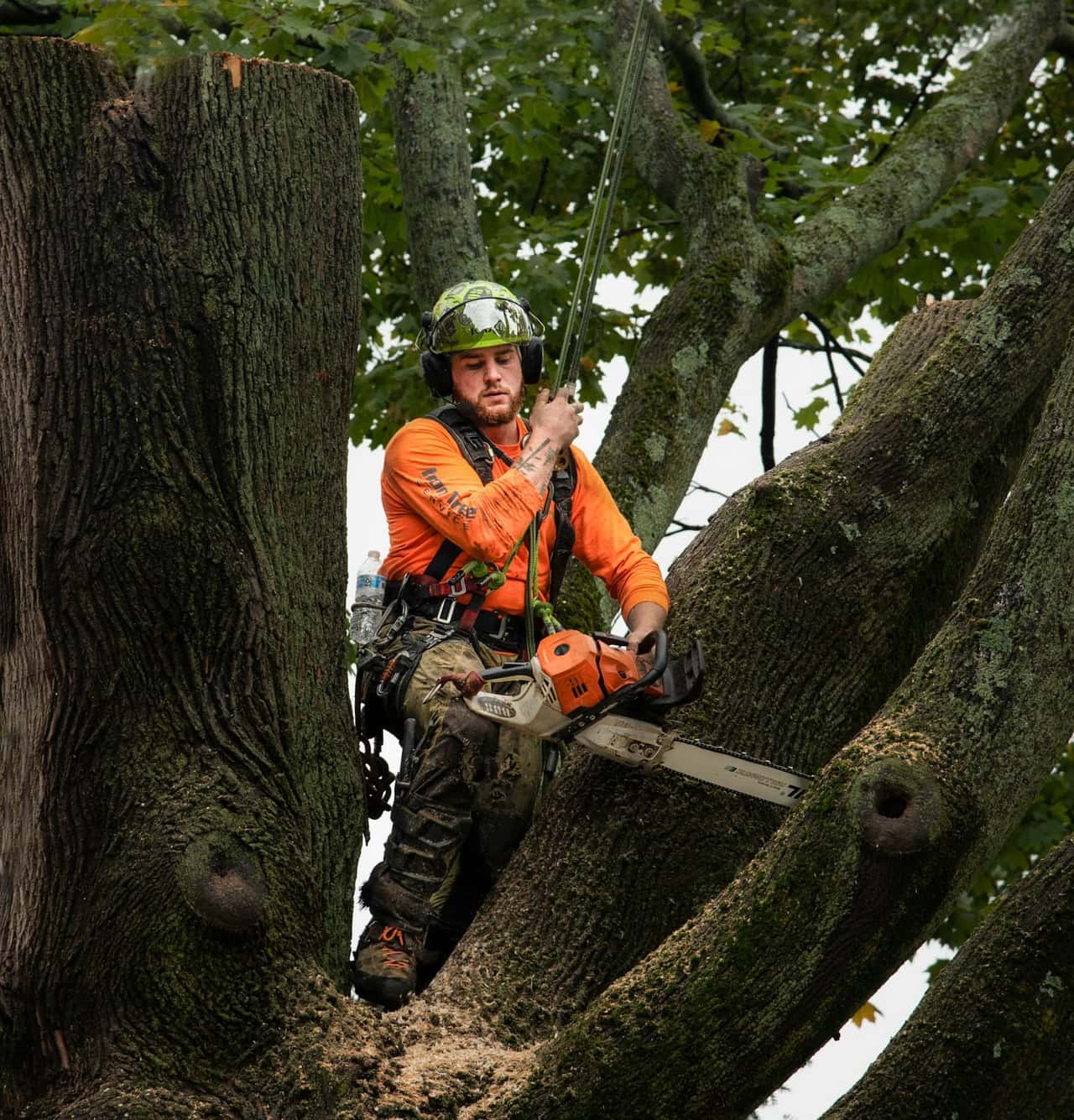
Many Cincinnati houses sit on steep lots with retaining walls and narrow streets, where a bucket truck or crane can't set up. Climbers take the tree down in pieces, lowering each one on ropes, and the wood is carried up or down to the street by hand. That's slower and costs more than an open-yard removal, and it's the main reason quotes vary so much between neighborhoods.
When you call, describe the slope, any retaining walls, stairs, how far the tree is from the street, and where a truck could park.
Slope stability: why the stump plan matters
Cincinnati's hillsides are clay over shale that can slide when saturated. Removing trees, cutting into the toe of a slope or piling heavy wood at the top can make a slope less stable. On those lots it's often better to leave the stump and roots in place to keep holding soil, rather than grinding or pulling them, and to carry wood off rather than stacking it on the slope.
If your lot has a history of movement, get advice on the slope before removing several trees at once.
Hillside hazard trees: what to do and what to leave
Safe for a homeowner
- Keep people, pets and cars out of the area the tree could reach, roughly its height in every direction.
- Photograph the defect now and over the following weeks; changes help an arborist judge urgency.
- Call your electric utility if the tree threatens power lines.
- Tell your neighbor in writing if the tree is on your property and could fall onto theirs.
Leave these to professionals
- Don't climb or cut a cracked, leaning or decayed tree yourself; it can fail without warning when cut.
- Don't pile soil or park vehicles around the base of a leaning tree.
- Don't wait through storm season if the tree can reach the house.
Public trees, permits and the neighbor's tree
No work on a public tree (a street tree or other tree on public property) may start without an Urban Forestry permit from the city. The permit covers pruning, removal and other work on or near the tree, and fees vary with the job, so ask Urban Forestry before you book. Properties in the Urban Forestry Maintenance District pay a front-foot assessment that funds planting, pruning and removal of public street trees.
If a neighbor's private tree is threatening your property (not one in the right-of-way), the city handles it as a code-enforcement matter through the Department of Buildings & Inspections.
How a hillside hazard removal is done
- 1
Assess the tree and its fall zone
The crew works out which way the tree or its parts could fail and what's in the way before anyone starts cutting.
- 2
Choose a method that doesn't rely on the defect
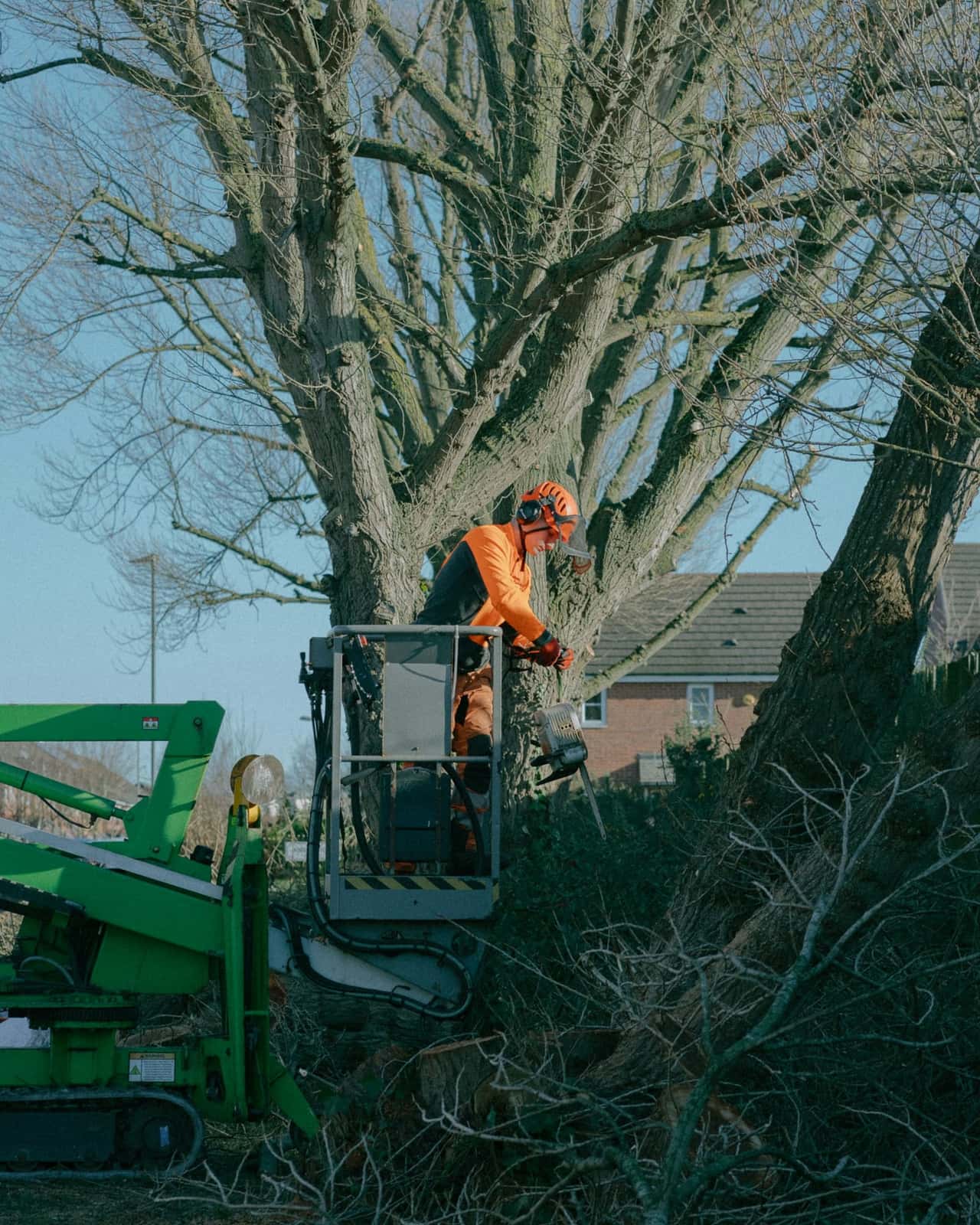
A cracked or decayed tree may not hold a climber's weight or rigging, so lifts and cranes are used to take it apart from outside the tree.
- 3
Make it safe in stages
The most dangerous parts, such as hanging limbs or the heavy side of a leaning tree, come off first to reduce the load.
- 4
Finish and clean up
The remaining trunk is taken down in sections, wood is hauled or left as agreed, and the stump is cut low or ground.
Next steps in Cincinnati
If you are not sure the tree needs to come down, start with an assessment; if it is dead or failing, go straight to removal.
For leaning trees on slopes before deciding.
For brittle dead ash.
After ice and summer storms.
Cincinnati hazardous tree questions
Is a tree that leaned after heavy rain on my Cincinnati hillside an emergency?
If the lean is new and soil is cracked or lifting on the uphill side, treat it as urgent and keep people out of its path. Wet clay on a slope can let it keep moving.
Why do hillside removals in Cincinnati cost more?
A lift or crane often can't set up, so climbers rig the tree down and wood is carried by hand to the street. Retaining walls, stairs and parking add time.
Should the stump be ground on my slope?
Often not. Roots help hold hillside soil; leaving the stump can be the safer choice on landslide-prone lots. Ask before agreeing to grinding.
Can I hire a company to remove the street tree in front of my house?
Only with an Urban Forestry permit; no work on a public tree may start without one.
How soon should a dead ash come down?
Promptly if it can reach the house, a car or the street. Dead ash become brittle and harder to climb safely every season.
What should I tell the company when I call?
The defect you see, whether the lean is new, the slope and walls, how far the tree is from the street, and what's underneath it.
Who handles a tree touching the power line behind my house?
Duke Energy, before anyone works on the tree. A tree service handles the rest once the line is safe.
What if my neighbor's tree is the hazard?
Talk to them first. If it's a private tree threatening your property, the city treats it as a code-enforcement matter through Buildings & Inspections.
More tree services in Cincinnati
- Tree Removal servicesTaking down a tree you no longer want or can't keep, in sections near buildings.
- Emergency Tree Removal servicesA tree on the house, car, driveway or a line, or one about to fall.
- Storm Damage Tree Removal servicesUprooted, split or snapped trees and hanging limbs after wind, ice or hurricanes.
- Tree Trimming & Pruning servicesPruning for clearance over roofs and drives, deadwood removal and storm preparation.
- Dead Tree Removal servicesDead or dying trees that turn brittle and get riskier to climb every season.
- Large Tree Removal servicesBig trees close to structures that need rigging or a crane.
- Stump Grinding & Removal servicesGrinding stumps below grade so you can replant, sod or build.
- Tree Risk Assessment servicesAn arborist's opinion on whether a tree can stay, before you remove it.
- Commercial Tree ServicesTree work for HOAs, property managers and commercial sites.
- Land Clearing servicesClearing brush, trees and stumps from a lot by mulching or excavation.
- Stump Removal servicesDigging out the stump and root ball where something will be built or planted.
- Tree Cutting servicesBringing a tree down safely: felled in one piece or cut down in sections.
- Palm Tree Removal servicesDead, diseased or unwanted palms, crown first, then the trunk.
- Oak Tree Removal servicesOaks with permits, oak wilt timing and heavy wood to plan around.
- Pine Tree Removal servicesTall, beetle-killed or storm-damaged pines near the house.
- Emergency Tree Trimming servicesBroken, hanging or cracked limbs over a roof, drive or path.
- Emergency Tree Cutting servicesCutting a fallen tree off a car, driveway, fence or road.
Tell us what's happening and we'll connect you with a tree-service provider serving your area.
Call for tree serviceTree service areas near Cincinnati
Sources for the local facts on this page
- Cincinnati Municipal Code Chapter 743: Urban Forestry (checked 2026-10-05)
- Cincinnati Parks: Public tree work permit (checked 2026-10-05)
- Cincinnati Parks: Urban Forestry assessments (checked 2026-10-05)
Hazardous tree removal in Cincinnati
Call to speak with a local tree-service provider about removal, trimming, stumps or storm damage. Describe the tree and what it's near, and they'll explain the next step.
By calling, you agree that your call may be recorded and routed to an independent local tree-service provider, who may call or text you back about your request. Calling is free and does not obligate you to hire anyone. See our Privacy Policy.