
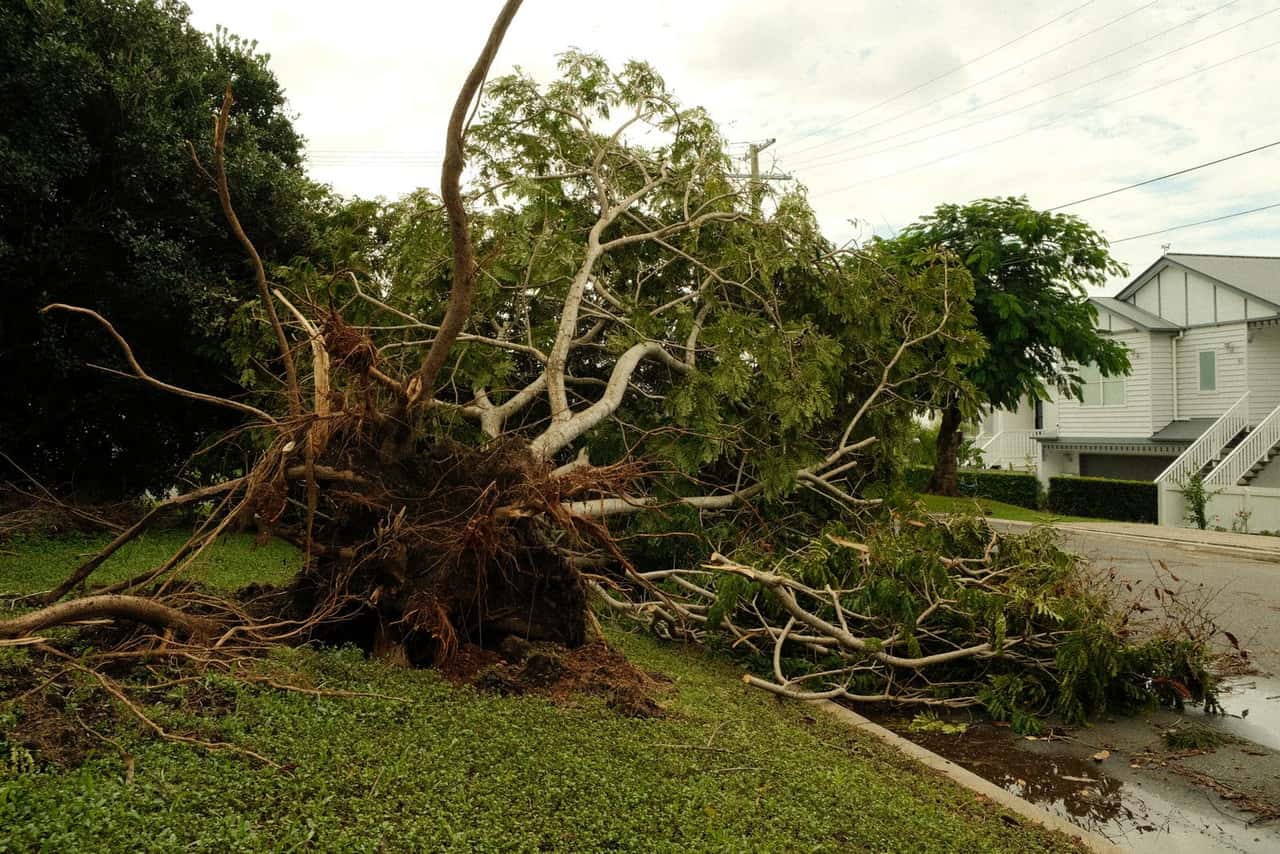
Texas · storms, ice and lines down
Emergency Tree Removal Services in Texas
If a tree in Texas is on a power line, call the company that owns the wires, not the retailer on your bill: Oncor, CenterPoint Energy, AEP Texas or TNMP in the deregulated market, or your city utility or co-op elsewhere. Stay at least 35 feet away. A tree from your yard that's on your house is yours to have removed; trees from the street right-of-way are the city's.
By calling, you agree that your call may be recorded and routed to an independent local tree-service provider, who may call or text you back about your request. Calling is free and does not obligate you to hire anyone. See our Privacy Policy.
When you need emergency tree removal in Texas
A tree on the house, car, driveway or a line, or one about to fall.
- A tree or large limb has fallen onto a house, garage, vehicle or fence.
- A tree is resting on or tangled in power, cable or phone lines.
- A fallen tree blocks your only driveway, a door, or emergency access.
- A large broken limb is hanging in the canopy over a place people walk (a "hanger").
- A storm has left a tree cracked at the base or visibly lifting its roots.
Often needed with: Storm Damage Tree Removal services, Tree Removal services, Large Tree Removal services, Tree Risk Assessment services.
Call and we'll connect you with a tree-service provider for emergency tree removal in Texas.
Call about a tree emergencyTree emergency in Texas? Call first
Call now if you have any of these in Texas:
- A tree on the house, garage or car
- A fallen tree blocking the driveway or road
- A tree or limb touching a power line
- A tree leaning more than it did yesterday, with soil lifting
- Large broken limbs hanging over people or the roof
- A storm-damaged tree that could still fall
Lines first: if a tree touches a power line, stay at least 35 feet away and call the electric utility or 911 before anyone works on it.
What emergency tree removal in Texas includes
- Assessment
- What the tree could hit, its condition, and access.
- Job planning
- Whether it can be felled or must come down in sections.
- Sectional removal and rigging
- Limbs and trunk lowered on ropes near buildings.
- Crane work when needed
- For big or decayed trees over structures.
- Brush and debris cleanup
- Chipping branches and raking the work area.
- Wood hauling or leaving rounds
- Agree in advance which you want.
- Stump options
- Grinding is usually a separate line item.
- Property protection
- Mats, plywood or careful drops to protect lawns and drives.
What to confirm in a emergency tree removal quote in Texas
Quotes differ mostly in what they include. Ask each provider to put these in writing so you can compare like for like:
- Getting the tree off the structure, and whether that's billed separately from full removal
- Tarping or temporary protection, or whether that's a roofer's job
- Hauling the wood and debris, or cutting it and leaving it
- After-hours or same-day rates
- Stump grinding, usually scheduled later
- Paperwork and photos for your insurance claim
Before you call about emergency tree removal in Texas
These answers let a provider in Texas tell you on the first call what the job involves and roughly how it'll be done.
- Is anyone hurt or trapped?
- If so, call 911 first
- Is a power line involved?
- Stay 35 feet away; the utility comes first
- What the tree is on
- Roof, car, garage, driveway, road
- Is it still moving?
- Shifting, creaking, soil lifting at the base
- Is access blocked?
- Driveway, doors, the only road out
- Rough size
- Whole tree or one big limb?
- Photos
- Wide shots for the crew and your insurer, from a safe spot
Safety and permission checks
- Power lines: stay at least 10 feet from overhead lines (OSHA's minimum distance for unqualified workers) and call the utility; only line-clearance-qualified tree workers cut closer.
- Underground lines: call 811 a few days before stump grinding or digging so buried utilities are marked for free.
- Permits: ask the city or county before removing or heavily pruning a large tree; protected-tree sizes and street-tree rules vary by place.
- Who is responsible: a tree on your lot is usually yours, street (right-of-way) trees are usually the city's, and trees on lines are the utility's to clear.
- Doing it yourself: picking up small fallen limbs is a homeowner job; chainsaw work off a ladder, near lines or on anything that could hit a building is not.
Have your answers ready? Call and we'll connect you with a provider serving your area.
Call for tree serviceHow getting emergency tree removal in Texas works
- 1
Tell us what's happening
Call and describe the tree, where it is and how urgent it is.
- 2
Get connected
Your call goes to an independent tree-service provider serving your area.
- 3
The tree is assessed
The provider looks at the tree, what's around it, and access for equipment.
- 4
Scope and price are discussed
You get the plan and price directly from the provider, before any work.
- 5
You decide
There's no obligation; you choose whether and when to go ahead.
TreeRemovalServices.net is a referral service and doesn't perform tree work. How it works
Local conditions
Local emergency tree removal considerations in Texas
What's specific to this work in Texas: local storms, trees, access, rules and costs.
Texas at a glance
- Lines down
- Call the wires utility (Oncor, CenterPoint, AEP Texas, TNMP, city utility or co-op) and 911 for sparks
- Your retailer
- Can't fix lines; it only sells you electricity
- Public trees
- Right-of-way trees are the city's or TxDOT's; report them
- Oak wounds
- Paint any oak wound from storm cleanup to limit oak wilt
- Mitigation fees
- Tex. Loc. Gov't Code 212.905: no city fee for trees under 10 in. at a home
Last updated
Who owns the wires: why your electric company can't help
Most of Texas runs on a deregulated market. The company you pay is a retail electric provider; it doesn't own or repair poles and lines. Downed lines, limbs on lines and outages go to the transmission and distribution utility for your area: Oncor across Dallas–Fort Worth and much of North and West Texas, CenterPoint Energy in greater Houston, AEP Texas in South and parts of West Texas, and Texas-New Mexico Power in scattered areas.
Not everyone is in that market. Austin (Austin Energy), San Antonio (CPS Energy) and many other cities run their own utilities, and rural areas are often served by electric cooperatives. Your bill or the utility's outage map tells you who to call. Either way, a tree crew can't start on a tree touching a primary line until the utility has made it safe.
Oncor area (DFW, much of North/West TX)
- Report lines down to
- Oncor: 888-313-4747
CenterPoint area (greater Houston)
- Report lines down to
- CenterPoint Energy: 800-332-7143
AEP Texas area
- Report lines down to
- AEP Texas: 866-223-8508
TNMP area
- Report lines down to
- Texas-New Mexico Power: 888-866-7456
City utility or co-op (e.g., Austin Energy, CPS Energy)
- Report lines down to
- That utility's outage line
Tree on the house: the first hour
- 1
Get people out of the affected rooms
Leave the house entirely if you smell gas, see a sagging ceiling, or a line is involved.
- 2
Call 911 and the wires utility when needed
Injuries, gas, fire or sparks go to 911. Any tree touching a line goes to the utility first.
- 3
Photograph the damage
Wide and close shots, inside and out, before anything is moved.
- 4
Call a tree service and your insurer
Tell the tree company what the tree is resting on and whether a crane may be needed. Ask whether they tarp or whether you need a roofer.
Texas emergencies by region and season
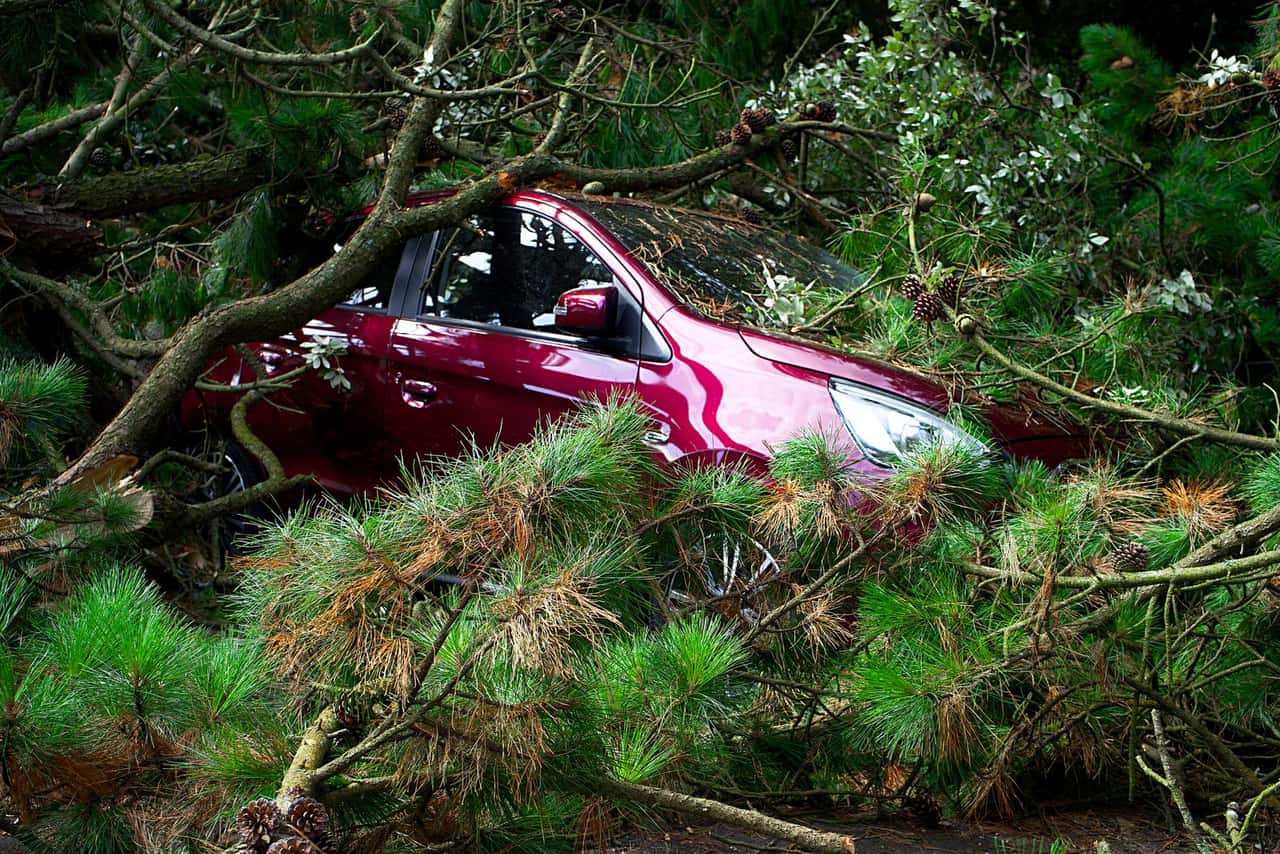
Texas tree emergencies come from different hazards in different places. Spring and early summer bring hail, straight-line winds and tornadoes across North Texas and the Panhandle. The Gulf Coast faces hurricanes and tropical storms from June through November, with uprooted pines and water oaks in Houston and Beaumont. Winter storms bring ice to Central and North Texas, like the February 2021 storm and Austin's February 2023 ice storm, which broke huge numbers of live oak and pecan limbs.
Drought adds a quieter emergency: stressed trees shed large limbs on calm summer days. A big limb dropping without wind is a reason to have the rest of the tree checked before it drops another.
Right-of-way trees and who removes what
Texas cities generally maintain trees in the street right-of-way, and TxDOT handles state highways. If a public tree falls on your property, report it to the city (often via 311) before paying anyone; some cities will remove it as an emergency. Trees that grew on your property are your responsibility even when they fall into the street, though the city may clear what's blocking traffic.
Houston, for example, treats a right-of-way tree on a house as an emergency through 311 and the Parks Urban Rangers. See emergency tree removal in Houston for that city's numbers.
Oak wilt and storm cleanup
Oak wilt is widespread in Central Texas, and fresh wounds on oaks let beetles carry it in, especially February through June. Storm emergencies can't wait for the calendar, but every oak cut and torn limb should be painted right away, in any month. Don't move or stack fresh red oak firewood from infected areas next to healthy oaks. More in tree trimming in Austin.
Do this now, never do this
Do this now
- Get people and pets out of rooms under or near the tree.
- Shut off gas at the meter if you smell gas, and leave the house.
- Photograph the scene from a safe distance before anything is moved.
- Call your insurer early. Many policies want to know before major work.
Never do this
- Never go near or touch a tree that's touching a wire. Treat every line as live.
- Don't try to cut a tree off a roof yourself. The weight can shift without warning.
- Don't stand under hanging or cracked limbs to look at the damage.
- Don't let anyone pressure you into signing a contract or assigning insurance benefits at the door.
What an emergency removal costs in Texas
There's no single price. A tree on a roof that must be lifted off in sections costs much more than one lying across the lawn; nights, weekends and post-storm demand add more, and a crane is billed by the hour with a minimum. After a regional storm, written quotes before work starts protect you from inflated bills.
On permits and fees: under Texas Local Government Code 212.905, a city can't charge a tree mitigation fee for removing a tree under 10 inches in diameter (measured 4.5 feet up) at an owner's one- or two-family home, and where it does charge one, it must allow a planting credit. See the emergency tree removal cost factors.
Emergency tree removal in Texas cities
CenterPoint, 311 right-of-way trees and water oak failures.
Oncor territory, spring wind and hail.
Austin Energy, ice storms and oak wilt.
CPS Energy and South Texas storms.
Oncor and North Texas severe weather.
Texas emergency tree questions
Who do I call in Texas when a tree falls on a power line?
The utility that owns the wires: Oncor, CenterPoint Energy, AEP Texas or TNMP in the deregulated areas, or your city utility or electric co-op elsewhere. Call 911 first if there are sparks, fire or injuries, and stay at least 35 feet away.
Why won't my electricity provider send someone for a downed line?
In Texas's deregulated market, the retail provider only sells electricity. The poles and wires belong to the transmission and distribution utility, which handles outages and lines down.
Can I get a tree removed tonight in Texas?
Often, if it's on an occupied house, blocking the only way out, or resting on something that could collapse. After widespread storms, wait times grow and crews triage by risk.
Will the city remove a tree that fell from the street onto my house?
Usually, if the tree grew in the city right-of-way. Report it through 311 or public works and photograph where it grew. Trees from inside your property line are yours.
Does homeowners insurance cover emergency tree removal in Texas?
Typically when the tree damaged a covered structure, up to a policy limit. A tree that fell in the yard without hitting anything usually isn't covered. Check your wind/hail deductible, which in parts of Texas is a percentage of dwelling coverage.
Do I need a city permit to remove a fallen tree in Texas?
Fallen and imminently hazardous trees are usually exempt or handled after the fact, but protected-tree cities like Austin and San Antonio still expect notice for large trees. Call the city arborist office if you're not sure.
What should I do if a storm-broken limb is hanging in my tree?
Keep everyone out from under it, including driveways and sidewalks, and don't try to pull it down. Hangers can fall without warning; a crew can lower it with ropes.
Should I paint oak cuts after emergency tree work in Texas?
Yes. Paint every oak wound right away in any month to keep oak wilt beetles off fresh cuts, especially from February through June.
Why do Texas trees drop big limbs on calm summer days?
Drought stress and internal decay. Long, heavy limbs on live oaks, pecans and water oaks can fail without wind in hot, dry spells. Have the tree checked after any calm-day limb drop.
Who can I call for emergency tree removal in Texas?
A licensed, insured local tree service with storm equipment. You can call us to reach an independent provider in your part of Texas. See emergency tree removal for what to do before they arrive.
More tree services in Texas
- Tree Removal servicesTaking down a tree you no longer want or can't keep, in sections near buildings.
- Storm Damage Tree Removal servicesUprooted, split or snapped trees and hanging limbs after wind, ice or hurricanes.
- Tree Trimming & Pruning servicesPruning for clearance over roofs and drives, deadwood removal and storm preparation.
- Dead Tree Removal servicesDead or dying trees that turn brittle and get riskier to climb every season.
- Hazardous Tree Removal servicesLeaning, cracked or decayed trees that could hit something if they fail.
- Large Tree Removal servicesBig trees close to structures that need rigging or a crane.
- Stump Grinding & Removal servicesGrinding stumps below grade so you can replant, sod or build.
- Tree Risk Assessment servicesAn arborist's opinion on whether a tree can stay, before you remove it.
- Commercial Tree ServicesTree work for HOAs, property managers and commercial sites.
- Land Clearing servicesClearing brush, trees and stumps from a lot by mulching or excavation.
- Stump Removal servicesDigging out the stump and root ball where something will be built or planted.
- Tree Cutting servicesBringing a tree down safely: felled in one piece or cut down in sections.
- Palm Tree Removal servicesDead, diseased or unwanted palms, crown first, then the trunk.
- Oak Tree Removal servicesOaks with permits, oak wilt timing and heavy wood to plan around.
- Pine Tree Removal servicesTall, beetle-killed or storm-damaged pines near the house.
- Emergency Tree Trimming servicesBroken, hanging or cracked limbs over a roof, drive or path.
- Emergency Tree Cutting servicesCutting a fallen tree off a car, driveway, fence or road.
Tell us what's happening and we'll connect you with a tree-service provider serving your area.
Call about a tree emergencyTree service areas near Texas
- Tree removal in Harris County, Texas
- Tree trimming in Houston
- Hazardous tree removal in Houston
- Stump grinding in Houston
- Emergency tree removal in Miami
- Emergency tree removal in Chicago
- Tree trimming in Dallas
- Emergency tree removal in Atlanta
- Tree removal in Dallas
- Tree removal in Houston
- Tree removal in Austin
- Tree removal in San Antonio
- Tree removal in Fort Worth
- Tree services in Texas
Sources for the local facts on this page
- Texas Local Government Code §212.905 (tree mitigation fees) (checked 2026-10-03)
- CenterPoint Energy: Electric safety tips and downed-line reporting (checked 2026-10-03)
- Oncor: Outage FAQs (888-313-4747) (checked 2026-10-03)
- AEP Texas: Outage reporting (866-223-8508) (checked 2026-10-03)
- TNMP: Power outages and hazards (888-866-7456) (checked 2026-10-03)
- Texas A&M Forest Service: Oak wilt (checked 2026-10-03)
Emergency tree removal in Texas
Call to speak with a local tree-service provider about removal, trimming, stumps or storm damage. Describe the tree and what it's near, and they'll explain the next step.
By calling, you agree that your call may be recorded and routed to an independent local tree-service provider, who may call or text you back about your request. Calling is free and does not obligate you to hire anyone. See our Privacy Policy.