
New York City · emergencies
Emergency Tree Removal in New York City, NY
If a street tree falls on your car, house or the sidewalk in New York City, report it to 311; street trees are city property, and cutting one without an NYC Parks permit can mean fines. Trees in your backyard are yours, and emergency removals there usually mean rigging pieces down and carrying them out through the house or lifting them by crane.
By calling, you agree that your call may be recorded and routed to an independent local tree-service provider, who may call or text you back about your request. Calling is free and does not obligate you to hire anyone. See our Privacy Policy.
When you need emergency tree removal in New York City
A tree on the house, car, driveway or a line, or one about to fall.
- A tree or large limb has fallen onto a house, garage, vehicle or fence.
- A tree is resting on or tangled in power, cable or phone lines.
- A fallen tree blocks your only driveway, a door, or emergency access.
- A large broken limb is hanging in the canopy over a place people walk (a "hanger").
- A storm has left a tree cracked at the base or visibly lifting its roots.
Often needed with: Storm Damage Tree Removal services, Tree Removal services, Large Tree Removal services, Tree Risk Assessment services.
Call and we'll connect you with a tree-service provider for emergency tree removal in New York City.
Call about a tree emergencyTree emergency in New York City? Call first
Call now if you have any of these in New York City:
- A tree on the house, garage or car
- A fallen tree blocking the driveway or road
- A tree or limb touching a power line
- A tree leaning more than it did yesterday, with soil lifting
- Large broken limbs hanging over people or the roof
- A storm-damaged tree that could still fall
Lines first: if a tree touches a power line, stay at least 35 feet away and call the electric utility or 911 before anyone works on it.
What emergency tree removal in New York City includes
- Assessment
- What the tree could hit, its condition, and access.
- Job planning
- Whether it can be felled or must come down in sections.
- Sectional removal and rigging
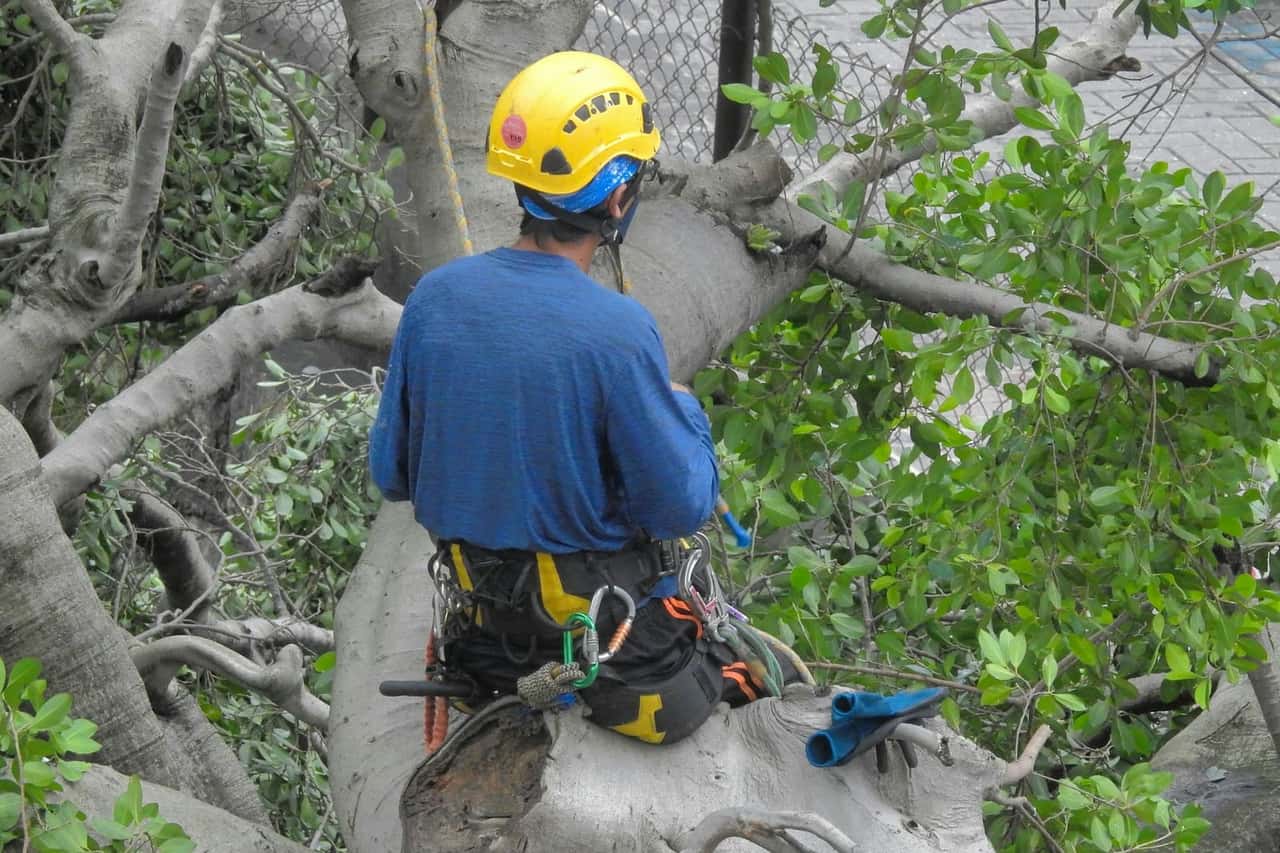
- Limbs and trunk lowered on ropes near buildings.
- Crane work when needed
- For big or decayed trees over structures.
- Brush and debris cleanup
- Chipping branches and raking the work area.
- Wood hauling or leaving rounds
- Agree in advance which you want.
- Stump options
- Grinding is usually a separate line item.
- Property protection
- Mats, plywood or careful drops to protect lawns and drives.
What to confirm in a emergency tree removal quote in New York City
Quotes differ mostly in what they include. Ask each provider to put these in writing so you can compare like for like:
- Getting the tree off the structure, and whether that's billed separately from full removal
- Tarping or temporary protection, or whether that's a roofer's job
- Hauling the wood and debris, or cutting it and leaving it
- After-hours or same-day rates
- Stump grinding, usually scheduled later
- Paperwork and photos for your insurance claim
Before you call about emergency tree removal in New York City
These answers let a provider in New York City tell you on the first call what the job involves and roughly how it'll be done.
- Is anyone hurt or trapped?
- If so, call 911 first
- Is a power line involved?
- Stay 35 feet away; the utility comes first
- What the tree is on
- Roof, car, garage, driveway, road
- Is it still moving?
- Shifting, creaking, soil lifting at the base
- Is access blocked?
- Driveway, doors, the only road out
- Rough size
- Whole tree or one big limb?
- Photos
- Wide shots for the crew and your insurer, from a safe spot
Safety and permission checks
- Power lines: stay at least 10 feet from overhead lines (OSHA's minimum distance for unqualified workers) and call the utility; only line-clearance-qualified tree workers cut closer.
- Underground lines: call 811 a few days before stump grinding or digging so buried utilities are marked for free.
- Permits: ask the city or county before removing or heavily pruning a large tree; protected-tree sizes and street-tree rules vary by place.
- Who is responsible: a tree on your lot is usually yours, street (right-of-way) trees are usually the city's, and trees on lines are the utility's to clear.
- Doing it yourself: picking up small fallen limbs is a homeowner job; chainsaw work off a ladder, near lines or on anything that could hit a building is not.
Have your answers ready? Call and we'll connect you with a provider serving your area.
Call for tree serviceHow getting emergency tree removal in New York City works
- 1
Tell us what's happening
Call and describe the tree, where it is and how urgent it is.
- 2
Get connected
Your call goes to an independent tree-service provider serving your area.
- 3
The tree is assessed
The provider looks at the tree, what's around it, and access for equipment.
- 4
Scope and price are discussed
You get the plan and price directly from the provider, before any work.
- 5
You decide
There's no obligation; you choose whether and when to go ahead.
TreeRemovalServices.net is a referral service and doesn't perform tree work. How it works
Local conditions
Local emergency tree removal considerations in New York City
What's specific to this work in New York City: local storms, trees, access, rules and costs.
New York City at a glance
- Fallen street tree
- Report to 311; NYC Parks handles it
- Permit
- Any work on or within 50 ft of a street tree
- Backyard trees
- Owner's responsibility
- Lines
- Con Edison (or PSEG Long Island in parts of Queens) and 911
Last updated
Street tree down: call 311
Street trees in the sidewalk strip belong to the city. Any pruning, removal or work within 50 feet of one needs an NYC Parks permit, and unauthorized removal is punishable by fines and possible jail time. When one falls in a storm, report it to 311; NYC Parks crews clear city trees and prioritize those blocking streets or on structures.
Backyard emergencies
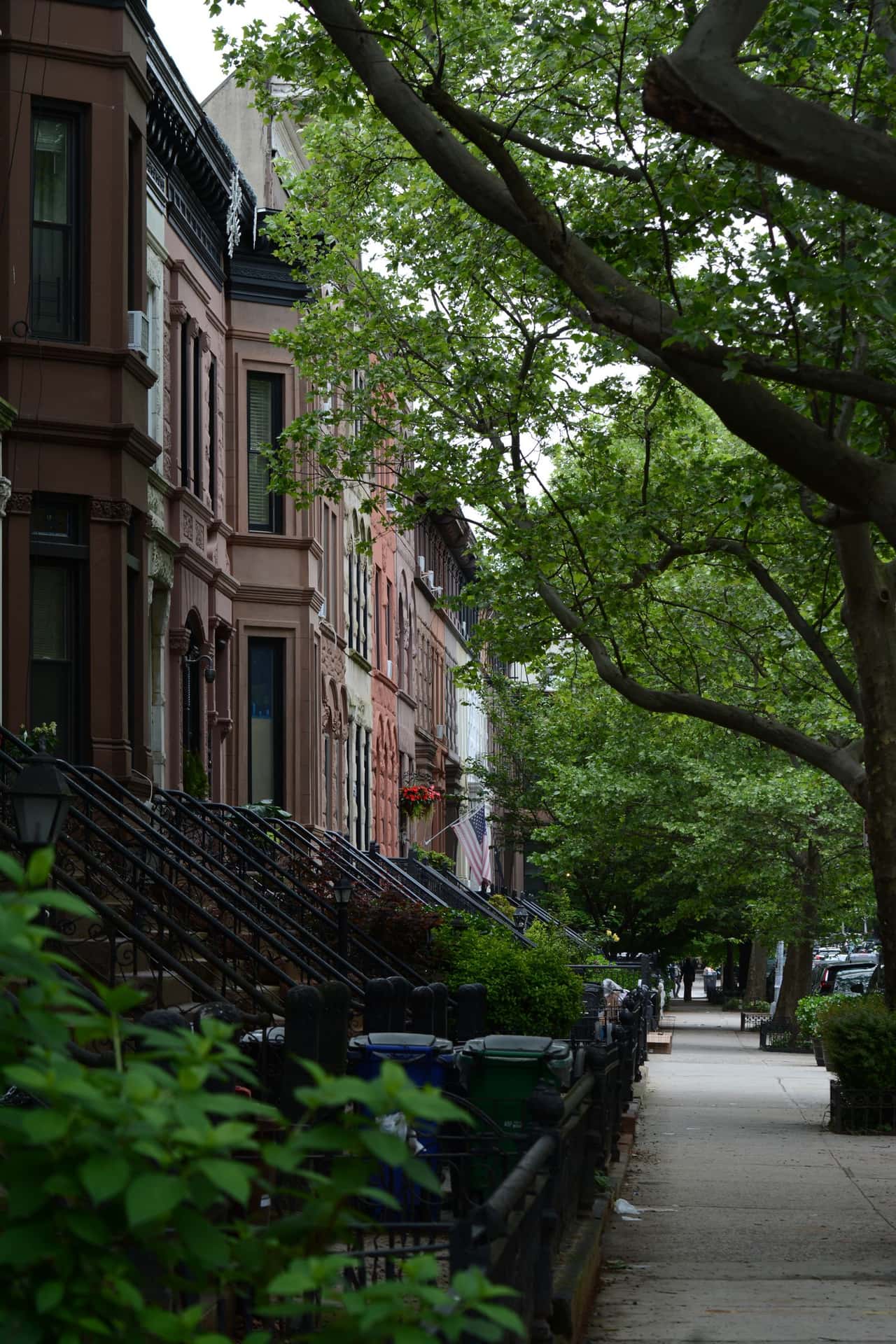
A tree from your own backyard that falls on your house or a neighbor's is yours to have removed. In row-house neighborhoods, crews rig it down in pieces and carry them out through the house, or bring a crane to lift sections over the building. Expect a site visit before work and questions about access, floors and doorways.
NYC storm safety: do and don't
Do this now
- Get people and pets out of rooms under or near the tree.
- Shut off gas at the meter if you smell gas, and leave the house.
- Photograph the scene from a safe distance before anything is moved.
- Call your insurer early. Many policies want to know before major work.
Never do this
- Never go near or touch a tree that's touching a wire. Treat every line as live.
- Don't try to cut a tree off a roof yourself. The weight can shift without warning.
- Don't stand under hanging or cracked limbs to look at the damage.
- Don't let anyone pressure you into signing a contract or assigning insurance benefits at the door.
Working near a street tree during private emergency work
Even when the emergency is your own backyard tree, crews and equipment often have to work near a street tree out front. Any work within 50 feet of a street tree, including parking heavy equipment over its roots or pruning a limb in the way, needs an NYC Parks permit. A company that works regularly in the city will know how to handle that.
Coastal storms and tree failures
Sandy (2012) and Isaias (2020) brought down thousands of trees across the boroughs. Norway maples with shallow, girdling roots and Callery pears that split at weak forks are frequent backyard failures. Oak wilt has been confirmed in Brooklyn, and emerald ash borer is present in the city.
Rigging a tree out of a city backyard
- 1
Make it safe
Utilities de-energize lines. The crew sets a work zone and checks the structure for stability before climbing or rigging.
- 2
Stabilize the tree
Ropes, a crane, or a loader take the weight so that cutting doesn't cause it to shift or roll.
- 3
Remove in sections
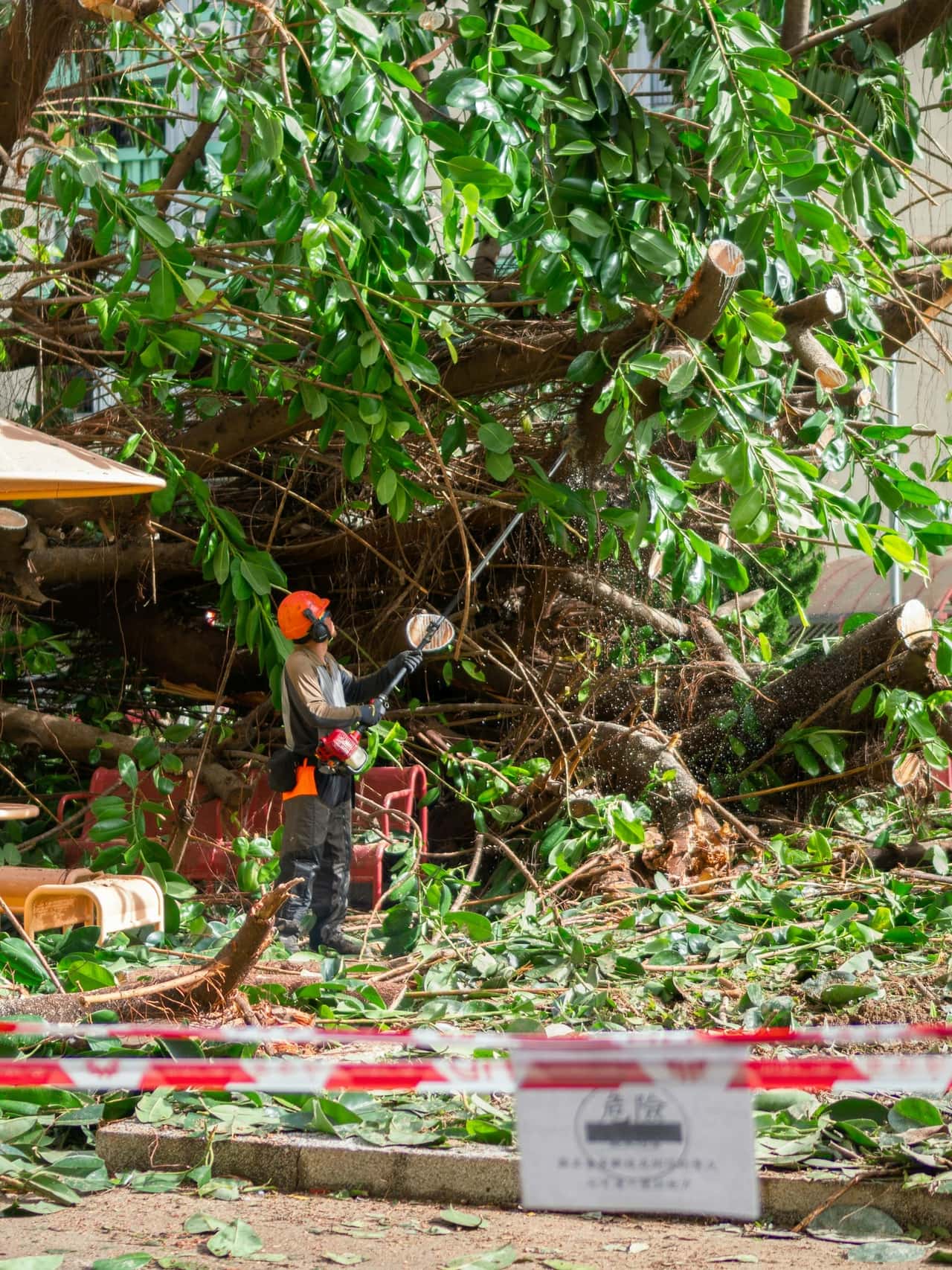
Limbs and trunk pieces come off top-down and are lowered or lifted clear of the damaged area.
- 4
Secure and document
The roof is tarped or openings covered (often by a separate contractor), and you get photos and an itemized invoice for your insurer.
After an NYC emergency
For backyard trees that survived but are cracked or leaning.
For broken limbs on trees worth keeping.
Before the next storm season.
When your backyard tree damages a neighbor's house
In dense row-house blocks, a backyard tree failure often lands on the neighbor's roof or wall. Usually each owner's insurance covers damage to their own property, but a tree you knew was dead or dangerous can shift responsibility to you. Document the condition of your trees, keep records of maintenance, and see who pays when a tree falls.
NYC emergency tree questions
Who pays if my backyard tree falls on my neighbor's house in NYC?
Usually each owner's insurance covers its own property, but a tree you knew was dead or dangerous can make you responsible. Keep records of maintenance.
Can I cut up a fallen street tree myself?
No. Any work on a street tree needs an NYC Parks permit, and unauthorized cutting can bring fines.
Who removes a backyard tree that fell on my house in Brooklyn?
You do, through a tree company. Row-house removals are rigged in pieces and carried out or lifted by crane.
Who handles a tree on power lines in New York City?
Con Edison in most of the city, or PSEG Long Island in the Rockaways, and 911 for sparks or fire.
Why do Norway maples fall in NYC storms?
They often have shallow, girdling roots that weaken anchorage, especially in confined backyards.
Is there a permit for removing my own backyard tree?
Generally no citywide permit for private trees, but landmark districts and development projects can involve review.
How much does emergency tree removal cost in NYC?
Access is the biggest factor: carry-through and crane work cost more. See the emergency tree removal cost factors.
Who does emergency tree removal near me in New York City?
Insured tree companies experienced with tight urban access. You can call us to reach an independent provider.
More tree services in New York City
- Tree Removal servicesTaking down a tree you no longer want or can't keep, in sections near buildings.
- Storm Damage Tree Removal servicesUprooted, split or snapped trees and hanging limbs after wind, ice or hurricanes.
- Tree Trimming & Pruning servicesPruning for clearance over roofs and drives, deadwood removal and storm preparation.
- Dead Tree Removal servicesDead or dying trees that turn brittle and get riskier to climb every season.
- Hazardous Tree Removal servicesLeaning, cracked or decayed trees that could hit something if they fail.
- Large Tree Removal servicesBig trees close to structures that need rigging or a crane.
- Stump Grinding & Removal servicesGrinding stumps below grade so you can replant, sod or build.
- Tree Risk Assessment servicesAn arborist's opinion on whether a tree can stay, before you remove it.
- Commercial Tree ServicesTree work for HOAs, property managers and commercial sites.
- Land Clearing servicesClearing brush, trees and stumps from a lot by mulching or excavation.
- Stump Removal servicesDigging out the stump and root ball where something will be built or planted.
- Tree Cutting servicesBringing a tree down safely: felled in one piece or cut down in sections.
- Palm Tree Removal servicesDead, diseased or unwanted palms, crown first, then the trunk.
- Oak Tree Removal servicesOaks with permits, oak wilt timing and heavy wood to plan around.
- Pine Tree Removal servicesTall, beetle-killed or storm-damaged pines near the house.
- Emergency Tree Trimming servicesBroken, hanging or cracked limbs over a roof, drive or path.
- Emergency Tree Cutting servicesCutting a fallen tree off a car, driveway, fence or road.
Tell us what's happening and we'll connect you with a tree-service provider serving your area.
Call about a tree emergencyTree service areas near New York City
Sources for the local facts on this page
- NYC Parks: Forestry FAQ (checked 2026-10-03)
- NYC Parks: Tree work permit types (checked 2026-10-03)
Emergency tree removal in New York City
Call to speak with a local tree-service provider about removal, trimming, stumps or storm damage. Describe the tree and what it's near, and they'll explain the next step.
By calling, you agree that your call may be recorded and routed to an independent local tree-service provider, who may call or text you back about your request. Calling is free and does not obligate you to hire anyone. See our Privacy Policy.