
Chicago, IL · dead trees
Dead tree removal in Chicago
In Chicago, dead parkway trees belong to the city: request removal through 311, and the Bureau of Forestry prioritizes dead and damaged trees. Dead trees in your yard are yours to remove, and most are ash killed by emerald ash borer. Dead ash become brittle fast, so remove them before they drop limbs on garages, alleys and neighbors.
Chicago at a glance
- Parkway trees
- City-owned; request removal through 311
- Yard trees
- Owner's responsibility; no city permit for most private removals
- Main cause
- Emerald ash borer, confirmed in Illinois in 2006
- Access
- Usually from the alley; wood out through a gangway or over the garage
Reviewed and updated
Is it your tree or the city's?
The parkway tree between the sidewalk and curb belongs to the City of Chicago. If it's dead, request removal through 311; a Bureau of Forestry arborist inspects it, and dead, damaged and emergency trees are handled ahead of routine removals, which are scheduled in the November–March season. Don't pay a private company to remove a parkway tree.
A tree in your front yard, backyard or along the alley inside your lot line is yours.
Dead ash: the most common Chicago removal
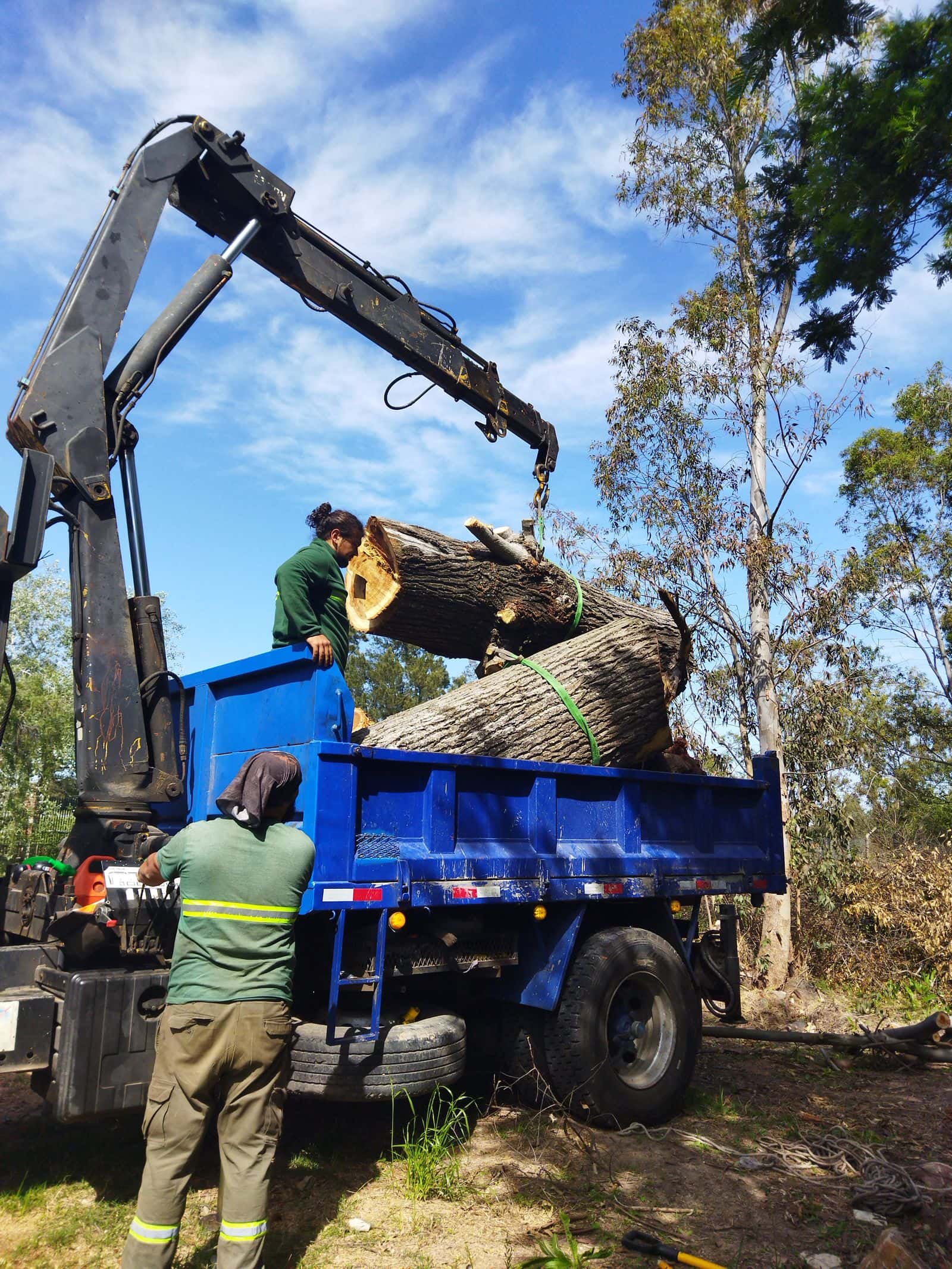
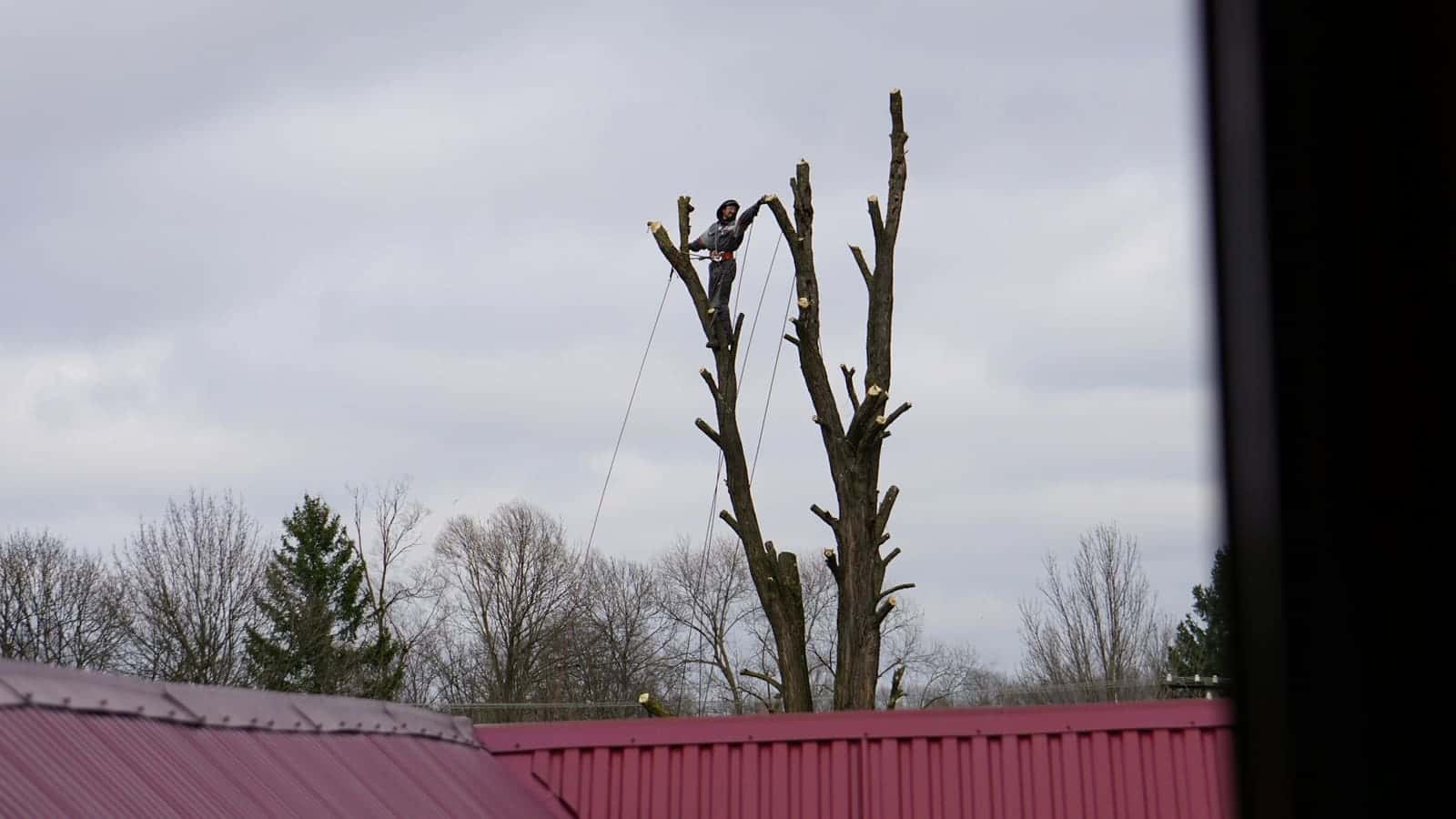
Chicago planted ash widely after Dutch elm disease, and emerald ash borer, confirmed in Illinois in 2006, has killed or forced removal of a huge share of them. The city treated many parkway ash, but untreated backyard ash are often dead. Dead ash dry out and become brittle quickly; limbs snap without warning and climbers can't trust them for rigging, so crews switch to lifts or cranes. Waiting makes the job riskier and more expensive.
Garages, alleys and two-flat lots
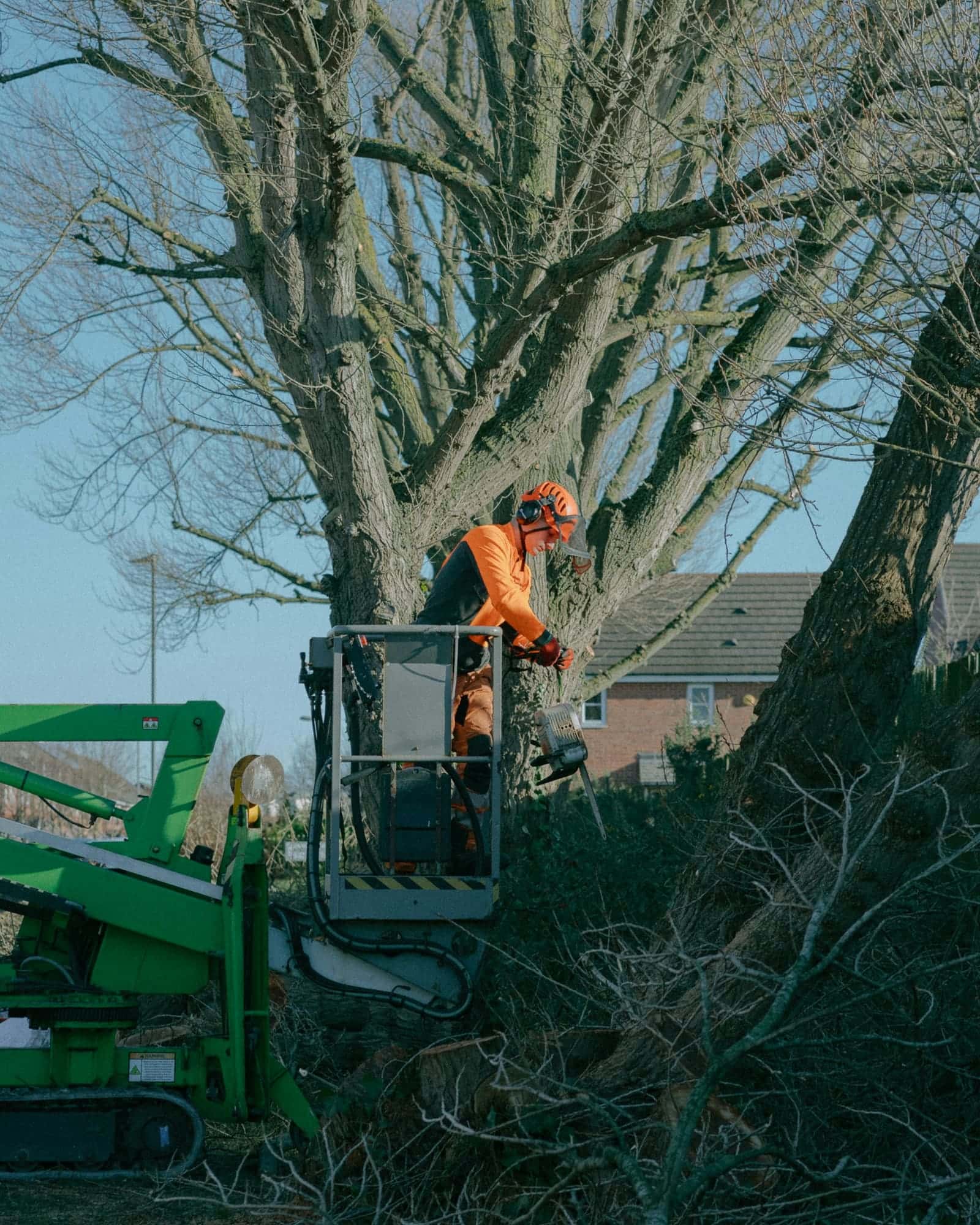
Chicago's long, narrow lots put backyard trees between the house and a detached garage on the alley, with overhead lines along the alley. Most dead-tree removals are done from the alley with a lift, or by climbers lowering sections, and wood comes out through the gangway or over the garage. Tell the company about alley width, overhead lines and where they can park.
How a dead tree comes down
- 1
Confirm it's dead
An arborist checks for live tissue and looks for the cause, which matters if nearby trees of the same species are at risk.
- 2
Choose the method
Bucket truck, crane or controlled felling instead of climbing, when the wood is too weak to trust.
- 3
Remove
Sections are taken down or the tree is felled in a planned direction.
- 4
Dispose properly
Wood from trees killed by invasive pests may be subject to firewood movement rules. Don't haul it across county or state lines.
Other trees that die in Chicago yards
Besides ash, aging silver maples decline and decay, Dutch elm disease still kills remaining American elms, and drought or root damage from garage or sewer work can kill trees years later. A tree that leafs out only partly, has bark falling off, or has fungus at the base should be checked.
Winter removal
Winter is a good time for non-urgent dead tree removal in Chicago: frozen ground supports equipment, leaves are off so crews can see the structure, and schedules are more open. A dead tree over a garage or the house shouldn't wait for winter, though.
Next steps after a dead tree
For dead limbs or trees that have already failed.
After removal; call JULIE first.
To decide whether a declining tree can be saved.
Chicago dead tree questions
How do I get a dead parkway tree removed in Chicago?
Request it through 311. A Bureau of Forestry arborist inspects it, and dead and damaged trees are prioritized over routine removals.
Do I need a permit to remove a dead tree from my Chicago yard?
Generally no city permit is needed to remove a tree on your own private lot. Parkway trees are city property and go through 311.
Why are so many ash trees dead in Chicago?
Emerald ash borer, confirmed in Illinois in 2006, kills untreated ash. Chicago had planted ash widely after Dutch elm disease.
Is a dead ash tree in my backyard dangerous?
Yes, if it can reach a garage, house, alley or neighbor's yard. Dead ash become brittle and drop limbs without warning.
Why does a dead ash cost more to remove from a Chicago backyard?
Brittle wood can't be climbed or rigged safely, so crews often need a lift or crane, which costs more. The longer it stands, the worse it gets.
Can a tree crew work from the alley in Chicago?
Usually yes. Most backyard removals use the alley for a lift and trucks; tell the company about overhead lines and alley width.
When is the best time to remove a dead tree in Chicago?
Winter for non-urgent jobs; immediately if it threatens a structure or people.
How much does dead tree removal cost in Chicago?
It depends on size, access from the alley, nearby lines and whether a lift or crane is needed. See the tree removal cost guide.
Who removes dead trees near me in Chicago?
Insured local tree companies with lifts for brittle trees. You can call us to reach an independent provider in Chicago.
Sources for the local facts on this page
- Chicago 311: Tree removal (checked 2026-10-03)
- City of Chicago: Dead or damaged trees (checked 2026-10-03)
- Illinois Department of Agriculture: Emerald ash borer (checked 2026-10-03)
Dead tree removal in Chicago
Call to speak with a local tree-service provider about removal, trimming, stumps or storm damage. Describe the tree and what it's near, and they'll explain the next step.