
Omaha, NE · dead and dying trees
Dead Tree Removal in Omaha, NE
Most dead trees in Omaha are ash killed by emerald ash borer, which was confirmed in the city in 2016, and pines that die quickly in summer. Dead ash turn brittle and get riskier to climb each season, so book removal promptly when one can reach the house, a car or the street. Omaha requires tree companies to hold a city arborist license, and a tree in the right-of-way needs a permit from the city forester.
By calling, you agree that your call may be recorded and routed to an independent local tree-service provider, who may call or text you back about your request. Calling is free and does not obligate you to hire anyone. See our Privacy Policy.
When you need dead tree removal in Omaha
Dead or dying trees that turn brittle and get riskier to climb every season.
- No leaves during the growing season, or only a few clusters.
- Bark falling off in large sheets, exposing bare wood.
- Brittle twigs that snap cleanly instead of bending.
- Fungal conks or mushrooms on the trunk or around the base.
- Woodpecker holes, D-shaped exit holes (emerald ash borer), or pitch tubes (bark beetles).
Often needed with: Tree Removal services, Tree Risk Assessment services, Stump Grinding & Removal services, Large Tree Removal services.
Call and we'll connect you with a tree-service provider for dead tree removal in Omaha.
Call for tree serviceWhat dead tree removal in Omaha includes
- Assessment
- What the tree could hit, its condition, and access.
- Job planning
- Whether it can be felled or must come down in sections.
- Sectional removal and rigging
- Limbs and trunk lowered on ropes near buildings.
- Crane work when needed
- For big or decayed trees over structures.
- Brush and debris cleanup
- Chipping branches and raking the work area.
- Wood hauling or leaving rounds
- Agree in advance which you want.
- Stump options
- Grinding is usually a separate line item.
- Property protection
- Mats, plywood or careful drops to protect lawns and drives.
What to confirm in a dead tree removal quote in Omaha
Quotes differ mostly in what they include. Ask each provider to put these in writing so you can compare like for like:
- Whether the tree can be climbed or needs a lift or crane
- Felling or sectional removal near structures
- Hauling all wood (dead wood is often not worth keeping)
- Stump grinding
- Removing any dead neighbor-side limbs that cross the line, with agreement
Before you call about dead tree removal in Omaha
These answers let a provider in Omaha tell you on the first call what the job involves and roughly how it'll be done.
- How long it's been dead
- Months, or years?
- Bark and limbs
- Bark falling off, big dead limbs
- What it could hit
- House, drive, play area, neighbor
- Rough size
- Taller than the house?
- Access
- Room for a lift? Dead trees often can't be climbed safely
- Species if known
- Ash, pine and oak each fail differently
Safety and permission checks
- Power lines: stay at least 10 feet from overhead lines (OSHA's minimum distance for unqualified workers) and call the utility; only line-clearance-qualified tree workers cut closer.
- Underground lines: call 811 a few days before stump grinding or digging so buried utilities are marked for free.
- Permits: ask the city or county before removing or heavily pruning a large tree; protected-tree sizes and street-tree rules vary by place.
- Who is responsible: a tree on your lot is usually yours, street (right-of-way) trees are usually the city's, and trees on lines are the utility's to clear.
- Doing it yourself: picking up small fallen limbs is a homeowner job; chainsaw work off a ladder, near lines or on anything that could hit a building is not.
Have your answers ready? Call and we'll connect you with a provider serving your area.
Call for tree serviceHow getting dead tree removal in Omaha works
- 1
Tell us what's happening
Call and describe the tree, where it is and how urgent it is.
- 2
Get connected
Your call goes to an independent tree-service provider serving your area.
- 3
The tree is assessed
The provider looks at the tree, what's around it, and access for equipment.
- 4
Scope and price are discussed
You get the plan and price directly from the provider, before any work.
- 5
You decide
There's no obligation; you choose whether and when to go ahead.
TreeRemovalServices.net is a referral service and doesn't perform tree work. How it works
Local conditions
Local dead tree removal considerations in Omaha
What's specific to this work in Omaha: local storms, trees, access, rules and costs.
Omaha at a glance
- Most common dead tree
- Ash killed by emerald ash borer
- Who may do the work
- A city-licensed arborist (2nd or 1st class)
- Right-of-way trees
- City forester permit before removal
- Timing
- Dead ash: promptly; they get brittle fast
Last updated
Why so many Omaha trees are dying at once
Emerald ash borer was confirmed in Omaha in 2016, and it kills ash that aren't being treated. Neighborhoods built in the same decades were planted with ash along whole streets, so many blocks are losing their ash within a few years of each other. The city has been removing thousands of ash from public property, while some homeowners treat the ash in front of their homes instead.
The other common call is a pine that turns brown over a summer. A fast decline like that should be looked at and, if the tree is dead, removed before it becomes a hazard.
How dead ash change the removal
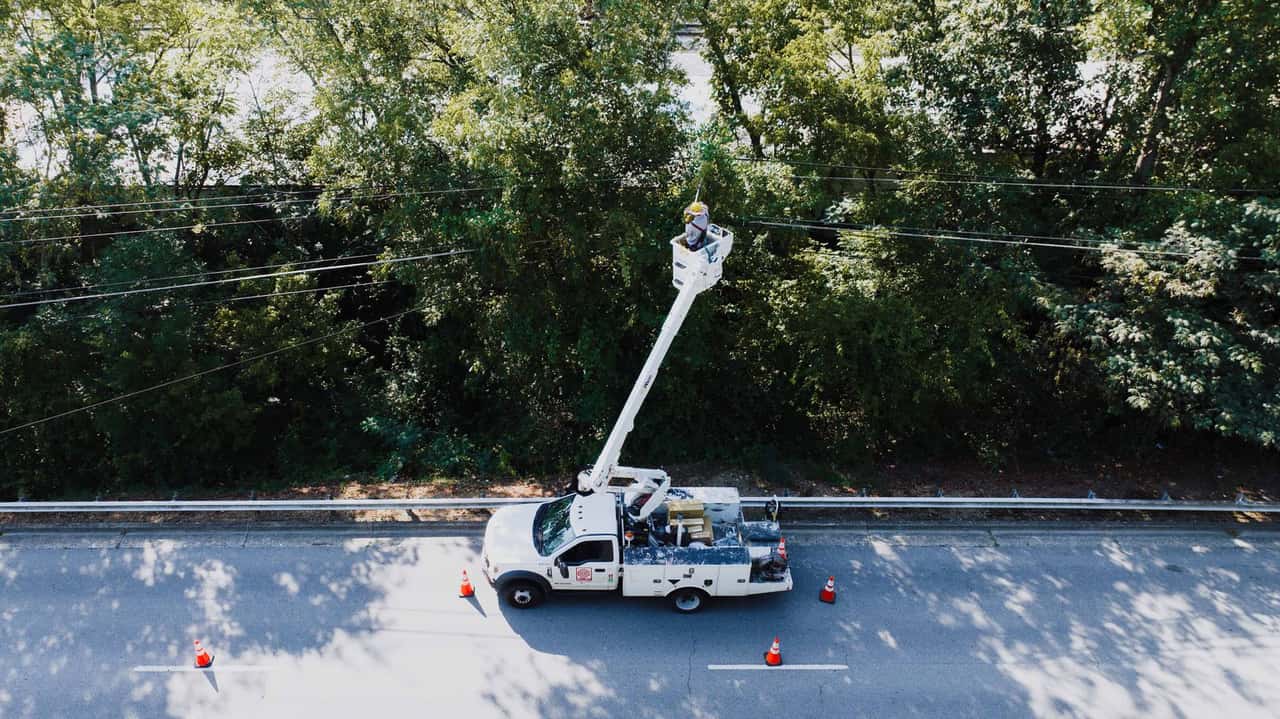
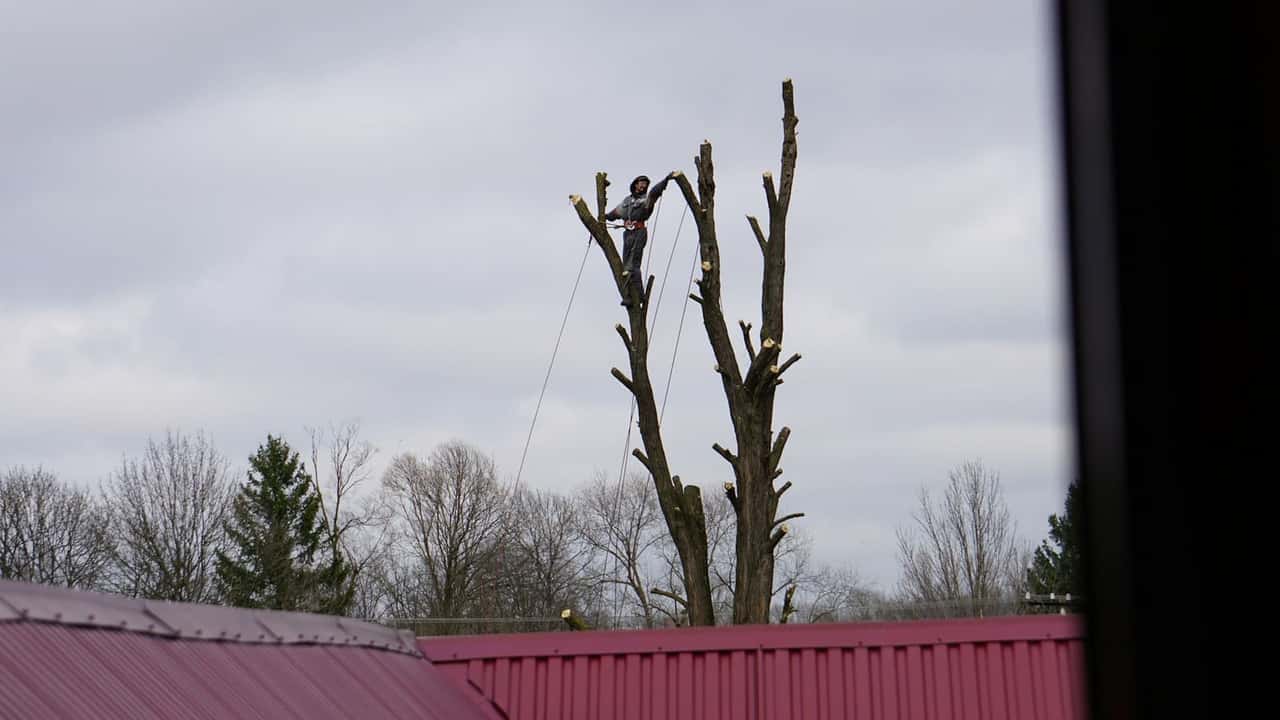
A dead ash dries out and becomes brittle within a year or two. Limbs snap instead of bending, so climbing it gets riskier every season. On a tree that has been dead a while, crews often work from a bucket truck or lift instead of climbing, or take it down with more rigging and smaller pieces, which can add cost.
That's the main reason to book sooner rather than later: the same tree is usually cheaper and safer to remove the year it dies than three years on.
Hiring a licensed arborist in Omaha
Omaha makes it unlawful to do tree work for hire without a city arborist license. Trimming or removing trees needs a second-class or first-class license; a third-class license only covers chemical work such as ash treatment. Before booking a removal, ask which class of license the company holds and check it with the city's Parks and Recreation forestry office.
Dead trees between the sidewalk and the street
Trees in the street right-of-way are city property, even though the owner of the abutting lot is responsible for keeping them trimmed and free of hazards. Removing one without a valid permit from the city forester can bring a penalty of up to three times the tree's appraised value, so confirm the permit is in place before any removal starts.
If the dead ash is on the city's own removal list, report it to the city before you pay for a removal.
Dead tree removal in Omaha: what to do and what to leave
Safe for a homeowner
- Keep people out of the area the tree could reach if it fell (about its height in every direction).
- Look at neighboring trees of the same species. Pests like emerald ash borer spread.
- Use local firewood only; don't move it long distances.
Leave these to professionals
- Don't climb a dead tree to cut it.
- Don't leave a dead tree that can reach the house standing into hurricane, ice or thunderstorm season; dead wood only gets weaker.
How a dead tree removal is done
- 1
Confirm it's dead
An arborist checks for live tissue and looks for the cause, which matters if nearby trees of the same species are at risk.
- 2
Choose the method
Bucket truck, crane or controlled felling instead of climbing, when the wood is too weak to trust.
- 3
Remove
Sections are taken down or the tree is felled in a planned direction.
- 4
Dispose properly
Wood from trees killed by invasive pests may be subject to firewood movement rules. Don't haul it across county or state lines.
Next steps in Omaha
If the tree is clearly dead, book removal; if you're unsure whether an ash can still be saved, start with an assessment.
To judge whether an ash is too far gone to treat.
After the removal, if you plan to replant.
If a dead tree has split or is hung up after a storm.
Omaha dead tree questions
How can I tell if my Omaha ash is dead or just struggling?
Thin crowns, dead branches at the top, bark splitting or woodpecker damage and new sprouts low on the trunk all point to emerald ash borer. If more than about half the crown is gone, treatment usually isn't worth it, so ask for an assessment.
Why does a dead ash cost more to remove the longer it stands?
Dead ash become brittle quickly, so crews need a lift or more rigging instead of climbing. If it can reach the house, a car, a walk or the street, remove it soon.
Does an Omaha tree company need a license?
Yes. The city requires an arborist license for tree work for hire; removals need a second-class or first-class license. Ask for it before booking.
Can I hire someone to remove the dead tree by the curb?
Only with a permit from the city forester, because right-of-way trees are city property. Removing one without a permit can bring a penalty of up to triple the tree's appraised value.
Who is responsible for the tree between the sidewalk and the street?
The owner of the abutting lot must keep it trimmed and free of hazards, but removal still needs the city forester's permit.
What does a dead tree removal in Omaha usually include?
Cutting the tree down, hauling the wood and cleanup. Stump grinding is often priced separately; ask whether it's included.
What details help an Omaha crew quote a dead tree?
That the tree is dead, how long it's been dead, what it could hit, whether it's by the street or a power line, and how a truck can reach it.
Should I replace the ash with another ash?
No. Plant a different species; the city's forestry office and nurseries can suggest trees suited to Omaha.
More tree services in Omaha
- Tree Removal servicesTaking down a tree you no longer want or can't keep, in sections near buildings.
- Emergency Tree Removal servicesA tree on the house, car, driveway or a line, or one about to fall.
- Storm Damage Tree Removal servicesUprooted, split or snapped trees and hanging limbs after wind, ice or hurricanes.
- Tree Trimming & Pruning servicesPruning for clearance over roofs and drives, deadwood removal and storm preparation.
- Hazardous Tree Removal servicesLeaning, cracked or decayed trees that could hit something if they fail.
- Large Tree Removal servicesBig trees close to structures that need rigging or a crane.
- Stump Grinding & Removal servicesGrinding stumps below grade so you can replant, sod or build.
- Tree Risk Assessment servicesAn arborist's opinion on whether a tree can stay, before you remove it.
- Commercial Tree ServicesTree work for HOAs, property managers and commercial sites.
- Land Clearing servicesClearing brush, trees and stumps from a lot by mulching or excavation.
- Stump Removal servicesDigging out the stump and root ball where something will be built or planted.
- Tree Cutting servicesBringing a tree down safely: felled in one piece or cut down in sections.
- Palm Tree Removal servicesDead, diseased or unwanted palms, crown first, then the trunk.
- Oak Tree Removal servicesOaks with permits, oak wilt timing and heavy wood to plan around.
- Pine Tree Removal servicesTall, beetle-killed or storm-damaged pines near the house.
- Emergency Tree Trimming servicesBroken, hanging or cracked limbs over a roof, drive or path.
- Emergency Tree Cutting servicesCutting a fallen tree off a car, driveway, fence or road.
Tell us what's happening and we'll connect you with a tree-service provider serving your area.
Call for tree serviceTree service areas near Omaha
Sources for the local facts on this page
- Omaha Code of Ordinances, Chapter 37: Trees and Vegetation (checked 2026-10-05)
- Omaha Parks and Recreation: Licensed arborists (checked 2026-10-05)
- Omaha Parks and Recreation: Emerald ash borer (checked 2026-10-05)
- City of Omaha: USDA confirms emerald ash borer in Omaha (checked 2026-10-05)
Dead tree removal in Omaha
Call to speak with a local tree-service provider about removal, trimming, stumps or storm damage. Describe the tree and what it's near, and they'll explain the next step.
By calling, you agree that your call may be recorded and routed to an independent local tree-service provider, who may call or text you back about your request. Calling is free and does not obligate you to hire anyone. See our Privacy Policy.