
Dallas, TX
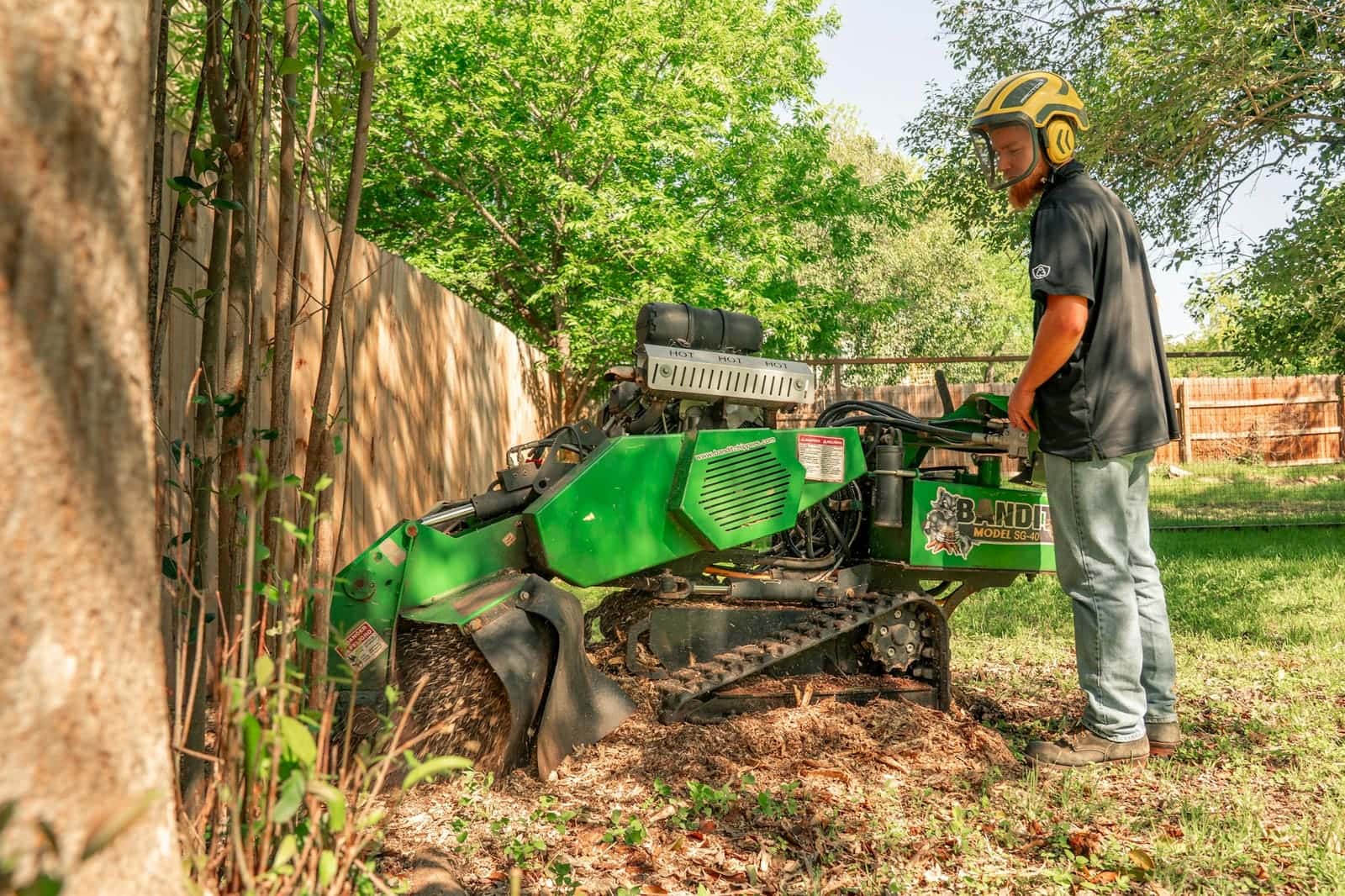
Stump grinding in Dallas
In Dallas, most stumps are ground 6 to 12 inches below grade, then filled with soil and sodded. Texas law requires an 811 call two business days before grinding; a hired company makes it. City brush pickup won't take stump wood or pieces over 8 inches thick.
Reviewed and updated
Grind, dig out or leave it? Dallas yard scenarios
St. Augustine or Bermuda lawn
- Usual choice
- Grind 6 to 8 inches, remove chips, add soil, sod or let Bermuda fill in
- Why
- Grass only needs a few inches of clean soil over the old roots
New tree
- Usual choice
- Grind deeper, or plant a few feet away
- Why
- Grindings and decaying roots make a poor planting hole
Driveway, patio or pool
- Usual choice
- Dig out the stump and main roots
- Why
- Pavement over decaying wood settles and cracks
Room addition or slab
- Usual choice
- Full removal and compacted fill, coordinated with the builder
- Why
- Footings need stable, root-free soil
Back of a large lot
- Usual choice
- Leave it or cut it low
- Why
- Cheapest option if nothing will be built or mowed there
Texas 811 and the lines under a Dallas yard
Texas law requires notice to 811 two business days, excluding weekends and holidays, before digging, and a stump grinder digs. When you hire a company, calling is the contractor's responsibility; ask for the ticket number before the machine arrives. The service is free.
811 marks lines owned by utilities. It doesn't mark private lines, and Dallas yards are full of them: sprinkler mains and valves, low-voltage landscape lighting, invisible pet fences, and gas or power lines run to a detached garage or pool equipment. Flag those yourself. Older central neighborhoods with alleys often have service lines running across the backyard toward the alley, right where many backyard trees grew.
Grinding near slabs in shrink-swell clay
Much of Dallas sits on clay that swells when wet and shrinks when dry, and slab foundations are common. Grinding a stump doesn't change how the soil around the slab behaves; the roots that stay in the ground decay slowly over years. What does matter is what you do afterward: leaving a deep, chip-filled hole beside a foundation lets water collect there, and wood chips settle as they rot.
Near a slab, ask for the grindings to be removed rather than packed back into the hole, and for the hole to be backfilled with soil and graded so water drains away from the house. If a big tree was removed because of foundation concerns, a foundation professional can advise on watering the soil near the slab through the next dry summer.
Stumps that keep sprouting: pears, chinaberry and hackberry
Some of the trees most often removed in Dallas don't give up when the trunk is cut. Callery (Bradford) pears, planted widely in newer subdivisions, send up sprouts from their roots. Chinaberry, an invasive species common in older yards and alleys, does the same. Hackberry seedlings also come up readily around old stumps, though those usually grow from seed rather than roots.
Grinding removes the stump, which ends sprouting from the stump itself, but root sprouts can still appear several feet away. Cut them at ground level as soon as they show; each cut draws down the roots' stored energy. A grinding company can also grind out the larger surface roots, which reduces the number of sprouts.
What Dallas brush pickup will and won't take
Dallas Sanitation collects brush and bulky trash monthly, up to 10 cubic yards per household, with one larger 20-cubic-yard pickup a year if you reserve it through 311 the week before. Brush has to be in pieces no more than 8 inches in diameter and 10 feet long, and set out Thursday through Sunday before your collection week. Piles over the limit are collected for a fee billed to the utility account.
That works for limbs from a removal. It doesn't work for the stump itself, trunk rounds, or a mound of grindings, so decide before the job whether the company hauls those, spreads the chips on site, or leaves rounds you'll cut down yourself.
Getting grass back over the spot
- 1
Pull the chips out
Rake most of the grindings out of the hole. In Dallas heat, a chip-filled patch dries out and stays bare.
- 2
Fill with soil, not sand
Backfill with a sandy loam topsoil, mounded slightly; it settles over a few weeks of watering.
- 3
Match the lawn
St. Augustine is usually patched with sod squares. Bermuda spreads by runners and will fill a small patch on its own in summer.
- 4
Time it for growing season
Warm-season grasses establish best from late spring through summer with regular watering; a winter grinding can be filled and sodded in spring.
Questions to settle before the grinder arrives
- How deep will you grind, and will you chase the surface roots? Get both in writing.
- Will the chips be hauled, spread in beds, or left in the hole?
- Can the machine fit through the side gate? Many Dallas side yards and alley gates are narrow; small grinders fit through 36-inch openings.
- Who called 811, and what's the ticket number?
- Is grinding cheaper if it's done the same day as the tree removal? It usually is.
Dallas stump grinding questions
Will Dallas pick up my tree stump with brush and bulky trash?
No. Brush pickup only takes pieces up to 8 inches in diameter and 10 feet long. Stumps, large trunk sections and loose grindings need to be hauled by the tree company or a private hauler.
Do I have to call 811 before stump grinding in Dallas?
Yes. Texas law requires notice two business days before digging, and grinding counts. If you hire a company, it's the contractor's job to call; ask for the ticket number.
My Bradford pear stump keeps sprouting. What do I do?
Callery (Bradford) pears often send up sprouts from the roots after the trunk is cut. Grind the stump, then keep cutting new sprouts at ground level as they appear; repeated cutting eventually exhausts the roots.
Sources for the local facts on this page
- Texas811: Homeowner information (checked 2026-10-01)
- City of Dallas Sanitation: Brush and bulky trash FAQ (checked 2026-10-01)
- Dallas City Code Sec. 18-4: Residential solid waste collection (checked 2026-10-01)
Stump grinding in Dallas
Call to speak with a local tree-service provider about removal, trimming, stumps or storm damage. Describe the tree and what it's near, and they'll explain the next step.