
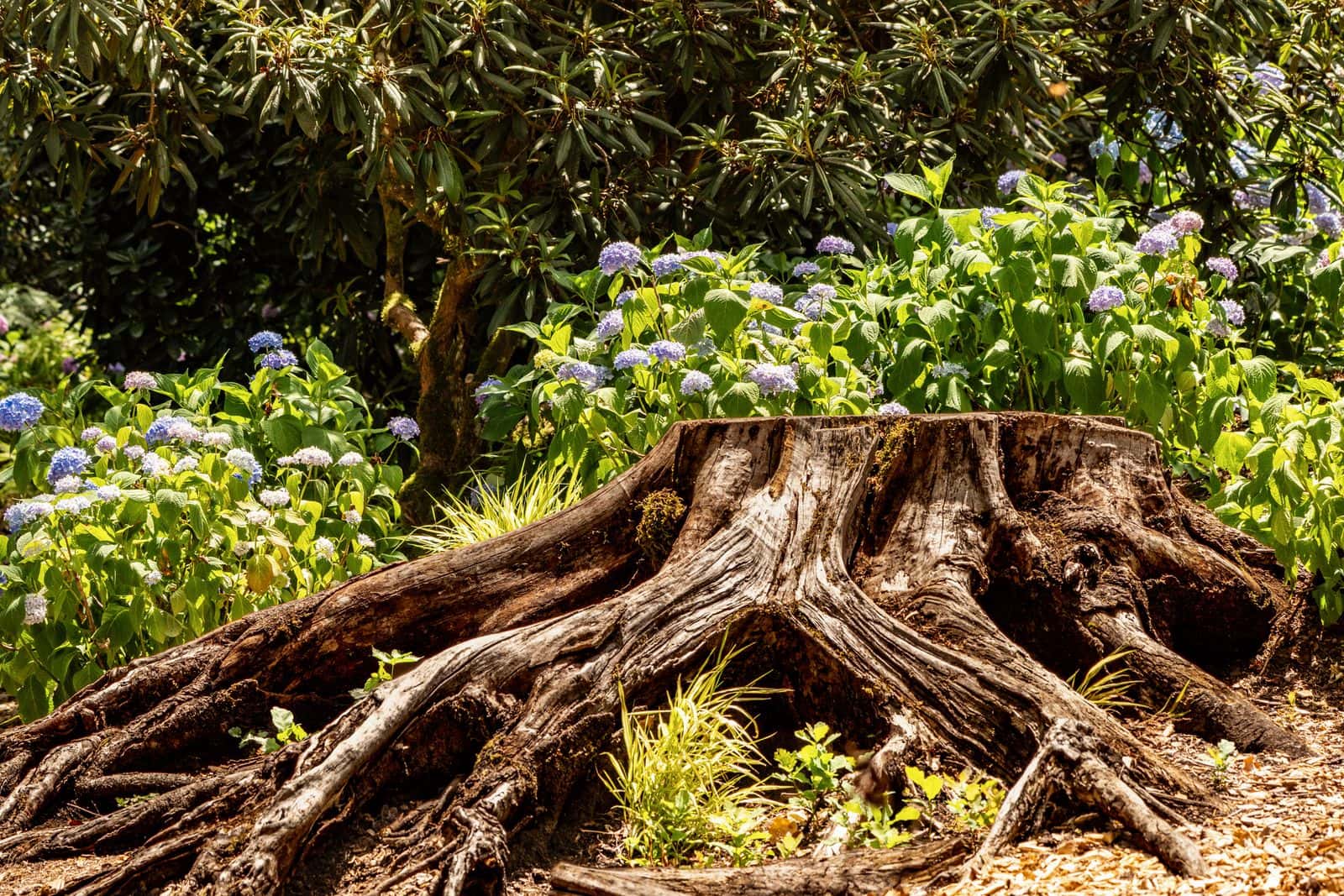
Atlanta, GA · stump grinding
Stump grinding in Atlanta
In Atlanta, stump grinding usually follows a permitted removal, so plan it around the replacement trees the city may require. Contact Georgia 811 before grinding, expect red clay to be sticky after rain, and ask how the grinder will reach stumps on steep or narrow in-town lots. Grind sweetgum and oak surface roots where they're a trip hazard.
Atlanta at a glance
- Utility locates
- Georgia 811 before digging
- Soil
- Red clay: heavy when wet, slow to drain
- Access
- Steep and narrow lots; compact grinders through gates
- Replanting
- May be required after a permitted removal
Reviewed and updated
Grinding with replanting in mind
Atlanta's tree ordinance usually pairs approved removals with replacement planting on the property or a payment into the Tree Trust Fund. If you'll plant replacements, decide where before grinding: the old stump spot is full of decaying roots and wood chips, so new trees usually go a few feet away. Remove most grindings and backfill with soil where you plan to plant or lay sod.
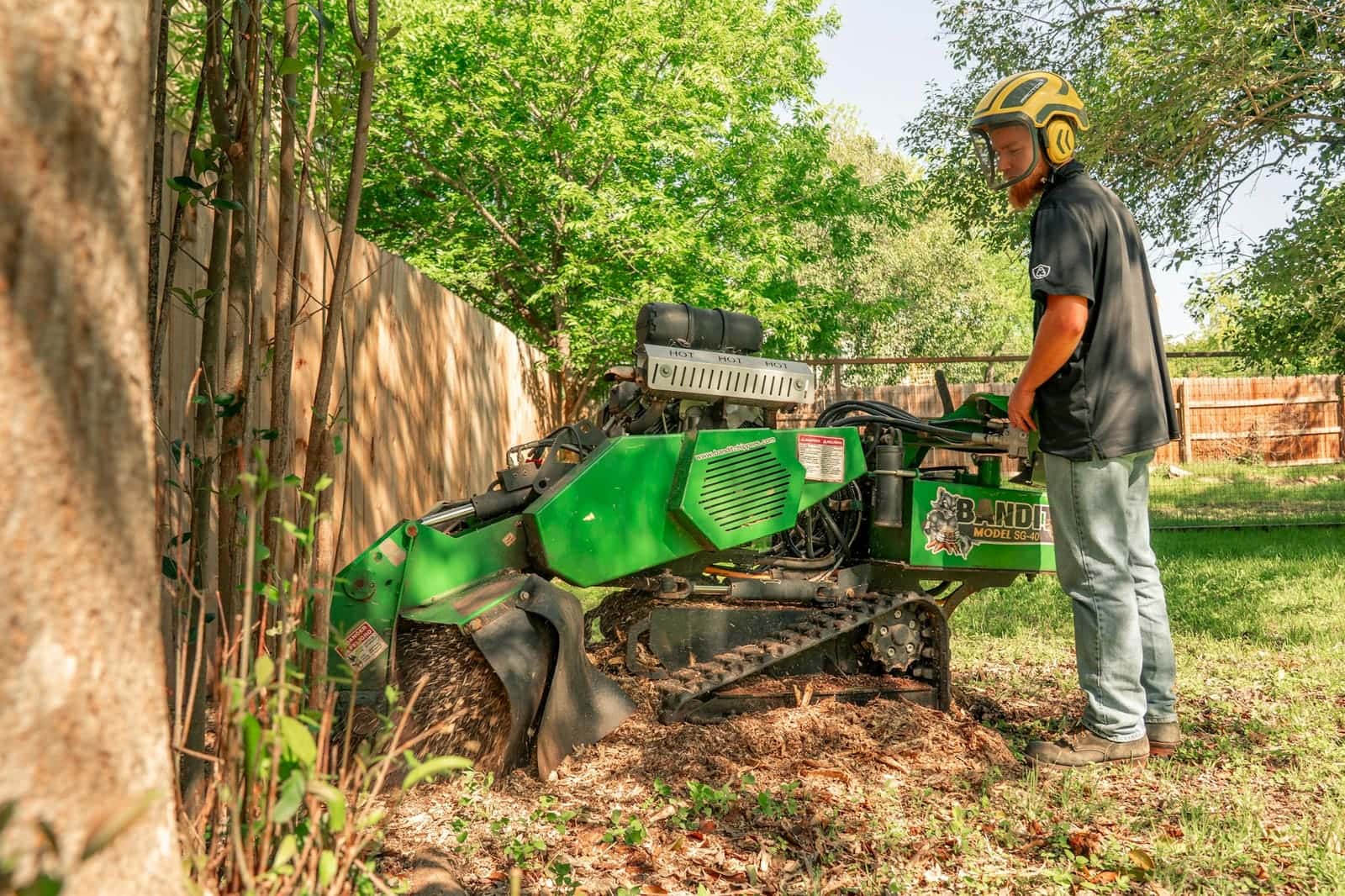
Grinding day on an Atlanta lot
- 1
Mark utilities
Call 811 a few business days ahead so underground lines are marked. Point out irrigation lines and invisible pet fences, which 811 doesn't mark.
- 2
Prep
Rocks and soil around the stump are cleared, and shields are set up to catch flying chips.
- 3
Grind
The wheel works across the stump to the agreed depth, plus any surface roots included in the quote.
- 4
Finish
Chips are raked into the hole, left in a pile, or hauled away, and topsoil is added if agreed.
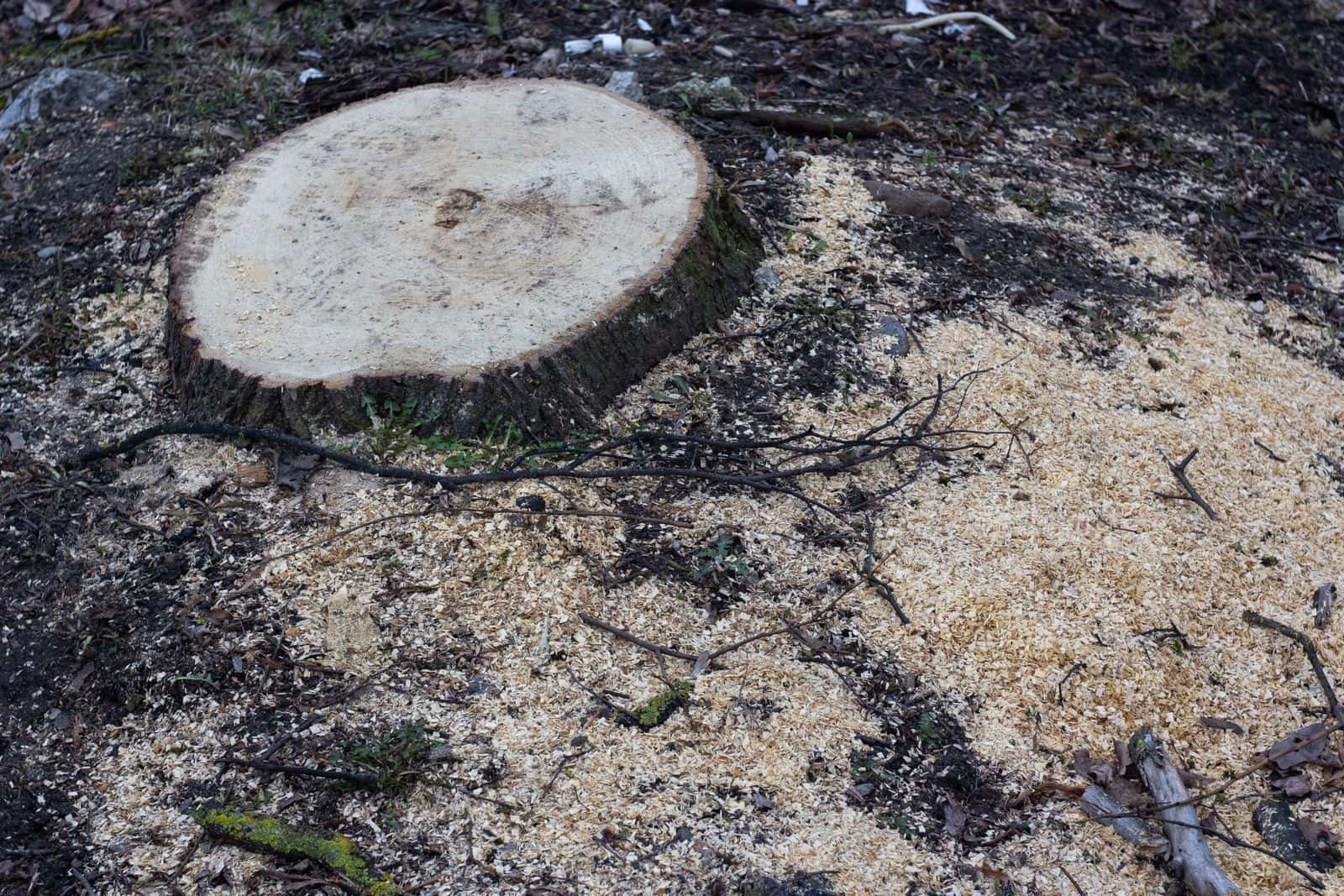
Red clay, slopes and surface roots
Georgia's red clay is heavy and slow-draining; after rain, grinding is messy and machines can rut a lawn, so a few dry days help. On steep lots, compact tracked grinders are safer than wheeled ones. Sweetgums and big oaks leave thick surface roots across lawns; those can be ground separately, but avoid cutting large roots of trees you're keeping.
Grinding next to fences, walls and driveways
Many in-town stumps sit against a fence, retaining wall or driveway apron. A grinder can usually get most of the stump, leaving a sliver against the structure; roots under concrete stay in place and decay slowly. Expect some settling of pavement near large old roots over the following years.
Georgia 811 and private lines
Contact Georgia 811 before grinding so underground utilities are marked; the grinding company usually handles it. Private lines like irrigation, landscape lighting and power to outbuildings aren't marked, so flag them yourself.
Before and after an Atlanta stump
Grinding is usually the last step of a removal; these are the steps around it.
If the tree is still standing.
For storm-felled trees that leave root plates.
For the trees you're keeping.
Atlanta stumps that cause trouble later
Stumps left in Atlanta yards don't just sit there. Sweetgum stumps sprout, decaying oak and pine stumps attract termites in Georgia's warm climate, and a rotting stump next to a foundation leaves a void that settles. Grinding is the usual fix; on a slope, leaving the root system in place also helps hold the soil.
If the removed tree was a pine killed by beetles, grind the stump and haul or chip the wood so beetles don't emerge to attack nearby pines.
Atlanta stump grinding questions
Do I need a permit for stump grinding in Atlanta?
Grinding the stump of a tree that was already removed generally doesn't need its own permit; the removal is what Atlanta regulates. Check any replacement-planting conditions on your removal permit.
Will grinding a stump next to my driveway crack it?
Usually not, but roots under the concrete stay and decay slowly, so pavement near big old roots may settle over the following years. Grinders leave a sliver against the slab.
Can I plant a replacement tree where the stump was?
Usually it's better a few feet away, out of the decaying roots and chips. If you replant in the same spot, remove grindings and backfill with soil.
Can a stump grinder work on a steep Atlanta lot?
Often, with a compact tracked machine. Very steep or walled lots may need hand work or a different approach; ask during the quote.
Why is my old pine stump attracting termites?
Decaying stumps feed termites in Georgia's warm climate, and a colony in a stump near the house is too close. Grinding removes the food source; have the house inspected if you see activity.
Should sweetgum surface roots be ground too?
They can be, where they're trip or mower hazards. Avoid grinding large roots of a tree you're keeping, which can harm it.
Is it urgent to grind a stump right after removal?
Not usually. But beetle-killed pine stumps and sprouting sweetgums are worth grinding soon, and a stump in a mowing path is a trip hazard.
How much does stump grinding cost in Atlanta?
Usually by stump diameter, plus access, surface roots and cleanup. See the stump grinding cost guide.
Who grinds stumps near me in Atlanta?
Tree services and stump grinding companies. You can call us to reach an independent provider in Atlanta.
How long after grinding can I lay sod?
Once grindings are removed and soil is backfilled and settled, usually a week or two with watering.
Sources for the local facts on this page
- Atlanta Tree Conservation Commission: Tree removal permits (checked 2026-10-03)
- Georgia 811 (checked 2026-10-03)
Stump grinding in Atlanta
Call to speak with a local tree-service provider about removal, trimming, stumps or storm damage. Describe the tree and what it's near, and they'll explain the next step.