
Oak Tree Removal · Statewide
Oak Tree Removal in Kansas
By calling, you agree that your call may be recorded and routed to an independent local tree-service provider, who may call or text you back about your request. Calling is free and does not obligate you to hire anyone. See our Privacy Policy.
- Free to call
- Independent local providers
- You decide
Tree problems in Kansas that call for oak tree removal
- 1
Pine wilt
Kills Scots and Austrian pines; spreading westward.
- 2
Ice storms
December 2007: 1–2 inches of ice; the costliest storm in Kansas history.
- 3
Tornadoes and straight-line winds
Spring and summer storms across open terrain.
What oak tree removal covers
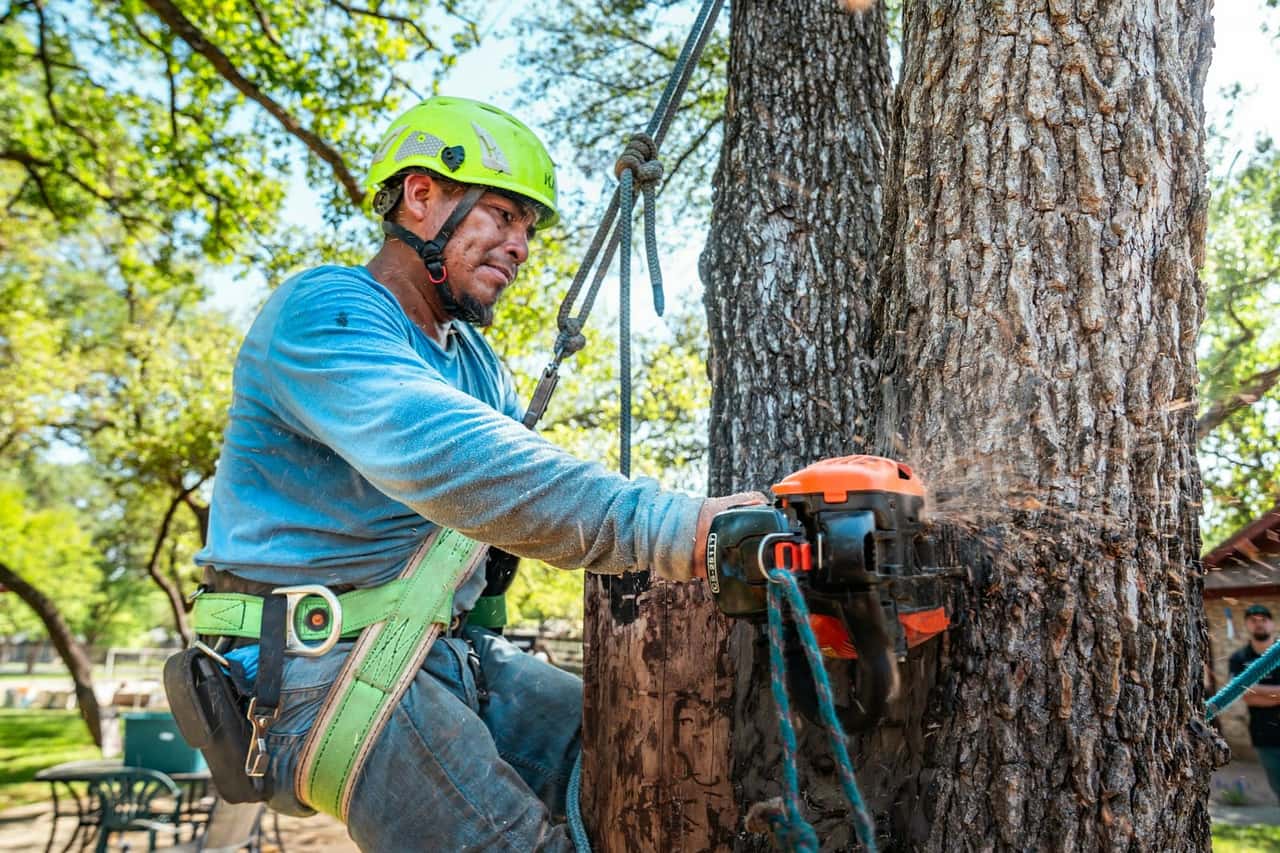
Removing an oak usually involves more rules and more rigging than other trees.
How oak tree removal works, step by step · part of tree removal
Describe the tree and what it's near, and you'll reach an independent provider serving Kansas.
Call for tree serviceTrees in Kansas that most often need oak tree removal
- Scots and Austrian pine
- Pine wilt kills them; replace with other species
- Hackberry and bur oak
- Tough natives
- Eastern redcedar
- Windbreaks; invasive in grasslands
Timing in Kansas
- Winter
- Ice storms
- Spring–summer
- Tornadoes, hail and wind
- Late winter
- Remove pine-wilt-killed pines before beetles emerge
Tree rules and permits in Kansas
- Kansas has no statewide permit for removing trees on private residential lots; cities manage street trees.
- Evergy generally prunes for at least 10 feet of clearance around its lines and cycles through its network every five to six years.
- K-State Research and Extension and the Kansas Forest Service advise removing and destroying pine-wilt-killed pines before beetles emerge.
Sources (checked 2026-10-03)
Rules change and details depend on your exact property. Confirm with the city or county before work starts. This isn't legal advice.
What affects the price of oak tree removal in Kansas
The usual drivers are size, access, what's under the tree and cleanup; see the full list for oak tree removal.
Oak Tree Removal in Kansas: common questions
Do I need a permit for oak Tree Removal in Kansas?
Kansas has no statewide permit for removing trees on private residential lots; cities manage street trees. Evergy generally prunes for at least 10 feet of clearance around its lines and cycles through its network every five to six years.
Which trees in Kansas most often need oak tree removal?
Scots and Austrian pine: pine wilt kills them; replace with other species Hackberry and bur oak: tough natives Eastern redcedar: windbreaks; invasive in grasslands
When is the best time for oak tree removal in Kansas?
Winter: Ice storms Spring–summer: Tornadoes, hail and wind
Pine wilt: what does it mean for oak tree removal in Kansas?
Kills Scots and Austrian pines; spreading westward.
Ice storms: what does it mean for oak tree removal in Kansas?
December 2007: 1–2 inches of ice; the costliest storm in Kansas history.
Tornadoes and straight-line winds: what does it mean for oak tree removal in Kansas?
Spring and summer storms across open terrain.
Other tree services in Kansas
- Tree Removal in Kansas
- Emergency Tree Removal in Kansas
- Storm Damage Tree Removal in Kansas
- Tree Trimming & Pruning in Kansas
- Stump Grinding & Removal in Kansas
- Dead Tree Removal in Kansas
- Hazardous Tree Removal in Kansas
- Large Tree Removal in Kansas
- Tree Risk Assessment in Kansas
- Commercial Tree Services in Kansas
- Land Clearing in Kansas
- Stump Removal in Kansas
- Tree Cutting in Kansas
- Palm Tree Removal in Kansas
- Pine Tree Removal in Kansas
- Emergency Tree Trimming in Kansas
- Emergency Tree Cutting in Kansas
Oak Tree Removal nearby
More about Kansas: tree removal in Kansas · all locations
Need oak tree removal in Kansas?
Call to reach an independent tree-service provider that serves Kansas. Calling is free and you decide whether to hire anyone.
By calling, you agree that your call may be recorded and routed to an independent local tree-service provider, who may call or text you back about your request. Calling is free and does not obligate you to hire anyone. See our Privacy Policy.